ai smartphone health data what your phone knows 2026
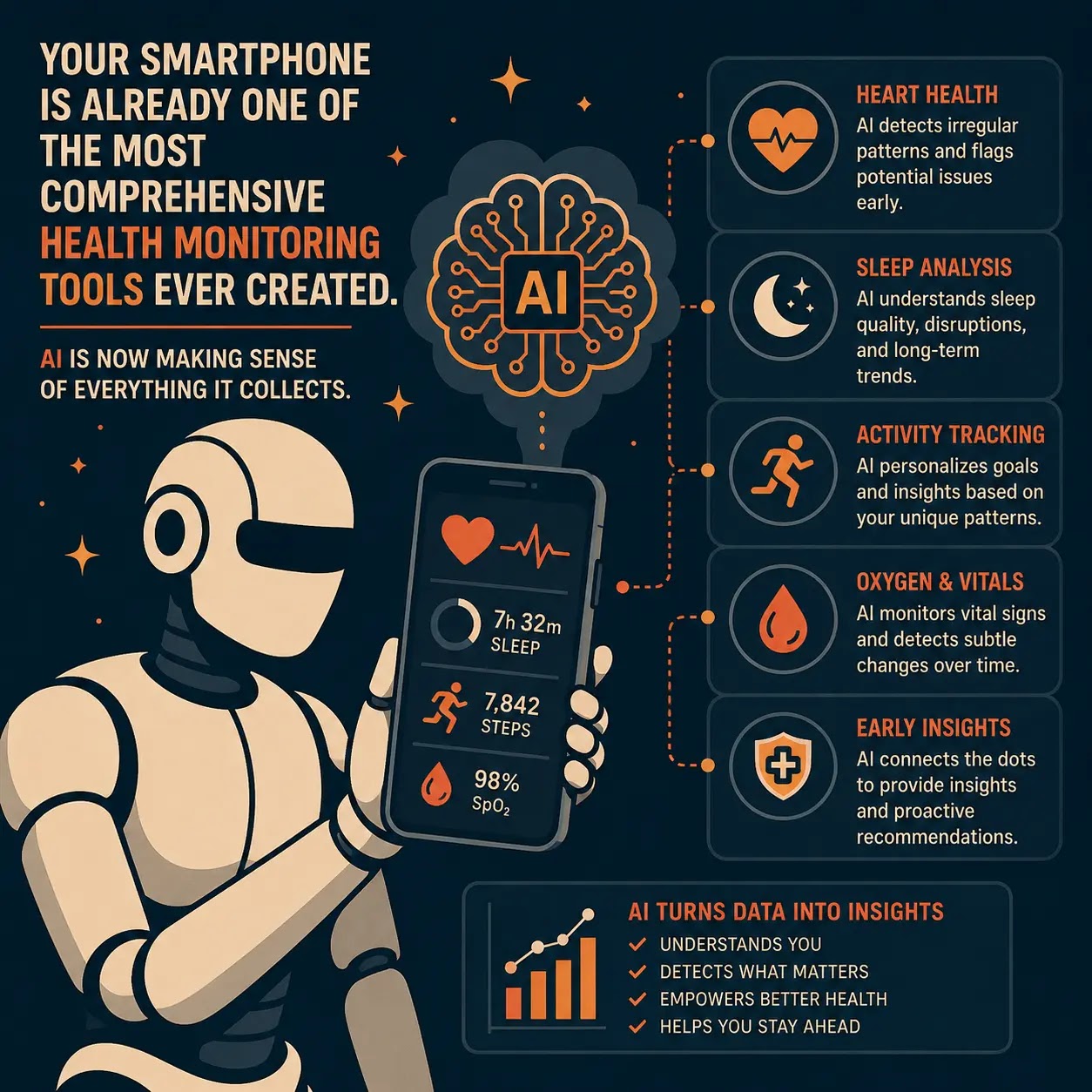
Your smartphone is already one of the most comprehensive health monitoring tools ever created. AI is now making sense of everything it collects.
By Stuart Kerr, Technology Correspondent, LiveAIWire
The Most Powerful Health Monitor You Own Is Already in Your Hand
You probably think of your smartphone as a communication device. A camera. A way to check social media, send messages, and watch videos. What it has quietly become, in the hands of AI systems running beneath the surface, is the most comprehensive health monitoring tool most people will ever own, and the gap between what your phone currently knows about your health and what your GP does is closing faster than almost anyone realises. Over 92 percent of new smartphones shipped globally in 2026 are equipped with advanced AI capabilities built directly into the hardware. The data those chips are processing includes information about how you sleep, how you move, how stressed you are, how your heart is performing, and in some cases early signals of conditions that have not yet been formally diagnosed. The question is no longer whether your phone is monitoring your health. It is whether you are using what it knows.
The Sensors Watching You Right Now
Stanford University researchers coined the term screenome to describe the complete digital trace that a smartphone generates about its owner. The screenome encompasses every tap, swipe, scroll, app opened, duration of use, time of day of activity, and the content being viewed, all of it recorded silently by sensors that never switch off. According to Stanford postdoctoral fellow Ian Kim, whose team published a major paper on screenomic research in March 2026, smartphones silently witness everything their owners do. They count steps, measure sleep patterns, record location, log every interaction, recognise faces, and capture a continuous record of digital behaviour that has been shown in multiple studies to correlate meaningfully with both physical and mental health.
The physical sensors embedded in modern smartphones go considerably further than most people realise. Shen AI, a clinically validated health monitoring platform, uses remote photoplethysmography through the smartphone camera to track over 30 health markers including blood pressure, heart rate, and BMI without any additional hardware, in under 30 seconds, using only the camera you already have in your hand. Its AI is trained on over seven million data points and delivers heart rate readings with under 0.5 beats per minute error, comparable to traditional medical devices. MIT researchers have built prototypes that diagnose respiratory conditions from coughs recorded over a standard phone microphone with 98 percent accuracy. Other studies demonstrate that AI can detect Parkinson’s disease from voice recordings and identify depression from speech patterns during routine calls.
What Your Wearable Is Telling the AI
The relationship between your smartphone and your wearable device, whether an Apple Watch, Fitbit, Garmin, or Whoop, creates a health data ecosystem that generates thousands of data points every single day. Resting heart rate, heart rate variability, sleep stages, blood oxygen levels, skin temperature, stress scores, workout recovery, and activity patterns are all captured continuously and fed into AI models that look for patterns across weeks and months of longitudinal data.
What makes AI transformative in this context is its ability to synthesise these data streams simultaneously. Your annual blood test result sits in a PDF that your GP reviews once. An AI health platform can cross-reference that same result against your sleep quality trend, your resting heart rate over the past six weeks, your stress indicators, and your movement patterns, identifying subtle shifts that no single data point would reveal in isolation. According to health technology analysts at mindbodygreen, by 2026 this kind of integration is becoming standard practice for users who engage seriously with their health data, with AI platforms able to identify early indications of thyroid dysfunction months before standard testing protocols would trigger investigation, simply by noticing subtle shifts across multiple data streams.
Apple’s Health Intelligence Ambition
The most significant development in smartphone health AI coming in the second half of 2026 is Apple’s Health Plus platform, which integrates ChatGPT with Apple’s comprehensive health data ecosystem. The redesigned Siri expected with iOS 27 will enable users to ask complex health questions and receive AI-generated responses grounded in their personal data. Instead of looking at charts showing that sleep declined last week, a user will be able to ask why sleep quality has been worse lately and receive an analysis connecting sleep patterns to exercise timing, caffeine intake, stress indicators, and environmental factors tracked across their devices.
This represents a fundamental shift from passive health monitoring to active health intelligence. The data your phone has been collecting for years becomes, for the first time, a coherent and queryable health narrative rather than a collection of disconnected metrics. Apple has flagged the need for enhanced privacy safeguards for the Health Plus rollout including data deidentification and federated learning, which keeps analysis happening locally on your device rather than being sent to external servers.
The Privacy Trade-Off That Deserves Honest Attention
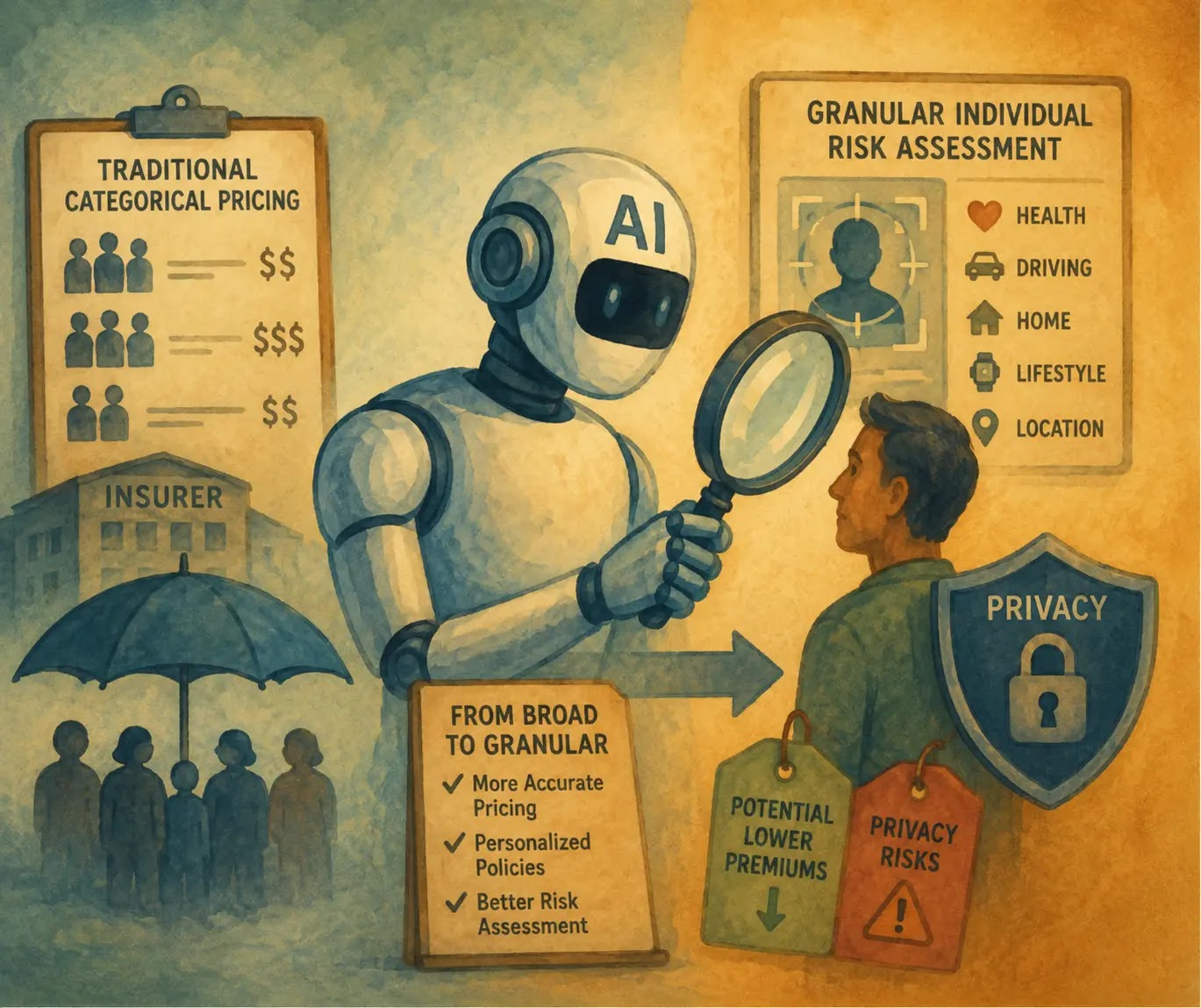
The depth of health data that smartphones collect in 2026 creates a privacy consideration that is genuinely significant and deserves to be stated plainly rather than buried in a privacy policy footnote. The apps and devices that handle heart rate, sleep patterns, menstrual cycle data, weight, and mood information are also handling information from which sensitive inferences can be drawn, including pregnancy status, mental health conditions, substance use patterns, and medical conditions that have not been formally diagnosed.
A 2026 analysis of wearable and health app data practices found that while terms of service have become more restrictive than they were three years ago, the default for many products remains to collect everything and monetise the aggregate. As explored in AI Bias Guardrails: Why August 2026 Is the Deadline That Changes Everything, the regulatory frameworks governing how AI systems handle personal data are tightening significantly, with the EU AI Act’s transparency requirements now active. But global enforcement remains uneven and users bear significant responsibility for understanding what they are agreeing to.
The practical guidance is straightforward. Before committing to any health platform, read the actual privacy policy rather than the marketing page. Understand specifically whether health analysis happens on your device or is sent to external servers. Check what data sharing arrangements the platform has with third parties. These questions take ten minutes to investigate and the answers vary significantly between platforms.
What to Do With What Your Phone Already Knows
The immediate opportunity, available to anyone with a smartphone and a wearable today, is to treat the data already being collected as a serious health asset rather than a set of numbers to glance at and ignore. The AI tools to make sense of that data are already available or arriving shortly. A few practical starting points make a significant difference.
Review your sleep data over the past month and look for patterns rather than individual nights. AI sleep analysis consistently reveals correlations between late screen exposure, meal timing, alcohol consumption, and sleep quality that are invisible without longitudinal data. Check your resting heart rate trend over several weeks. A sustained upward trend is a meaningful health signal even when individual readings look normal. Pay attention to heart rate variability, the measure of variation between heartbeats, which is one of the most sensitive early indicators of stress, illness, and recovery that consumer wearables now measure reliably.
As covered in How to Use AI to Save Time Every Day and Why Your Doctor Will Soon Know You Are Ill Before You Do, the intersection of AI and personal health data is one of the areas where the technology is delivering the most concrete and immediate value to individuals right now. The tools are already in your pocket. The data is already being collected. The question is simply whether you are paying attention to what it is telling you.
About the Author
Stuart Kerr is Technology Correspondent at LiveAIWire. He writes about artificial intelligence, ethics, and how technology is reshaping everyday life. Follow @LiveAIWire on X.