
By Stuart Kerr, Technology Correspondent, LiveAIWire
A Mental Health System Under Pressure
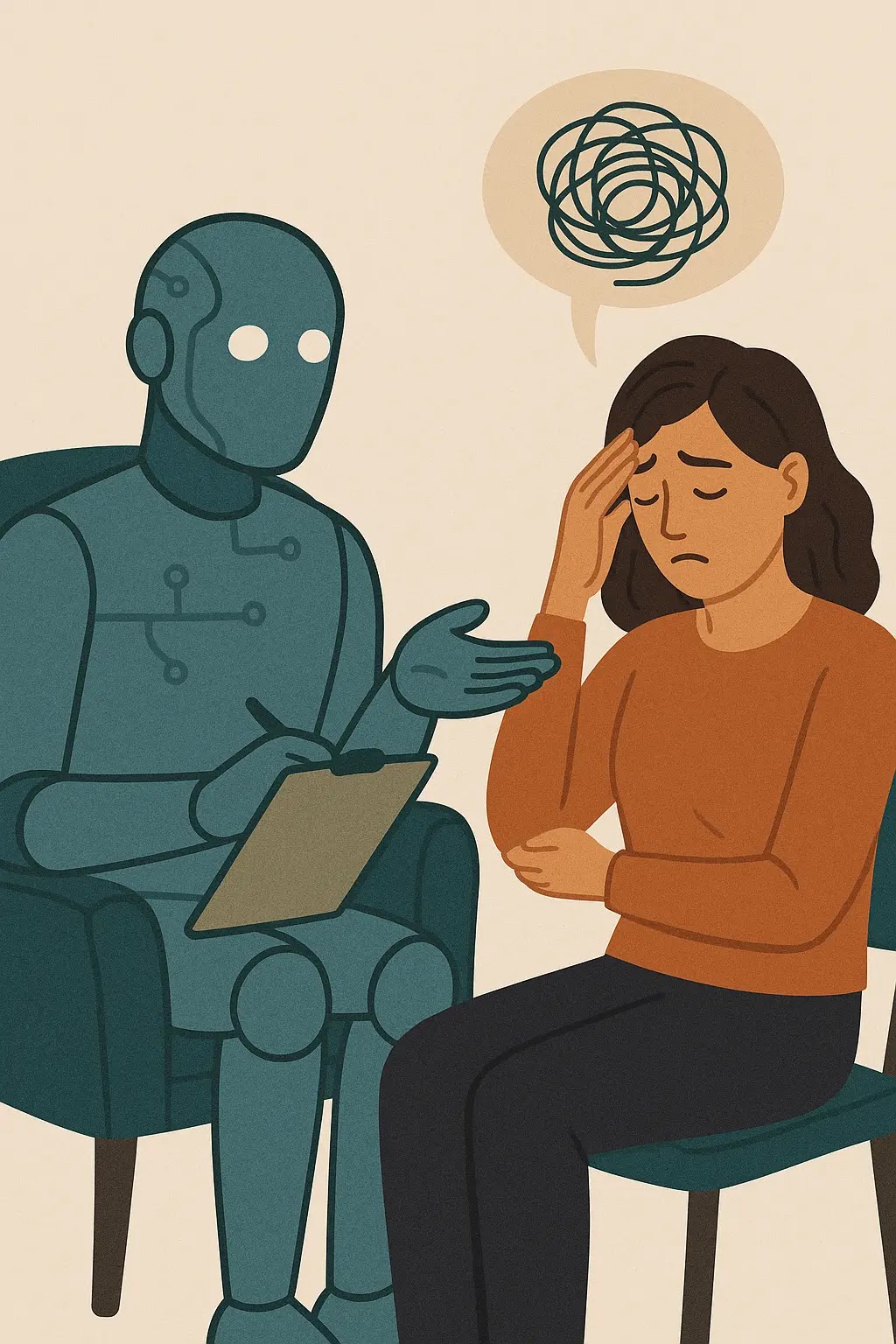
AI therapy chatbots have arrived at a moment when mental health care is facing a demand crisis that existing services cannot resolve through conventional means. Waiting lists for counselling and psychiatric support have stretched to months or years in many countries. Rates of anxiety, depression, and trauma-related conditions have risen sharply in the years since the pandemic, and the workforce of trained therapists has not kept pace. Into this gap, a new category of tool has arrived: AI-powered applications designed to deliver structured psychological support, in particular cognitive behavioural therapy, at scale and at low cost.
The appeal is real and immediate. For someone waiting three months to see a therapist, an AI app that can walk through the core techniques of CBT at any hour of the day or night addresses a genuine need. For a healthcare system struggling to allocate finite clinical resources, automating the more routine elements of structured therapy offers a practical route to extending reach without proportionally expanding the workforce, a pattern LiveAIWire has also traced in our reporting on patients using generative AI to navigate healthcare decisions. The question is whether the trade-off is worth making, and for whom the costs are highest.
What the Evidence Says About AI Therapy Chatbots
A systematic review and meta-analysis published in npj Digital Medicine examined 35 studies of AI-based conversational agents deployed to address symptoms of depression and psychological distress. The review, covering 15 randomised controlled trials, found that AI-based conversational agents significantly reduced symptoms of depression and general distress. For individuals experiencing mild to moderate distress who have limited access to professional care, AI therapy chatbots can provide structured support that is meaningfully better than no support at all.
But the same body of research is careful about the limits of that finding. Effect sizes for AI-delivered CBT are consistently smaller than those reported for human-led therapy, and results are less consistent for older adults and for more complex depressive presentations. The evidence supports AI therapy chatbots as a genuine but partial intervention, not a like-for-like substitute for trained clinical care.
The Empathy Problem
Empathy is not incidental to therapy. It is central. Decades of research on what makes psychotherapy effective consistently identifies the therapeutic alliance as one of the strongest predictors of outcome, in some studies more predictive than the specific technique being used. The therapeutic alliance is built on trust, rapport, and the experience of being genuinely understood by another mind. AI systems, however fluent and responsive, do not have minds in this sense. They simulate understanding, sometimes convincingly, but they do not experience it.
AI therapy chatbots can reproduce phrases that resemble empathetic responses. They can identify emotional language in user input and mirror it back in appropriately supportive ways. But they cannot feel the discomfort of sitting with someone in genuine distress, cannot notice the slight hesitation that precedes a disclosure the user is not sure they want to make, and cannot offer the wordless reassurance of a shared silence. For some users, particularly those with complex trauma or relational difficulties, the absence of these qualities is not merely an inconvenience. It is a barrier to the therapeutic work itself.
Ethical Risks of Displacement
A Stanford Institute for Human-Centered AI study tested five popular AI therapy chatbots against professional therapeutic guidelines covering stigma, appropriate crisis response, and equal treatment across patient groups. The researchers found the tools showed significant safety gaps, including stigmatising responses toward certain conditions and an inability to reliably respond to users at risk of self-harm. Senior author Nick Haber concluded that current AI models are not equipped to replace trained mental health professionals in safety-critical moments, even as some of the tools examined had logged millions of real user interactions.
That last risk is the most insidious. If healthcare commissioners use AI therapy chatbot adoption as grounds for not training more therapists or reducing funding for specialist services, the net effect for the people most severely affected by mental illness may be negative, even if the aggregate statistics on access appear to improve. Concerns about AI’s effects on mental health more broadly, which LiveAIWire examined in our reporting on AI and emerging mental health disorders, are already receiving serious attention from clinicians and researchers, which makes the question of how AI is deployed in therapeutic contexts particularly sensitive.
Augmentation as the Productive Model
The evidence points toward a model in which AI augments rather than replaces human therapeutic work. This is not a consolation position. It is a genuinely useful and scalable approach if implemented carefully. An AI application can deliver structured CBT exercises between sessions with a human therapist, reinforcing techniques that have been introduced in person. It can provide a low-stakes space for someone to practise the cognitive skills of the therapy before bringing their reflections to the clinical relationship. It can flag patterns in a user’s responses that a therapist might want to explore, offering a richer picture than a once-weekly session alone can provide.
This kind of integration requires human oversight at every step. The AI is not making decisions about the user’s care; it is supporting the human professional who is. That distinction preserves accountability, ensures that complex needs are identified and escalated, and keeps the therapeutic relationship, with all its human imperfection and genuine connection, at the centre of the intervention.
Access, Authenticity, and the Stakes of Getting It Wrong
There are parts of the world where AI therapy chatbots, for all their limitations, represent a genuine improvement over the alternative of no support at all. In countries with severe shortages of mental health professionals, a structured AI tool that can reach rural and underserved populations may prevent some deterioration and provide a bridge to eventual human care. In those contexts, the accessibility argument has real moral weight, and dismissing it entirely would be its own kind of harm.
But accessibility and adequacy are different standards, and conflating them risks normalising a second tier of mental health support for people who already face disproportionate disadvantage. The evolving regulatory landscape for AI needs to engage directly with the question of whether AI therapy chatbots are being deployed as a complement to adequate care or as a substitute for it. That distinction will determine whether AI in mental health represents a genuine expansion of human wellbeing or a more efficient management of its absence.
About the Author
Stuart Kerr is Technology Correspondent at LiveAIWire, covering artificial intelligence, cybersecurity, and the social impact of emerging technology. He publishes daily at LiveAIWire.com.