
By Stuart Kerr, Technology Correspondent, LiveAIWire
Generative AI to Find Doctors Is Becoming the Default
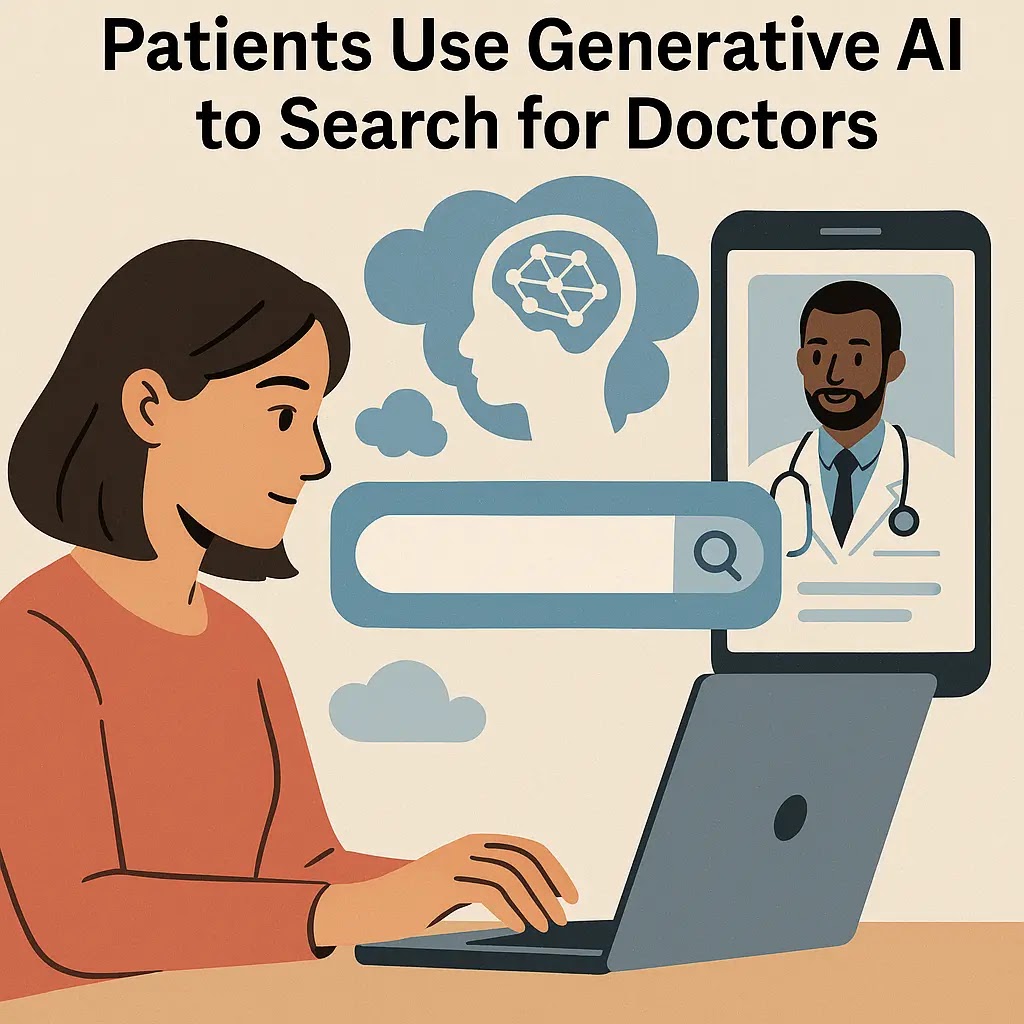
A growing number of patients are turning to generative AI to find doctors online, according to new survey data. As healthcare costs rise and online information grows more fragmented, patients are increasingly using AI to cut through noise and make more informed decisions about providers.
TechTarget reports that nearly one third of patients now rely on AI-powered search to identify healthcare providers. Patients use conversational prompts to filter doctors by location, specialty, insurance coverage, and even patient reviews. The appeal lies in AI’s ability to summarise multiple sources instantly, compared to the manual sifting required with traditional search engines.
Trust and Reliability Concerns
However, trust remains a significant hurdle. An Ipsos survey found that 31 percent of consumers already use generative AI for healthcare queries, but many worry about accuracy. While AI can quickly consolidate available information, it can also generate hallucinations, responses that sound authoritative but lack factual grounding.
A study from the Annenberg Public Policy Center revealed that 75 percent of respondents considered AI-generated health responses useful, and 63 percent judged them reliable, yet a majority still double-checked with a doctor before making decisions. This tension highlights AI’s growing role as a complement rather than a replacement for professional care, a distinction our reporting on AI therapy chatbots found holds across mental health tools too.
The Promise and Pitfalls
Researchers warn of deeper ethical and practical issues. A BMJ report examined how patients integrate AI into primary care decisions, raising concerns about uneven adoption across demographics. Some patients, especially younger digital natives, may embrace AI guidance, while older populations remain sceptical.
Similarly, the AAFP’s report highlights the risks of bias and misinformation. If AI is trained on skewed or incomplete healthcare data, it could unintentionally reinforce systemic inequities in access and outcomes.
AI as a Front Door to Healthcare
For many, generative AI to find doctors is becoming the front door to the healthcare journey. Instead of starting with Google search or insurance portals, patients ask AI tools to recommend providers, check availability, or draft initial outreach emails. This is particularly appealing in markets where finding a new provider can be daunting due to insurance complexity or lack of transparency.
This trend mirrors themes in our coverage of AI and autism, where neural networks aid neurodiverse communication, and in AI’s broader role as an intermediary between people and systems that can otherwise feel opaque or overwhelming. As LiveAIWire has also examined in the context of AI’s emerging effects on mental health, the same qualities that make AI approachable, its patience, its availability, its lack of judgement, can also blur the line between genuine expertise and a confident-sounding guess.
Looking Ahead
While healthcare regulators remain cautious, momentum is unlikely to slow. Patients are demonstrating that generative AI to find doctors has a real role in healthcare, not to diagnose or treat, but to navigate a labyrinth of options. The next step will be integrating generative AI to find doctors responsibly into official patient engagement strategies, balancing accessibility with reliability. Health systems that treat these tools as a supplement to, rather than a substitute for, professional guidance are likely to see the strongest outcomes for patients navigating an increasingly fragmented healthcare landscape.
As with all AI shifts, the future will hinge on trust. Patients may continue to embrace AI as a search companion, but doctors, policymakers, and developers must collaborate to ensure it supports, rather than distorts, the path to care.
About the Author
Stuart Kerr is Technology Correspondent at LiveAIWire, covering artificial intelligence, cybersecurity, and the social impact of emerging technology. He publishes daily at LiveAIWire.com.