Curiosity Compression amp Code — Visualising the Hidden Science Behind Interesting AI
By Stuart Kerr, Technology Correspondent — LiveAIWire
Published: December 2, 2025 | Updated: December 2, 2025 • Contact: liveaiwire@gmail.com
We scroll, click, watch — and occasionally, we stumble on something that grabs us. It isn’t always the flashiest headline or the most data-dense AI output: sometimes it’s the simple pattern that makes us pause. What if “interestingness” is not about complexity, but about compression — about our brains or our AI systems recognising simplicity hidden beneath apparent chaos? As AI advances, this hidden science may hold the key to why some algorithms delight, surprise, even bewitch us.
The theory behind interest: compression, curiosity and surprise
At the core of understanding why something feels interesting lies a powerful insight from information theory and cognitive science: the simpler (or more compressible) something becomes — once you “get it” — the more satisfying, the more engaging it feels. This is the essence of Simplicity Theory.Wikipedia+1
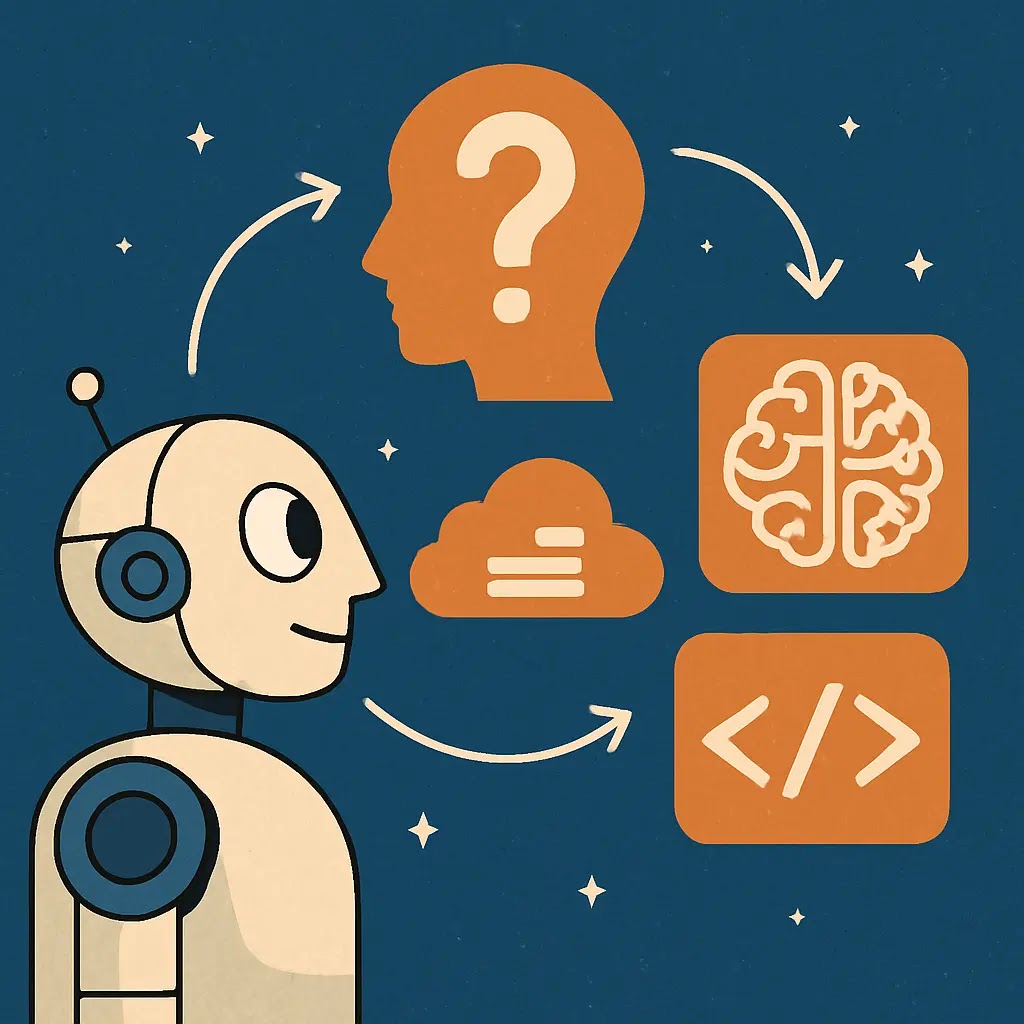
In the landmark paper Driven by Compression Progress: A Simple Principle Explains Essential Aspects of Subjective Beauty, Novelty, Surprise, Interestingness, Attention, Curiosity, Creativity, Art, Science, Music, Jokes, the researcher Jürgen Schmidhuber argues that a data stream becomes “interesting” precisely when a learner — human or machine — improves its ability to compress or predict that data. What was once random or chaotic becomes pattern, structure — and thus beauty.arXiv+2people.idsia.ch+2
In other words: curiosity is not just about novelty — it’s about finding simplicity in complexity. The “steepness of the learning curve” — the rapid gain in compressibility — is what our minds recognise as interesting.people.idsia.ch+1
This gives us a powerful lens to understand not only human fascination, but why certain AI outputs, puzzles, stories or visuals resonate deeply: because they offer patterns to decode, compress, internalise.
From code to intuition: how AI can embody “interest”
If interestingness is tied to compression and learning, then AI — especially learning systems — are primed to generate it. An AI that continually improves its internal model, that re-encodes data efficiently, that “discovers” structure — such a system can produce outputs that surprise us, not because they are random, but because they reveal simplicity in unexpected places.
Modern research on intrinsic motivation and curiosity-driven exploration builds on this concept: instead of relying solely on external reward signals, agents can be driven by internal metrics of compressibility — effectively seeking to “solve the puzzle” of their data environment.idsia.ch+1
Such systems may generate art, music, stories, visuals or ideas that feel fresh — not because they mimic human creativity, but because they explore the space of compressible patterns in novel ways.
Even in human communication, simplicity resonates: studies show that scientific explanations or narratives expressed in clearer, simpler language tend to improve comprehension and trust.OUP Academic+1
That aligns with the compression view: when the message’s structure is clean and compressible, it flows, feels intuitive — and feels “right.”
What makes humans — and AI — find things interesting
Putting theory into human terms, a few principles emerge:
-
Unexpected regularity — when something looks random but hides an elegant pattern (think a magic trick, a clever metaphor, or a piece of generative art).
-
Learning-based surprise — when you understand something new that reorganises prior complexity into a simpler form (a sudden insight, a plot twist, an elegant solution).
-
Cognitive ease — when information aligns with processing fluency: once pattern is recognised, it’s pleasant, satisfying, even beautiful.Wikipedia+1
-
Progress and mastery — the sense that one’s internal model is improving: we like to see ourselves or our tools “get smarter,” better at compressing the world.
For AI, these mean that the most compelling systems may not be the ones that generate the most data — but the ones that turn data into structure, pattern, insight. Systems that “compress” well — that abstract, distil and re-represent.
Risks, paradoxes and the fragility of “interestingness”
But this pursuit of compression-driven interestingness carries risks.
First, there’s the paradox of simplicity: while simple patterns are easier to process and often more appealing, overly simple prompts or designs can feel trivial, unchallenging, or even boring.sciencedirect.com+1
If there’s no margin between prior knowledge and new insight — no novelty or challenge — the “interestingness” curve flattens.
Second, a system that optimises for compression might over-simplify, disregard nuance or subtlety. What emerges can be reductive: structure without depth. Human cognition sometimes values nuance, ambiguity, contradiction — things less amenable to neat compression.
Third, there’s the risk of illusions: our brains can mistake pattern for meaning — a phenomenon akin to Apophenia — seeing order in randomness.Wikipedia
If AI outputs yield superficially compressible patterns, we may ascribe meaning or depth where none exists.
Finally, what’s “interesting” to one observer may not be for another — compression progress is subjective, dependent on prior knowledge, experiences, cognitive context. What expands one mind may bore another.
Designing AI for “interestingness”: practical implications
For creators, developers, and thinkers building the next generation of AI — this framing offers some actionable ideas:
-
Build AI that values compressibility as an internal objective — not just accuracy or external reward. Reward pattern discovery, abstraction, insight.
-
Design interaction and output not for maximal novelty, but for balanced surprise: enough unpredictability to provoke curiosity, but structured enough to allow compression and reflection.
-
Embrace simplicity in communication: whether via language, visuals or interface — clean, clear, compressible design often resonates deeper than flashy complexity.
-
Recognise subjectivity: allow users to tune “depth vs simplicity,” “challenge vs clarity” — different minds need different compression slopes.
-
Use “interestingness” as a compass for creativity — in art, storytelling, education, data analysis: encourage systems (and humans) to uncover underlying patterns rather than surface-level spectacle.
The bottom line: AI’s secret power may lie in its ability to simplify
As AI grows in sophistication, we often celebrate its capacity to generate vast data, deep detail, high-resolution output. But perhaps its greatest power lies elsewhere: in the ability to compress, to abstract, to reveal simplicity — and in doing so, to make things feel meaningful, surprising, beautiful.
The hidden science of “interesting AI” reminds us that fascination doesn’t always come from complexity — often, it comes from clarity.
© LiveAIWire 2025 — Supplemented by AI and Caffeine
About the Author
Stuart Kerr is a correspondent on AI at LiveAIWire. He reports on how AI reshapes work, media and the systems people rely on.