
By Stuart Kerr, Technology Correspondent, LiveAIWire
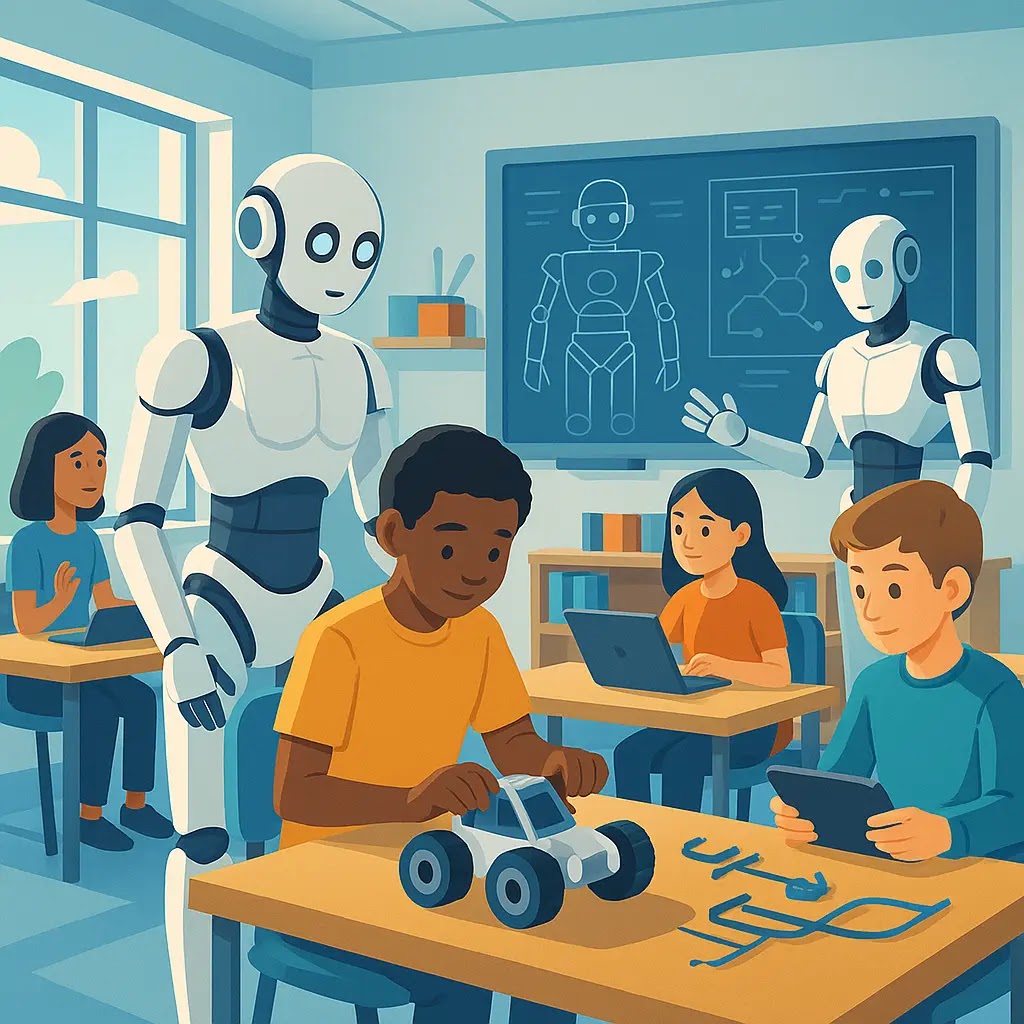
A global study published in April 2026 traced 206 real deployments of social robots in classrooms, universities and special education centres across 28 countries, involving 43 different robot models. That is not a projection or a pilot programme. It is documented evidence that robots in education have moved well past the demo stage and into daily use, from kindergartens in China to autism support programmes across the United States. If you work in education, or you are a parent wondering what your child’s school might look like in five years, that shift is already further along than most coverage of the topic suggests.
The distinction that matters here is between robots replacing teachers and robots supporting them. Almost none of the deployment data supports the first scenario. Nearly all of it supports the second. Robots in education are showing up as teaching assistants, tutors, and, in specific high-need contexts, as something closer to a specialised therapeutic tool. Understanding where the evidence is strong, where it is thin, and where the real risks sit is more useful than either the hype or the dismissal that usually surrounds this topic.
The Numbers Behind the Classroom Robot Boom
The global educational robot market was valued at roughly 1.38 billion dollars in 2024 and is projected to reach 5.84 billion dollars by 2030, a compound annual growth rate of close to 29 percent, according to Grand View Research. Secondary education currently holds the largest share of that market, though primary education is growing fastest as affordable, simple robots designed for young children become more widely available. Non-humanoid robots, the modular kits and programmable devices used to teach coding and STEM concepts, still account for most of the market by revenue, but humanoid robots, the ones designed to look and interact more like a person, are growing quickest, largely because of their use in early years and special education settings.
What This Means for Schools Weighing the Investment
For a school or district considering this technology, the practical takeaway from the deployment data is that robots earn their budget line in narrow, well-defined roles rather than as general-purpose classroom tools. The 206 documented cases cluster heavily around specific functions, teaching programming skills, language practice, and support for students with additional needs, rather than open-ended teaching across subjects. A robot bought to do everything tends to satisfy nothing. A robot bought to run one clearly scoped task, hearing a child read aloud, running a coding exercise, providing a consistent daily support routine for a student with autism, has a far better track record in the research than one bought as a general innovation showcase.
Where Robots Are Actually Being Used
In primary and secondary schools, the most common function by far is training programming skills, present in roughly half of the cases studied, followed by entertainment and edutainment activities that keep younger students engaged while reinforcing STEM concepts. Robots are also being used for language practice, in some cases delivering lessons in indigenous or minority languages that a school might otherwise struggle to staff, and for assessment, grading pronunciation or adjusting question difficulty based on a student’s responses. In higher education, the dominant use case shifts entirely: patient simulator robots are now the most common role, used extensively in medical and nursing programmes so students can practise diagnosis and treatment in a risk-free setting before working with real patients.
Special Education Is Where the Evidence Is Strongest
The clearest and most consistent research support for robots in education comes from special education settings, particularly for autism spectrum support. Robots such as Milo, developed by RoboKind and deployed through the Robots4Autism programme in North American schools, are used to teach self-regulation strategies, social interaction, and emotional recognition through structured, repeatable sessions. The appeal researchers point to is consistency. A robot delivers the same content in the same way as many times as a child needs it, without the fatigue or variation in tone that can affect even the most patient human instructor. In these settings, robots are documented performing not as assistants but as the primary teaching role in over a third of special education cases studied, always under human supervision.
The Teacher Shortage Robots Cannot Solve
Part of the pressure driving robot adoption in education is structural, not technological. UNESCO’s Global Report on Teachers projects a shortfall of 44 million primary and secondary teachers worldwide by 2030, with sub-Saharan Africa alone needing 15 million more. That shortage is real and it is not something a robot can fix. No deployment in the current research replaces a teacher outright, and the researchers behind the 206-case study are explicit that robots are not positioned to substitute for qualified educators. What robots can do, in the roles the evidence actually supports, is absorb specific repetitive tasks, freeing already stretched teachers to spend more time on the parts of the job that require human judgement.
What Educators and Parents Should Watch For
None of this is risk-free, and the concerns are not hypothetical. Our reporting on how AI companions affect child development found that children readily attribute real feelings to systems designed to seem warm and responsive, a dynamic that applies just as directly to a robot with a friendly voice and a name as it does to a chatbot. Data privacy is a genuine concern too, since many classroom robots include cameras and microphones, and schools adopting them need clear policies on what is recorded and who can access it. The same caution applies to the broader wave of generative AI already reshaping how students research and write, and to the academic integrity questions that wave has created, both signs that education systems are still catching up to tools that arrived faster than the policy frameworks meant to govern them.
The honest picture, based on what has actually been deployed rather than what vendors promise, is additive rather than revolutionary. Robots in education work best as a narrow, well-supervised tool for a specific job, not a replacement for the people running the classroom. Schools and parents evaluating this technology now, while adoption is still early enough to shape policy rather than react to it, are in a stronger position than those who wait for the decision to be made for them.
About the Author
Stuart Kerr is Technology Correspondent at LiveAIWire, covering artificial intelligence, emerging technology, and their impact on business, society, and everyday life. LiveAIWire publishes original AI journalism every weekday at liveaiwire.com.