
By Stuart Kerr, Technology Correspondent, LiveAIWire
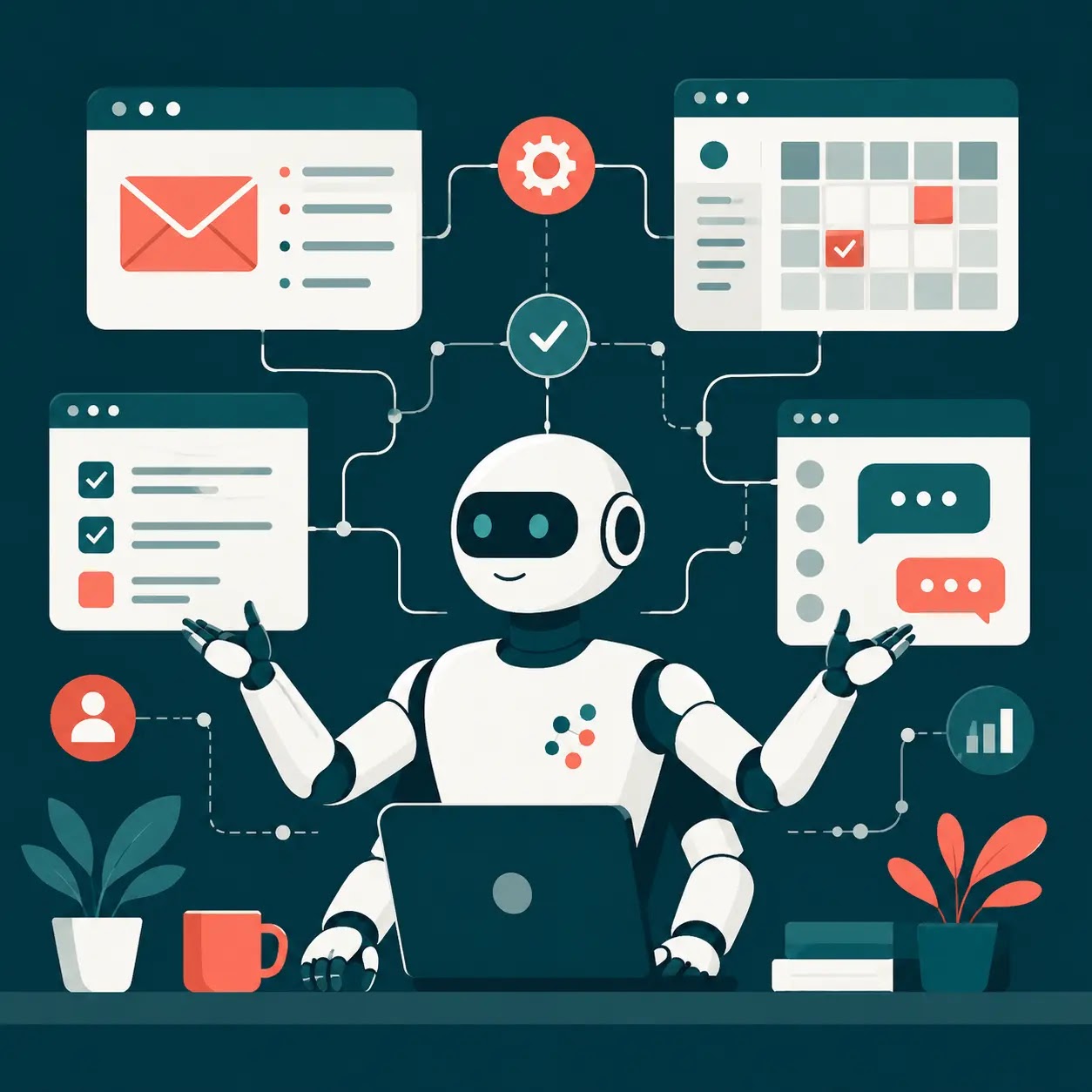
An AI agent can now triage your inbox, draft a reply in your own voice, check every attendee’s availability across three time zones, and lock a meeting into your calendar before you have finished your coffee. That is not a future scenario. AI agents for email and calendar have moved from research preview into daily use in 2026, with OpenAI, Zapier and a wave of specialist tools turning what used to be a chatbot into something that acts on your behalf inside the two tools every professional touches daily. The shift matters now because the agents doing this work are no longer experimental add ons. They are shipping inside subscriptions millions of people already pay for.
The practical difference between an assistant and an agent is control. An assistant waits for you to ask. An agent monitors your inbox in the background, decides what needs your attention, drafts the rest, and only interrupts you when a decision genuinely requires a human. The same logic now runs your calendar. Agents read every participant’s schedule, spot a conflict before it happens, and rearrange lower priority meetings automatically when something urgent lands. A missed conflict caught before it happens saves more time over a year than any single flashy feature.
Why Your Inbox Stopped Waiting for You
OpenAI’s clearest entry into this space is workspace agents, introduced inside ChatGPT on 22 April 2026. Unlike the custom GPTs that came before them, workspace agents run in the cloud, persist between sessions, and can be shared across a whole team rather than built by one person for personal use. Connected to Gmail, Outlook, Google Calendar and Slack, they can draft a reply, summarise a thread, or schedule a meeting on request. OpenAI’s own documentation confirms that sensitive steps such as sending an email or adding a calendar event require explicit approval before they go ahead. The feature is in research preview for ChatGPT Business, Enterprise, Edu and Teachers plans, has stayed free through several extensions, and will move to credit based pricing once that preview ends.
The Calendar Agent That Argues With Your Diary
Calendar specific agents take the same logic further. Instead of simply flagging a clash, they weigh every commitment against your stated priorities, protect blocks of deep work automatically, and shuffle lower priority meetings when something more urgent appears. The pitch is straightforward. Less time spent manually defending your calendar, more of it spent doing the work the calendar was meant to protect in the first place. The tools in this category differ mainly in how aggressively they are allowed to act without asking first, and that setting is usually the first thing worth adjusting when you start.
What AI Agents for Email and Calendar Mean for Your Working Week
For most professionals the practical entry point is narrower than the hype suggests. You do not need to hand an agent your entire inbox on day one. Choosing a single, well defined task, drafting replies to routine emails or protecting one recurring block of focus time, and watching how the agent handles it for two or three weeks gives a far more honest picture of the time saved than adopting every feature at once. Gartner’s enterprise software research has forecast that a large share of business applications will carry task specific agents by the end of 2026, up sharply from a small base only a year earlier, which suggests this is now a mainstream expectation for workplace tools rather than a novelty.
Why the Plumbing Matters More Than the Model
The single most important factor in choosing an agent is not how clever its reasoning sounds in a demo. It is how deeply it connects to the other tools you already rely on. Zapier’s AI platform now advertises governed connections to more than 9,000 apps, letting an agent that handles your inbox also reach into a CRM, a project tracker or a shared drive without a developer wiring the two together by hand. An agent that manages email brilliantly but cannot see your calendar, your documents or your task list creates a new gap rather than closing an old one. The agents earning genuine time savings in 2026 are the ones built around integration depth first and conversational polish second, a point OpenAI’s own workspace agents announcement makes explicitly by leading with governance and tool access rather than model capability.
What Could Go Wrong If You Move Too Fast
None of this comes risk free, and the agents themselves are usually built with that in mind. OpenAI’s own workspace agents require explicit approval before taking a sensitive action such as sending an email or creating a calendar event, a default worth keeping rather than switching off for convenience. The bigger risk sits with governance rather than the technology itself. Enterprise analysts have already warned that a significant share of early agentic AI projects will be shelved within the next two years, usually because organisations skipped the unglamorous work of setting clear rules for what an agent is allowed to do without asking first. For an individual professional the stakes are smaller but the lesson holds. An agent given broad, unsupervised access to your inbox and calendar on day one is far more likely to make an error you notice too late than one introduced gradually, task by task, with approval switched on until you have genuinely earned back the trust to loosen it. Data privacy deserves the same caution. Any agent connected to your email or calendar is reading sensitive material by definition, so it is worth checking exactly what a vendor stores, for how long, and whether any of it is used to train models before connecting a work account rather than after. The agents worth adopting long term are the ones that make these settings easy to find and adjust, not the ones that bury them behind a single toggle marked convenience.
Where to Start Without Losing Control
The organisations and individuals seeing the steadiest returns are not the ones that adopted every agent at once. They picked one process, most often email triage or calendar defence, set clear rules for when the agent needs to ask permission, and expanded only once that single workflow was reliable. That discipline matters more than the choice of vendor. For related context on how AI is reshaping the wider world of work, LiveAIWire has covered what the IMF’s 40 percent exposure figure actually means for workers and the automation divide now opening across the AI economy, both of which help frame where agentic tools like these sit inside the bigger employment picture.
None of this is free of friction. LiveAIWire’s own reporting on the attention economy and AI productivity tools has found that these tools can just as easily fragment focus as protect it, and agents that interrupt constantly for approval risk recreating the very problem they were built to solve. The agents worth keeping through 2026 are the ones configured to ask less, not more, once they have earned your trust.
About the Author
Stuart Kerr is Technology Correspondent at LiveAIWire, covering artificial intelligence, emerging technology, and their impact on business, society, and everyday life. LiveAIWire publishes original AI journalism every weekday at liveaiwire.com.