How to Prepare for the Extended Reality XR Revolution
Extended Reality is no longer confined to gaming: it’s stepping out into real-world classrooms, workplaces and daily lives. In this article we explore what XR means, how you can prepare for its arrival, and what it means for you.
By Stuart Kerr Published 30/10/2025 Updated 30/10/2025
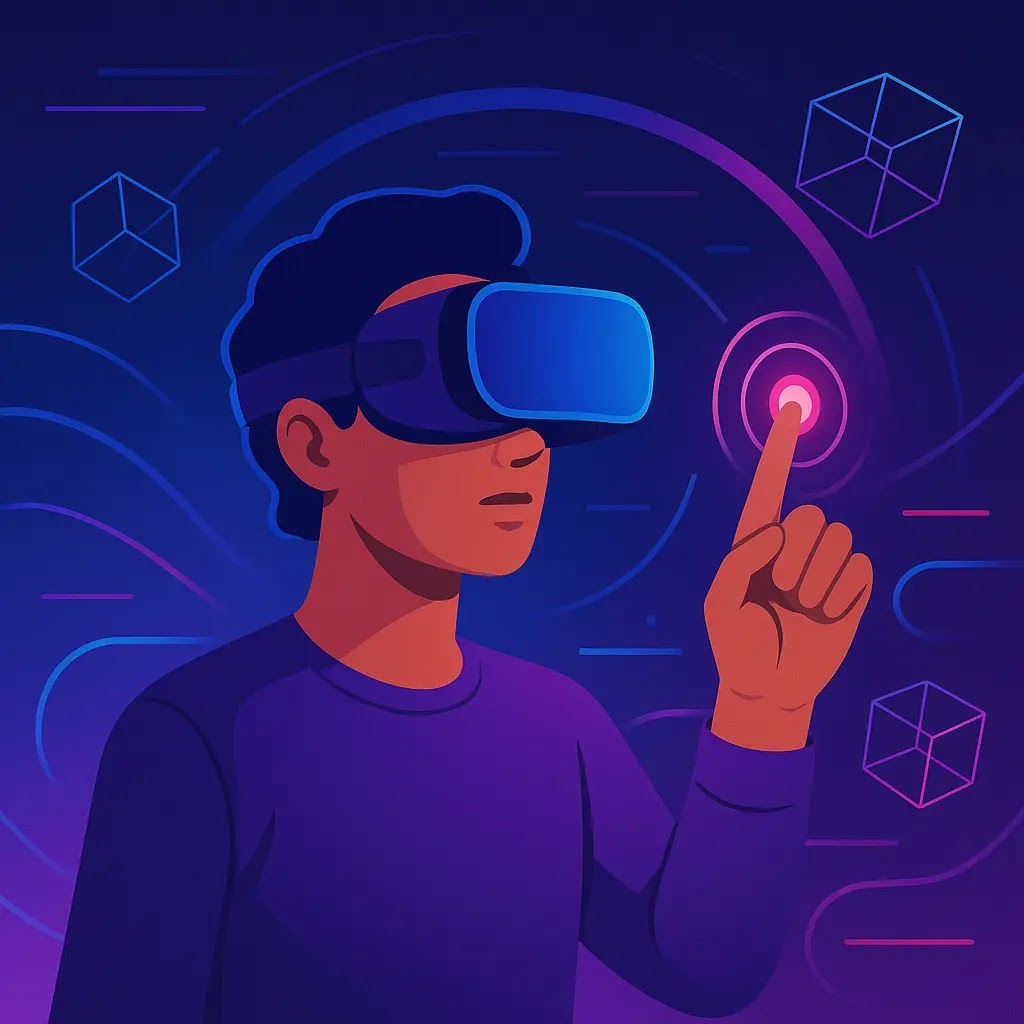
XR, which includes virtual reality (VR), augmented reality (AR) and mixed reality (MR), is moving rapidly beyond novelty and into areas where everyday people live and learn. As institutions experiment with immersive experiences, the question for you isn’t if, but how you will meet this shift. A previous piece on our site, From Cradle to Care Home, showed how robots are becoming personal assistants — now XR is doing something similar for learning, business and society.
The timing feels right. A recent article by EDUCAUSE described how colleges are piloting XR labs, simulators and hybrid classrooms and highlighted that institutions must think ahead about privacy, ethics and infrastructure. EDUCAUSE Review For you, this means the technology is ready and the opportunity is evolving from research to real adoption. Simulations, visualisations and problem-solving environments formerly limited to expensive labs are now accessible through XR, making it possible to walk through a virtual chemical reaction or rehearse a public speaking scenario from your home.
In practical terms, preparing for the XR revolution calls for three key moves. First, think about accessibility and skill readiness: you’ll want devices, software or platforms that work smoothly, and you may want to try small XR experiences yourself. Second, consider integration into workflows and learning: whether you’re a student, teacher or professional, ask how XR fits your goals — will it enhance your learning or simply distract? Third, plan for ethical, infrastructural and cost-related implications: no one wants to invest in tech that fails due to poor connectivity, lack of training or incompatible hardware.
The benefits of XR should excite you. Users report higher engagement, better spatial understanding of complex concepts and richer learning experiences when XR is done well. For example, teachers using XR in applied sciences reported that VR helped students understand abstract ideas by placing them inside immersive three-dimensional spaces. MDPI But it’s not all straightforward: challenges remain. Equipment cost, teacher training, long-term studies of outcome and ensuring equitable access are big hurdles. ResearchGate
For businesses and consumers the implications are equally meaningful. XR means you might attend a virtual meeting where holograms stand around you; you might visit a showroom from your living room; you might train in a fully immersive environment before ever touching real-world tools. To benefit, start by experimenting with apps or platforms (some free), build familiarity, and think about what kind of immersive experiences align with your goals. Before diving in, ask: “Does this add value or just novelty?”
The future of XR, if you’re ready, holds three major trends. One, XR will combine further with AI to deliver adaptive, personal-learning environments or training simulators. Two, XR will move from isolated devices to collaborative, social experiences — imagine group XR learning or remote teamwork in immersive spaces. Three, XR will become more affordable and mainstream — think of head-mounted displays or mobile-XR reducing cost barriers. Yet these trends will only deliver if the foundations are in place: strong connectivity, clear value, trained instructors or facilitators and inclusive design.
When done right, XR has the potential to reshape how we learn, work and even interact. But if you treat it only as a flashy gadget you’ll miss the point. The revolution is not about the device — it’s about the experience, design and relevance. Are you prepared to meet it?
About the Author
Stuart Kerr, Technology Correspondent
https://liveaiwire.com/p/to-liveaiwire-where-artificial.html