
By Stuart Kerr, Technology Correspondent, LiveAIWire
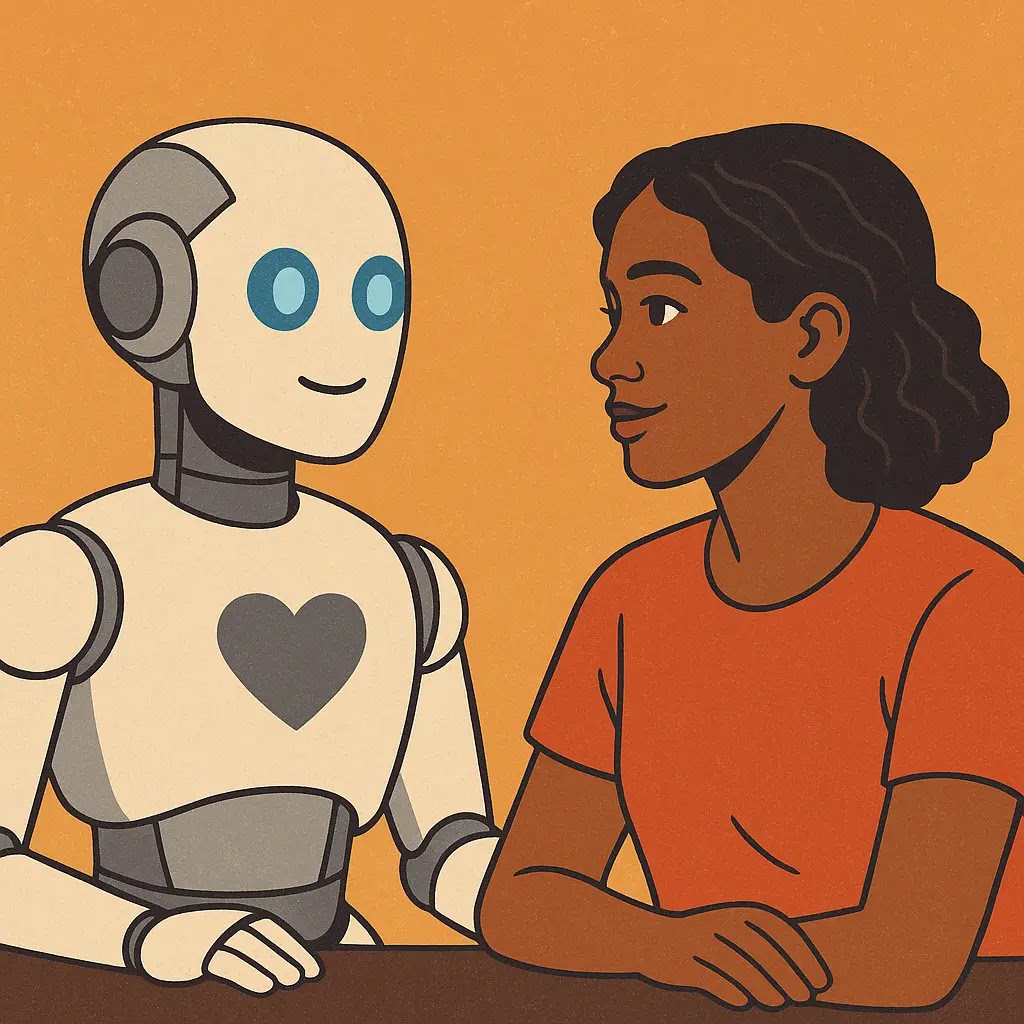
A seven-year-old child shown an AI agent that responds warmly, remembers their preferences, and consistently praises their ideas will, on average, attribute real feelings and personality to that agent, according to research from the MIT Media Lab. That finding, cited in a 2025 European Parliament briefing on children and generative AI, captures the central developmental challenge of the current moment: a generation of children is growing up with AI systems designed to be emotionally engaging in environments where their capacity to distinguish algorithmic warmth from human connection is still forming. The question is not whether AI will influence how children think, learn, and form values. It already is. The question is whether that influence is being designed, or merely happening. For many children, that influence increasingly comes through AI companions designed to feel like relationships rather than tools.
The American Psychological Association issued a health advisory in June 2025 warning that AI companion software using manipulative design “may displace or interfere with the development of healthy real-world relationships.” The advisory reflects a consensus concern in developmental psychology: the risk is not that children will be confused about whether an AI is sentient, but that extended interaction with systems designed to provide unconditional regard and consistent agreement will shape their expectations of human relationships in ways that do not serve them. A child whose primary conversational companion consistently agrees with them, remembers everything they have said, and never has competing needs or bad days is developing a model of relationship that no human relationship can or should replicate.
Table of Contents
What the Research Shows About AI Companions and Child Development
Dr. Ying Xu, Assistant Professor of AI in Learning and Education at Harvard Graduate School of Education, has emphasised that AI designed with specific developmental principles can benefit children’s growth and learning, but that AI literacy, children understanding what AI is and is not, is essential for those benefits to be realised rather than undermined. The distinction between AI as a tool that supports development and AI as a relationship substitute is where the design decisions get most consequential. Adaptive tutoring systems that respond to a child’s learning pace and provide encouragement calibrated to their performance are doing something developmentally constructive. AI companions that provide unlimited unconditional support without the accountability dynamics that characterise human relationships are doing something different, and the evidence on its long-term developmental effects is not reassuring.
The Brookings Institution analysis published in February 2026 identified AI’s “banal deception” as the specific mechanism of concern: the conversational tone, emulated empathy, and carefully designed communication patterns of current AI systems cause many children and young people to confuse the algorithmic with the human. That conflation short-circuits the development of two foundational competencies: the ability to navigate authentic social relationships and the ability to assess trustworthiness. Both require exposure to the genuine friction of human interaction, the experience of another person whose responses you cannot fully predict and whose needs sometimes conflict with yours. AI interaction does not provide that experience, and substituting it for human interaction during the developmental window when those competencies are forming carries documented risks.
The Educational Dimension
The educational implications are distinct from the social-developmental ones, though they intersect. AI tutoring systems, when well-designed, provide personalised pacing, patient repetition, and immediate feedback that human teachers cannot deliver at scale to every student simultaneously. The evidence on their effectiveness for specific learning outcomes in specific age groups is genuinely positive. The concern is not the tutoring function but the broader relational design: an AI that is simultaneously a tutor, a creative collaborator, and a companion is asking a child to navigate multiple relationship types with a single system in ways that may blur the distinctions between them.
The APA advisory specifically notes that AI companions exploit emotional vulnerabilities through unconditional regard, potentially triggering dependencies that hinder social skill development. The parallel with AI in therapeutic contexts is instructive: the evidence on AI therapy tools shows clinical benefit for adults in controlled settings, but the mechanisms that make AI therapeutic relationships effective, consistent non-judgmental response, patient availability, explicit validation, are exactly the mechanisms that make AI companions developmentally risky for children who have not yet formed the social and emotional reference points that allow adults to keep AI relationships in appropriate perspective. The developmental irreversibility of some of these effects, if children miss key windows for developing specific social competencies, makes early engagement with this question more urgent than the current policy pace reflects. Most educational AI governance focuses on academic integrity and data privacy, which are important but incomplete as a regulatory frame for the developmental impact of AI on children.
What Responsible Design Looks Like
The researchers and educators working most thoughtfully on this question are converging on a set of design principles for AI systems used with children: age-appropriate transparency about what AI is and is not; design features that actively encourage children to seek human connection rather than substitute AI interaction for it; limits on the continuity of AI memory with children in ways that prevent the formation of dependency relationships; and parental and educator visibility into the nature and content of children’s AI interactions. None of these principles requires dramatic constraint of AI capability. They require deliberate design choices that prioritise developmental outcomes over engagement metrics.
The connection between this concern and the broader home robot conversation is direct: humanoid robots entering domestic environments will intensify every dimension of children’s engagement with AI, adding physical presence and embodied interaction to the dynamics that current AI companions already create. And the academic integrity challenges AI creates in educational settings are one symptom of a deeper educational adaptation challenge that the field of child development is only beginning to address systematically.
What Parents and Educators Need to Know Now
The policy response to AI’s influence on child development is lagging behind the deployment of AI products designed for children. Parents navigating this without policy guidance need a practical framework for managing AI interaction in ways that preserve the developmental experiences their children need. The researchers converging on responsible design principles offer some of the most useful guidance: AI tools should be introduced as tools rather than companions, with explicit, age-appropriate explanation of what they are and how they work. The metaphors adults use to describe AI to children, whether they describe it as a smart calculator or as a helpful friend, shape how children engage with it, and the evidence suggests the calculator framing produces better developmental outcomes than the friend framing.
Limiting AI use to specific, bounded tasks with clear purposes and maintaining the primacy of human relationships for emotional support, creative collaboration, and social learning provides the developmental experiences that AI interaction cannot replicate. These are not anti-AI positions. They reflect the same evidence-based approach that parents and educators apply to any powerful media technology, starting with television and continuing through social media. AI is more interactive, more personalised, and more emotionally engaging than any previous technology children have encountered, which makes the same principles more important to apply, not less. The window before AI interaction becomes so normalised in childhood that these design and use choices are no longer being actively made is the window in which the decisions matter most.
About the Author
Stuart Kerr is Technology Correspondent at LiveAIWire, covering artificial intelligence, cybersecurity, and the social impact of emerging technology. He publishes daily at LiveAIWire.com.