How Robotics Is Reinventing Education
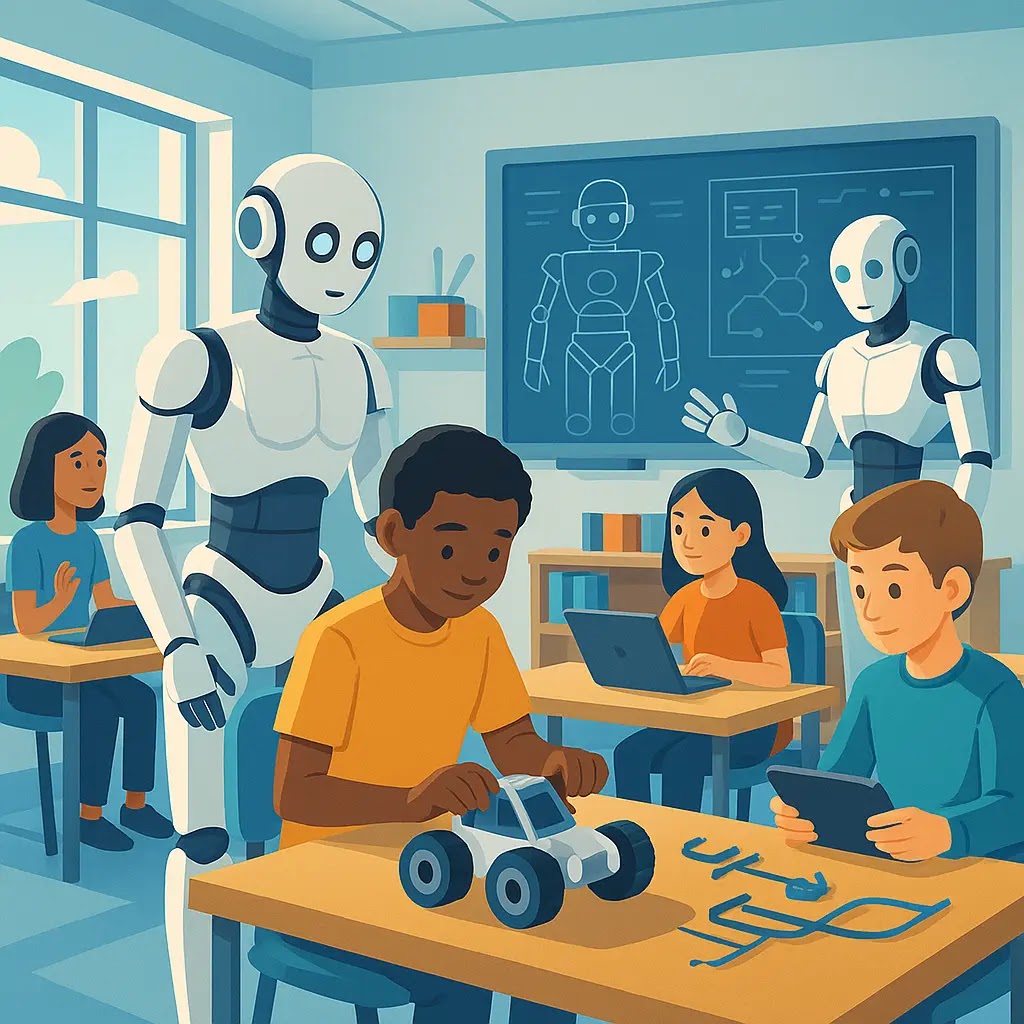
Robots are no longer only tools of industry: they’re entering classrooms as teaching assistants, tutors and interactive peers. In this piece we explore how robotics is transforming education, what’s driving the change, and what educators and students need to know to stay ahead.
By Stuart Kerr Published 31/10/2025 Updated 31/10/2025
Robotics has long been associated with manufacturing, automation and science-fiction fantasies. But in recent years schools, universities and learning platforms have started to repurpose robots as part of the educational process — changing how students engage, how teachers teach, and how curricula evolve. From early-childhood coding bots to humanoid tutors, the rise of robotics in the classroom is compelling educators to rethink one of society’s oldest structures. One earlier article from our own site, “From Cradle to Care Home,” examined how personal robots are moving into care settings — but the classroom is now becoming ground zero for this shift.
The convergence of cheaper sensors, smarter algorithms and greater connectivity means robots are now capable of interacting meaningfully with students. For example, a piece by TechCrunch explores whether robots can find a home in the classroom, showing how project-based learning comes alive when learners engage with machines. TechCrunch Beyond teaching code, robotics supports critical thinking, collaboration and creativity — exactly what the modern learner needs.
In practice, robotics in education is taking at least three major forms. First, programmable robot kits allow students to build, program and test robots, blending mechanics, computing and design into one experience. A TechCrunch article on kits married with live teaching demonstrated this in action. TechCrunch Second, social or companion robots act like tutors or peer-assistants, offering personalised support and engagement. Third, telepresence and hybrid models are enabling remote or underserved learners to join classroom activities via robots, helping bridge access gaps.
The adoption of robotics brings several benefits: higher student engagement through interactive tasks, interdisciplinary learning linking coding with design and engineering, and potential for personalised learning paths as robots adapt to students’ pace and style. Research conducted by the International Telecommunication Union shows that robotics in classrooms can enhance creative and critical thinking while also helping scaffold social skills. AI for Good However, the benefits depend on meaningful integration — robots must be aligned with curricula, supported by teacher training and accessible across diverse school settings.
However, robotics in education is not a panacea. Hardware costs and infrastructure remain significant barriers. Teachers may lack the training or time to integrate robots effectively. There is a real risk of treating robotics as a novelty instead of a pedagogical tool. Moreover, equity issues abound: if only well-funded schools can afford robots, the gap widens. Ethical questions also arise — whenever robots interact with children, issues of data privacy, transparency of algorithms and the nature of human-robot interaction must be addressed.
For educators, the best approach is to start small: pilot a robotics kit, integrate it into an existing lesson, provide professional development for teachers and monitor how learning outcomes shift. For students, robotics shouldn’t just be seen as playing with machines; it’s a tool to build future-ready skills: problem-solving, collaboration, coding and creativity. Institutions must ensure equitable access, plan for long-term integration and align robotics with both pedagogy and technology strategy.
Looking ahead, robotics in education is poised to evolve into three major directions. One, AI-powered tutor robots will adapt in real time to student behaviour. Two, teacher-robot teaming will become common, with robots handling routine tasks while educators focus on higher-order skills. Three, scalable low-cost robotics systems will make robotics accessible to more classes globally. But technology alone isn’t enough — success depends on integration into curricula, teacher readiness and ethical frameworks.
The arrival of robotics into education is more than a technological trend: it is a shift in how we conceive learning, teaching and classroom interaction. By embracing robotics thoughtfully, educators can unlock deeper engagement, richer learning experiences and new pathways for student skills development. But the key is not the robot itself — it’s how it is integrated, supported and aligned with pedagogy. The classrooms of tomorrow may look different, but the goal remains timeless: helping students learn, think and grow.
About the Author
Stuart Kerr, Technology Correspondent
https://liveaiwire.com/p/to-liveaiwire-where-artificial.html