
Artists
have always been among the first to sense and respond to the social
consequences of new technologies, and AI is no exception. Across the world, a
new wave of creative activists is using artificial intelligence both as a
subject and as a medium, exposing its biases, exploiting its c
By Stuart Kerr, Technology Correspondent, LiveAIWire
AI medical diagnosis went from novelty to routine in roughly two years. According to ECRI, the nonprofit patient safety organization, a survey of nearly 1,200 physicians found that 66% reported using AI in 2024, up from 38% in 2023. Over that same window, ECRI also cites research showing that tested machine learning models failed to recognize 66% of critical or deteriorating conditions in synthesized clinical cases, and that popular generative AI tools saw their diagnostic accuracy drop significantly when prompts came from open-ended patient conversations rather than textbook-style symptom descriptions.
Those two facts sitting side by side are why ECRI named “Navigating the AI Diagnostic Dilemma” the number one patient safety concern for 2026, the first time AI has topped the list. The dilemma is not whether AI belongs in medicine. The Food and Drug Administration has already authorized more than 1,000 AI-enabled medical devices, most of them in radiology, cardiology, and neurology.
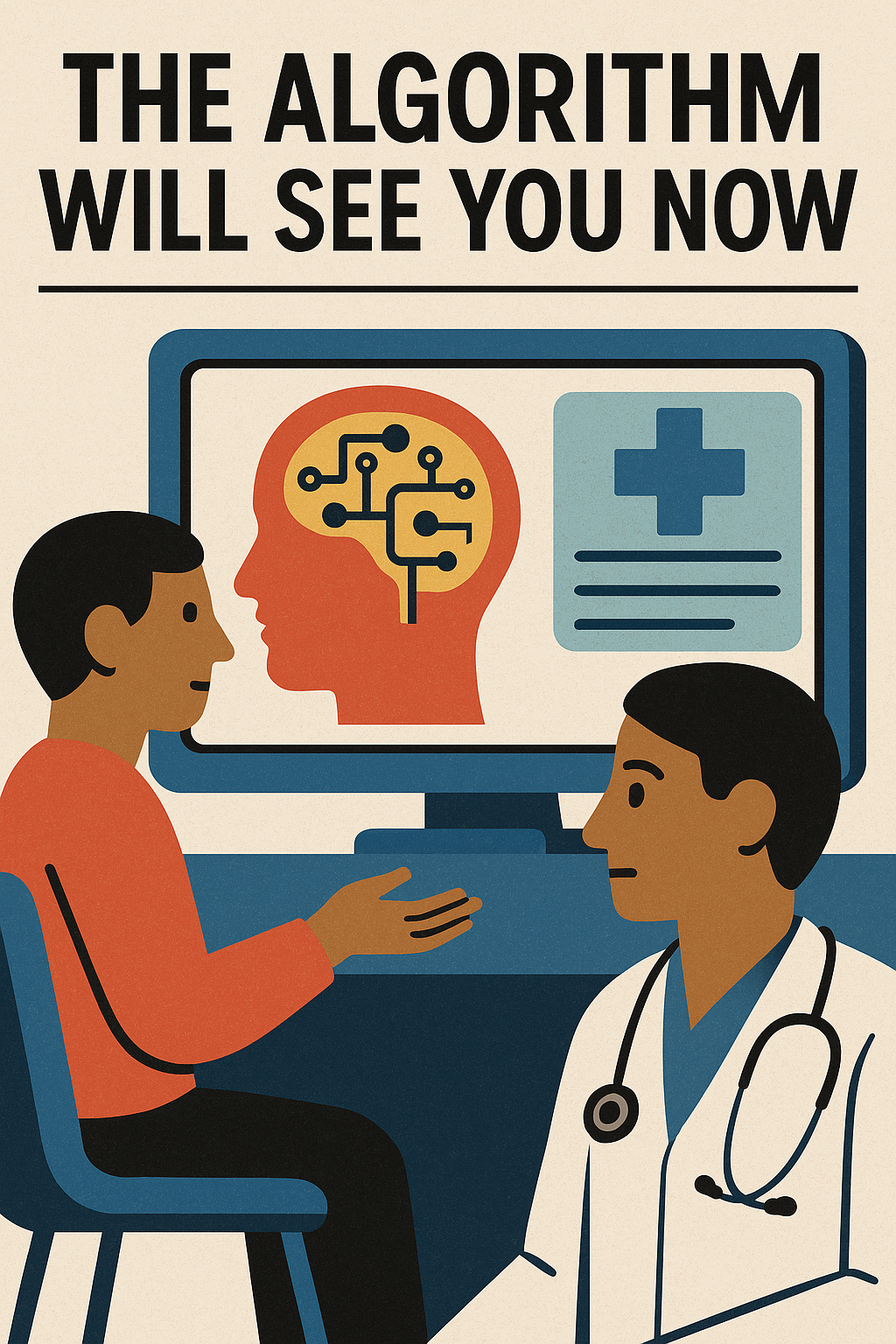
The dilemma is that the AI running in a validated diagnostic device and the AI a patient asks about a symptom at 2 a.m. are not the same technology, even though both now answer to the phrase “the algorithm will see you now.”
Table of Contents
AI Medical Diagnosis: Where the Evidence Is Strongest
LiveAIWire’s earlier reporting on AI in healthcare found that diagnostic tools have the strongest evidence base of any medical AI category, and the newest devices bear that out. An FDA-cleared foundation model powering body CT triage across 14 conditions reported mean sensitivity of 97% and mean specificity of 98% in its pivotal study. A separate 2025 prospective multicenter study of AI-assisted radiologists detecting intracerebral hemorrhage in emergency settings reported 98.91% sensitivity and 99.83% specificity.
Research on AI-human collaboration in radiology has found reading times fall by roughly 27% while sensitivity rises to about 1.12 times human-alone performance, largely because the AI flags time-sensitive findings like hemorrhage, aortic dissection, and pulmonary embolism and pushes them to the top of a radiologist’s queue. The FDA’s own AI-enabled device list, updated continuously, shows why radiology dominates this picture: tools from companies including Aidoc, Lunit, and the major imaging manufacturers are being cleared at a pace of dozens per month, most for narrow, well-defined tasks like flagging a pneumothorax or a suspicious lung nodule rather than replacing a radiologist’s overall read.
That evidence base carries a caveat worth taking seriously. A 2025 systematic analysis of 347 medical imaging AI papers found that more than 80% claimed superiority over clinicians without proper statistical significance testing to back the claim. The devices with genuinely strong, prospectively validated evidence exist and are already saving time and catching findings a tired radiologist might miss late in a shift. They are also a minority of the AI products marketed to health systems, and the marketing rarely distinguishes between the two.
What This Means for You
If a doctor tells you an AI tool flagged something on your scan, that is generally good news: the devices with FDA clearance for this kind of triage work have real prospective evidence behind them, and they exist specifically to catch what a human might miss under time pressure. If you are instead describing symptoms to a general-purpose chatbot at home, treat its answer as a starting point for a conversation with a clinician, not a diagnosis, since accuracy measurably declines once the input shifts from a tidy textbook description to the messy way real people describe how they feel.
Asking your provider directly whether AI played a role in your diagnosis or treatment plan is a reasonable question, and one more patients are starting to ask.
The Automation Bias Problem Physicians Can’t Shake
ECRI’s central worry is not that AI diagnostic tools perform badly. Many perform well. The worry is what happens to human judgment once a confident-sounding AI output enters the room. Research from King’s College London, cited in LiveAIWire’s earlier healthcare coverage, found that clinicians shown AI risk scores for patient deterioration adjusted their own assessments toward the AI’s output even when the AI was demonstrably wrong. That pattern, automation bias, is precisely why ECRI is telling health systems to treat AI as a supplement to clinical judgment rather than a replacement for it, and why the physician-use jump from 38% to 66% in a single year has safety officials more concerned rather than less.
LiveAIWire’s earlier reporting on bias in AI systems found that models trained primarily on structured, well-documented data tend to underperform once real-world inputs get messier and more varied, a pattern that lines up with ECRI’s finding that generative diagnostic tools lose accuracy on open-ended patient conversations. The tools are not becoming less capable in those moments. They are simply operating outside the narrow band of clean, textbook-style input their training most closely resembles, which is exactly the situation a walk-in patient describing a vague, evolving symptom actually presents.
When Patients Ask the Algorithm First
Patients are not waiting for hospitals to sort this out. A Pew Research Center survey of 5,111 US adults, conducted in October 2025 and published in April 2026, found that 22% of Americans get health information from AI chatbots at least sometimes, compared with 85% who turn to health care providers. The gap in trust is just as wide as the gap in usage: about 65% of people who get information from providers call it highly accurate, while views of AI chatbot accuracy are far more mixed, with most users landing on “somewhat accurate” rather than a confident endorsement.
LiveAIWire’s earlier coverage of patients using generative AI found a related but distinct trend: nearly a third of patients now use AI-powered search to find a doctor in the first place, filtering by location, specialty, and insurance before ever describing a symptom to anyone, human or otherwise. Put together, these two patterns describe a health care journey where AI now sits at both the entry point, helping people find a provider, and increasingly at the point where people first try to understand what might be wrong, well before a clinician is involved at all.
Diagnosis by AI is not limited to physical symptoms, either. LiveAIWire’s earlier reporting on AI mental health detection found that a speech-based AI model outperformed the standard PHQ-9 clinical questionnaire for identifying moderate to severe depression in a primary care setting, with sensitivity and specificity above 80%, according to a 2024 study published in The Lancet Digital Health. That kind of passive, voice-based screening could help close a treatment gap where most of the roughly 280 million people with depression worldwide never receive a diagnosis, though the same caveats about performance across languages and cultural contexts that apply to text-based AI medical diagnosis apply here too.
AI Freeing Physicians, in Theory
Mark Daly, chief technology officer of Digital Diagnostics, whose company holds the first FDA clearance for an autonomous AI diagnostic tool, frames the appeal in practical terms. Speaking to Medical Economics, Daly said the goal is “instead of having physicians wasting their time on activities that could be automated,” letting clinicians “work at the top of their license” and spend more time in meaningful encounters with patients rather than routine sorting exercises. That framing, AI absorbing repetitive triage so physicians can spend their attention where judgment actually matters, is the strongest case for AI medical diagnosis, and it is a case increasingly borne out by the sensitivity and specificity figures coming out of FDA-cleared devices.
Autonomous, in Digital Diagnostics’ case, means the device can render a diagnostic decision without a clinician reviewing the image first, a narrower and more tightly scoped category than most AI tools on the FDA’s list, which are designed to assist rather than replace a human reader. That distinction matters for how much trust a given tool deserves. A device cleared to operate autonomously has cleared a materially higher evidentiary bar than one cleared as a clinical decision aid, and conflating the two, treating every “FDA-cleared” claim as equivalent, is part of what makes it hard for physicians and patients alike to calibrate how much confidence a given AI output actually warrants.
Who’s Liable When AI Medical Diagnosis Gets It Wrong
The legal system has not caught up with any of this. Deepika Srivastava, chief operating officer at The Doctors Company, a leading malpractice insurer, told Medical Economics that as of late 2025 there had been no documented US malpractice case where AI was central to the claim, even as adoption grows far faster than legal frameworks. She described physicians as facing “a balancing act,” where not using AI could be seen as negligent and relying on it too heavily could be considered careless.
Richard Anderson, chairman and chief executive of The Doctors Company and TDC Group, described a sharper version of the same bind: “If AI makes a recommendation that’s different than the standard of care, and the doctor follows it, and the outcome is actually adverse, then, by definition, the doctor has violated the standard of care.” Anderson expects that paradox to slow AI adoption in medicine even as more than 1,000 FDA-validated tools become available, because physicians have limited practical ability to evaluate which of those tools are reliable before the outcome of using one is already known.
Some clarity is starting to arrive through disclosure requirements rather than court rulings. California’s Assembly Bill 2013, which took effect on 1 January 2026, requires disclosures about the training data and use cases behind AI tools used in health care, and legal analysts expect other states to use it as a template. LiveAIWire’s earlier reporting on AI hallucinations in legal filings found a similar pattern playing out in law: the technology outpaced professional accountability rules first, and disclosure and verification requirements followed only once the harm from unchecked AI output became impossible to ignore.
Where This Leaves Patients and Doctors
The FDA-cleared devices with prospective validation, the ones catching hemorrhages and flagging lung nodules with sensitivity above 97%, represent AI medical diagnosis at its most defensible. The general-purpose chatbot a worried patient consults at midnight, and the automation bias that can creep into a rushed clinical shift even with a validated tool, represent the same technology at its most uncertain.
ECRI’s 2026 ranking and the 66% physician adoption figure both point to the same conclusion: the tools are arriving in clinical practice faster than the evidence, the training, and the liability rules meant to govern them. Until that gap closes, the most useful question a patient or a physician can ask is not whether the algorithm is right, but how it was validated, and what happens if it turns out to be wrong.
About the Author
Stuart Kerr is Technology Correspondent at LiveAIWire, covering artificial intelligence, emerging technology, and their impact on business, society, and everyday life. LiveAIWire publishes original AI journalism every weekday at liveaiwire.com.
apabilities,
and building counter-narratives to the techno-optimist consensus dominating
public AI discourse. This is art that does not merely comment on AI; it
intervenes directly in the systems and power structures that AI is
creating.
The relationship between art and technology has never been simple.
Technology expands the range of what artists can express and the audiences
they can reach; it also creates new forms of dependency, new vectors of
commodification, and new mechanisms of censorship and control. AI intensifies
all of these dynamics simultaneously, making the current moment unusually
rich and unusually fraught for artists working at its intersection. The
artists responding most forcefully are those who refuse to treat the
technology as neutral.
Art as AI Audit
Some of the most politically significant AI art functions as a
form of audit, using creative means to expose algorithmic systems that
operate without adequate public scrutiny. Artist and researcher Joy
Buolamwini’s work on facial recognition bias began as an artistic exploration
and became a foundational academic study. Her Algorithmic Justice League has
used performance, installation, and advocacy to build public understanding of
AI discrimination that technical papers alone could not achieve. The
accessibility of art as a medium has brought these findings to audiences who
would never read an academic journal.
Refik Anadol’s large-scale AI data sculptures transform the
outputs of machine learning systems into immersive visual experiences that
make the scale and texture of data processing physically perceptible. His
work raises questions about what AI sees, what it misses, and whose
experiences are represented in the vast datasets on which these systems are
trained. The aesthetic experience makes these questions accessible to
audiences who would not engage with them in a policy document, performing a
genuine function of democratic communication.
Artists working in the tradition of institutional critique have
turned their attention to cultural institutions now licensing their
collections to train AI models. Legal challenges, public protests, and
creative interventions at institutions including the British Museum, the
Getty, and major auction houses have forced conversations about intellectual
property, consent, and the cultural economics of AI training data that were
previously confined to specialist legal and policy circles. The Creative Commons
organisation has become an important interlocutor in these debates, working
to develop licensing frameworks that protect creators while enabling
beneficial AI development.
Deepfakes and Counter-Narratives
Several artists have deliberately deployed synthetic media
technologies to create counter-narratives to dominant political and corporate
power. Bill Posters and Daniel Howe’s project featuring synthetic videos of
world leaders and corporate executives articulating the actual consequences
of their policies generated significant public debate about the ethics of
deepfake art alongside its politics. Stephanie Dinkins creates AI systems
trained on Black oral history, deliberately building counter-archives
challenging the demographic imbalances of mainstream AI training
datasets.
These artists navigate a genuine ethical complexity. The same
synthetic media technologies used to expose power can be misused to harass
individuals, suppress democracy, and spread disinformation. The distinction
between deepfakes as art and deepfakes as disinformation is not always clear
to audiences, and the potential for creative works to be decontextualised and
misused is real. Artists working in this space are increasingly developing
explicit ethical frameworks for their practice that address these concerns
directly rather than leaving them unacknowledged.
AI Tools in the Hands of Activists
Beyond critique, activists are using AI tools instrumentally to
amplify causes that mainstream media under-covers. Environmental activists
have used AI satellite image analysis to document deforestation and illegal
dumping at scales that make the evidence difficult to dismiss. Human rights
organisations use AI language tools to process testimony in languages that
their staff do not speak, enabling documentation of abuses that would
otherwise go unrecorded. Journalists in authoritarian contexts have used AI
to anonymise sources and protect sensitive communications from
surveillance.
The WITNESS
organisation, which supports human rights video documentation, has
developed AI tools specifically designed for activist and journalist use that
build in privacy protections absent from commercial equivalents. Their work
demonstrates that the design of AI tools encodes values, and that building
tools for marginalised communities requires explicitly centring their needs
rather than adapting tools built for commercial contexts.
What This Means for You
The AI art and activism landscape is one of the spaces where the
social consequences of AI are being most honestly examined and most
creatively contested. If the dominant narrative about AI is written by the
companies that build it, the counter-narrative is being written partly by
artists who have nothing to sell and everything to say. Engaging with this
work, following artists doing genuine intellectual and political labour at
the AI frontier, supporting institutions giving them platforms, and paying
attention to the questions they raise, is one of the most accessible ways for
non-specialists to develop a more nuanced relationship with a technology
reshaping every aspect of contemporary life.
The commercialisation of AI art tools is creating new
tensions within the activist art community. Platforms including Midjourney
and DALL-E are built by companies with commercial interests that may not
align with the values of artists using them for critical work. When an
activist artist uses a commercial AI tool to critique the AI industry, the
critique is partly undercut by its dependence on that industry’s
infrastructure. Some artists are responding by building their own open-source
tools, contributing to projects like Stable Diffusion, or working with
academic researchers to develop AI systems whose architecture and training
data are transparent and community-controlled. The politics of tool choice
within activist AI art practice is itself a form of political statement about
what kinds of AI development communities want to support.
The relationship between activist AI art and academic AI research
is becoming increasingly productive. Artists who develop technically
sophisticated critical perspectives on AI systems are influencing how
researchers frame questions about fairness, accountability, and transparency.
The Algorithmic Justice League’s work has directly shaped the framing of bias
research in facial recognition. Stephanie Dinkins’ work on AI and Black oral
history has contributed to debates about whose knowledge counts in AI
training datasets. This cross-pollination between artistic and academic
communities represents one of the more encouraging dynamics in the broader AI
ethics landscape, creating feedback loops between cultural critique and
technical practice that neither community could generate
alone.
Art cannot solve the governance challenges that AI poses, but it
can make those challenges visible in ways that provoke the public
conversation governance requires. The contribution of activist artists to the
AI accountability movement is difficult to quantify but real. Several of the
policy developments most consequential for AI governance, including the EU AI
Act provisions on biometric surveillance and the US executive order on AI
safety, were shaped in part by public pressure that activist art helped
generate. The translation from aesthetic provocation to policy change is slow
and indirect, but it is a real pathway that the history of social movements
consistently validates in ways that provoke the public conversation
governance requires. For related coverage of how AI is reshaping culture and
creative industries, see our analysis of AI
in fashion design and who
the AI creative economy serves.
About the
Author
Stuart Kerr is a technology correspondent at LiveAIWire, covering
artificial intelligence, digital innovation, and the social impact of
emerging technologies. Follow LiveAIWire for daily analysis at liveaiwire.com.