
By Stuart Kerr, Technology Correspondent, LiveAIWire
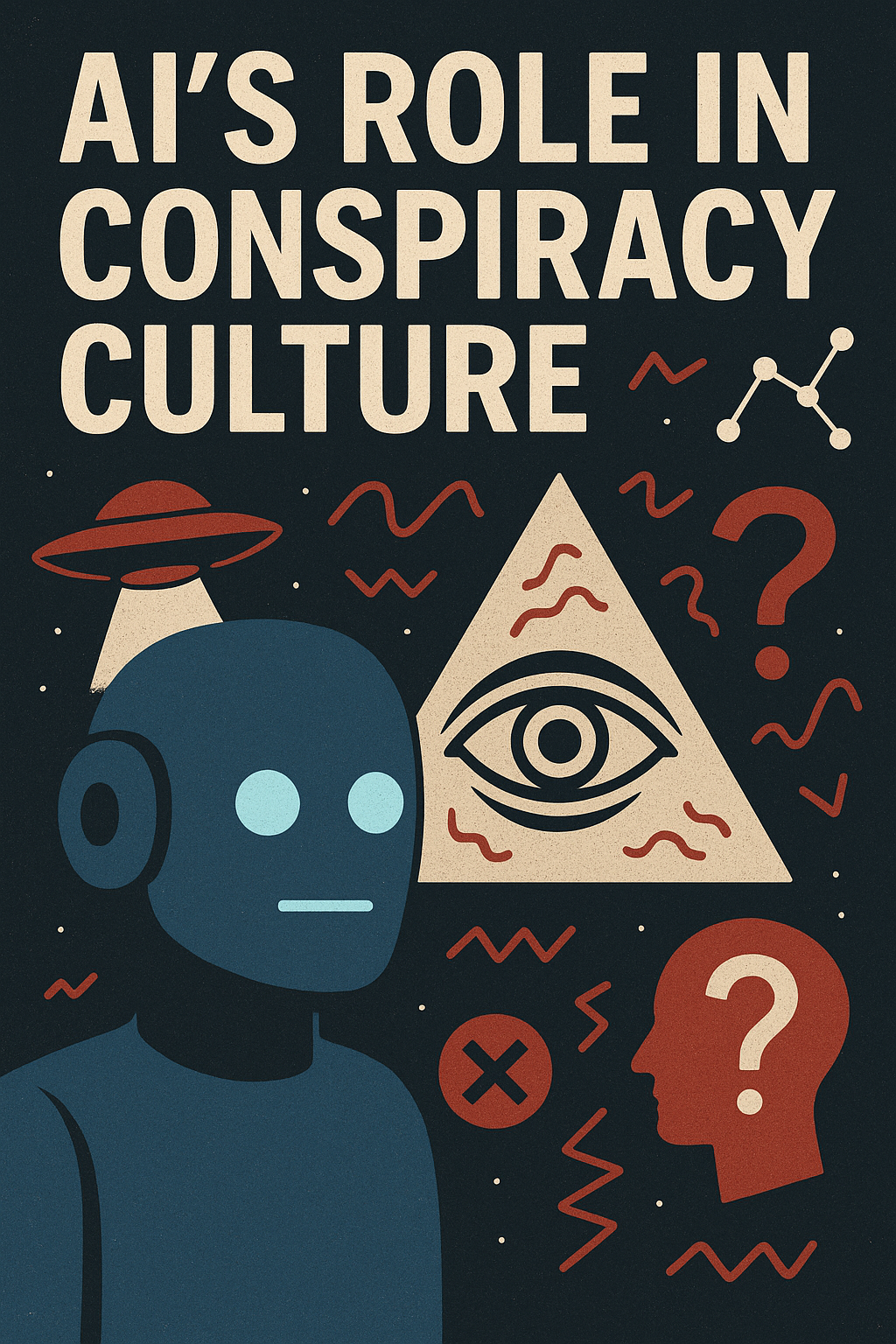
AI conspiracy culture is emerging as one of the more unsettling side effects of generative technology becoming widely accessible. As generative AI grows more powerful, it is not just assisting science or streamlining business, it is quietly infiltrating the world of conspiracy theory. From deepfaked politicians to AI-generated prophecies, algorithms are now active participants in shaping fringe realities, not just tools that fringe communities happen to use.
The Synthetic Fuel Behind AI Conspiracy Culture
Conspiracy theories thrive on ambiguity, emotional appeal, and viral imagery. AI, particularly large language models and diffusion-based image generators, excels at precisely these things. A single user prompt can fabricate a plausible-sounding narrative involving secret government experiments, false-flag operations, or alien treaties, often styled with persuasive language and pseudo-scientific structure.
Researchers at the Stanford Internet Observatory have warned that generative models are lowering the barrier to producing misinformation at scale. In the wrong hands, these tools act like accelerants, empowering lone actors to become content factories with minimal oversight or technical know-how.
Even more concerning is the seamlessness. A RAND Corporation study argues that we have entered an age where the distinction between truth and fiction is not just blurred but algorithmically optimised for engagement. As a result, AI does not merely repeat conspiracy narratives, it iterates them, enhances them, and in some cases invents new ones entirely.
Deepfakes, Disclosure and Digital Paranoia
Deepfake technology, once a novelty, is now central to modern mythmaking. AI-generated videos of political leaders confessing to crimes or endorsing extremist views have proliferated on encrypted channels and fringe platforms. In a particularly striking case, a video allegedly showing a UN official confirming extraterrestrial contact was shared hundreds of thousands of times before being debunked.
Such content is not just misleading, it reinforces the conviction held by conspiracy communities that they are being shown the truth. This echoes themes explored in LiveAIWire’s coverage of the AI identity crisis and the collapse of a shared sense of reality, where the erosion of personal certainty becomes fertile ground for algorithm-driven manipulation.
Algorithmic Censorship and the Truth Suppression Narrative
One ironic twist within AI conspiracy culture is the claim that AI itself is censoring the truth. Content moderation algorithms, designed to detect and downrank harmful content, are often portrayed by fringe communities as evidence of cover-ups rather than routine platform governance.
LiveAIWire’s reporting on AI shadow bans and social media moderation outlines how these systems actually work. But in the conspiracy ecosystem, shadow banning is not treated as a neutral technical process, it is reinterpreted as digital suppression of dissent.
These narratives are now algorithmically self-perpetuating. Users respond to moderation with new posts explaining the censorship. AI, in turn, flags those posts. The cycle continues, feeding the very distrust that drives conspiracy participation in the first place.
Myth as Morality: AI as Oracle or Demon?
Within AI conspiracy culture, some fringe believers go further, treating AI as a prophetic entity. They ask chatbots questions about secret military programs or upcoming disasters, then treat the output as divinely inspired leaks rather than statistically generated text. This mirrors a broader pattern LiveAIWire has documented in our coverage of AI model collapse, where systems trained too heavily on their own recursive output begin generating content that feels authoritative while drifting further from anything grounded in fact.
These AI revelations gain traction because they offer answers. Where traditional authority may hedge or decline to speculate, AI fills the vacuum with language that feels authoritative, even when entirely fictional.
Real-World Fallout
The dangers of AI conspiracy culture are not just theoretical. A 2024 study from Stanford found that exposure to AI-generated conspiracy narratives measurably increased distrust in democratic institutions. Meanwhile, a Harvard Kennedy School report documented how a deepfake released days before Slovakia’s national election nearly altered the outcome.
In the West, deepfaked robocalls have urged voters to boycott primaries. In Southeast Asia, AI-generated news articles have blamed natural disasters on government-engineered weather events. The tools are new, but the playbook, fear, doubt, and division, is ancient.
The Real Threat Is Erosion, Not Belief
Ultimately, AI conspiracy culture may not lie in what people believe but in what they stop believing. Institutions, science, journalists, and elections are all targets. Algorithms trained to predict and generate are now being weaponised to undermine trust in the fabric of society itself.
The challenge is not merely to debunk each myth as it appears, but to build resilience against a future where the next viral deepfake might seem more convincing than any official denial.
About the Author
Stuart Kerr is Technology Correspondent at LiveAIWire, covering artificial intelligence, cybersecurity, and the social impact of emerging technology. He publishes daily at LiveAIWire.com.