
By Stuart Kerr, Technology Correspondent, LiveAIWire
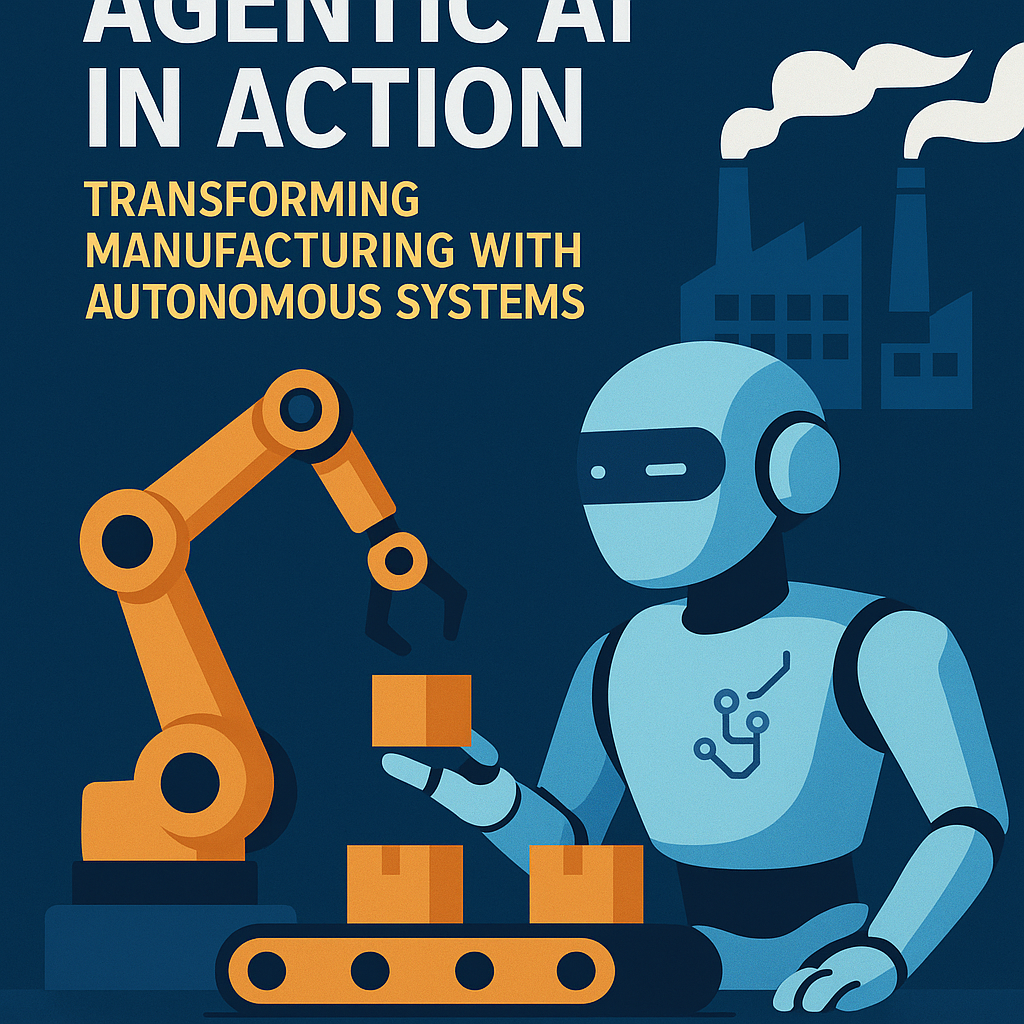
Agentic AI in manufacturing now runs the entire quality inspection process at a Jaguar Land Rover body shop in Solihull, where AI-powered vision systems examine every weld on every vehicle, autonomous agents log defects, generate repair instructions, reroute affected vehicles on the production line, and update supplier quality databases, all without a human reviewer seeing any individual result unless the defect severity exceeds a threshold defined by engineers.
The entire cycle takes under four seconds per vehicle. The human inspectors who previously performed this work have been redeployed to the exception cases the AI flags for human judgement. This is not an experimental deployment. It is current industrial practice, and it is representative of what is happening across advanced manufacturing in the UK and globally, a shift LiveAIWire has also tracked in our coverage of AI construction robots reshaping a different physically demanding industry along similar lines.
Agentic AI in manufacturing differs categorically from the AI tools that dominate public discourse. It does not answer questions or generate text. It plans and executes multi-step processes toward defined goals, monitors its own performance, adapts to changing conditions, and interacts with physical systems through robotics, conveyors, and industrial control infrastructure. The operational environment is the factory floor, not the browser tab, and the consequences of errors are physical and immediate rather than informational and correctable.
Agentic AI in Manufacturing: Quality Control and Inspection
Visual quality inspection is the most widely deployed agentic AI application in manufacturing because its value proposition is unambiguous. Machine vision systems running convolutional neural networks can examine components, welds, surface finishes, and assembly configurations with consistency, speed, and sensitivity that human inspectors cannot match over sustained production shifts. Research from the Make UK manufacturing association found that over 60 percent of UK manufacturers with revenues above 50 million pounds had deployed or were actively piloting AI quality inspection systems by 2024.
What makes these systems agentic rather than simply automated is their capacity to take consequential action on inspection findings rather than simply logging results for human review. A defect detection system that flags a result for a human to act on is an inspection tool. A system that detects a defect, identifies its root cause from production data, generates a corrective action, adjusts upstream process parameters, and communicates with the supplier whose component caused the issue is an agentic system. The latter is where manufacturing AI is increasingly moving.
Predictive Maintenance and Asset Management
Predictive maintenance was one of the earliest and best-evidenced applications of machine learning in manufacturing, and agentic AI in manufacturing is now extending it significantly beyond its original scope. Classic predictive maintenance systems monitor sensor data from equipment and alert human maintenance teams when indicators of impending failure are detected. Agentic predictive maintenance systems go further: they identify the failure, assess its severity and timeline, check parts inventory, generate a work order, schedule the maintenance window to minimise production disruption, order replacement parts if inventory is insufficient, and brief the maintenance team on the specific procedure required.
The productivity gains from agentic AI in manufacturing maintenance are substantial. Siemens, which has deployed agentic maintenance systems across several of its own manufacturing facilities as well as selling them to customers, reports reductions in unplanned downtime of 30 to 50 percent in facilities where the systems have been fully integrated. Unplanned downtime is typically the single most expensive operational disruption in manufacturing, and reductions of this magnitude translate directly into significant profitability improvements.
Supply Chain and Production Planning
Agentic AI is also being deployed in manufacturing supply chain management and production planning with consequences that extend beyond individual factory walls. AI agents that monitor supply chain conditions, including supplier capacity, logistics delays, commodity price movements, and demand signals, can adjust production schedules, renegotiate delivery windows with customers, and resequence manufacturing priorities in ways that maintain output targets under conditions that would previously have required days of manual replanning. This same real-time autonomous decision-making at the point of operation echoes what LiveAIWire has documented in our coverage of agentic AI and edge computing, where similar systems now manage wind turbines and hospital monitoring devices in real time without cloud connectivity.
The Workforce Question
The labour implications of agentic AI in manufacturing are real and require honest acknowledgment alongside the productivity narrative. The roles most directly displaced are those involving routine monitoring, inspection, and logistics coordination that agentic systems now perform autonomously. Make UK’s workforce survey data suggests that manufacturing AI is simultaneously creating demand for higher-skill roles in AI system management, data science, and advanced engineering while reducing demand for the entry-level and semi-skilled roles that have historically provided pathways into manufacturing employment.
Managing this transition equitably, through investment in workforce retraining and skills development that the productivity gains from AI could fund, is a policy and corporate responsibility challenge that the manufacturing sector has not yet addressed at adequate scale, a pattern that echoes LiveAIWire’s broader coverage of the AI automation divide. The Automotive Transformation Fund and the Made Smarter programme both provide some support for AI adoption in UK manufacturing, but neither is primarily designed to manage the workforce consequences of that adoption.
What Better Policy Would Look Like
For agentic AI in manufacturing to benefit workers as well as shareholders, a dedicated manufacturing AI transition fund that links productivity support to workforce investment requirements, conditioning access to technology adoption grants on commitments to retrain displaced workers at living wage replacement rates, would better align the incentives of employers, workers, and government. Several European countries including Germany and Denmark have implemented similar conditionality frameworks in their industrial AI support programmes, with early evidence that the approach produces better workforce outcomes without significantly reducing adoption rates.
What This Means for You
The goods you buy are increasingly manufactured with significant agentic AI involved in their production process. The reliability improvements and cost reductions that agentic quality control and maintenance systems deliver show up, eventually, in product quality and price. The jobs displaced by agentic manufacturing systems affect communities with concentrations of manufacturing employment in ways that are not adequately captured by aggregate productivity statistics, and both consequences deserve attention from policymakers who are currently more focused on the productivity opportunity than the workforce transition challenge.
About the Author
Stuart Kerr is Technology Correspondent at LiveAIWire, covering artificial intelligence, cybersecurity, and the social impact of emerging technology. He publishes daily at LiveAIWire.com.