
By Stuart Kerr, Technology Correspondent, LiveAIWire
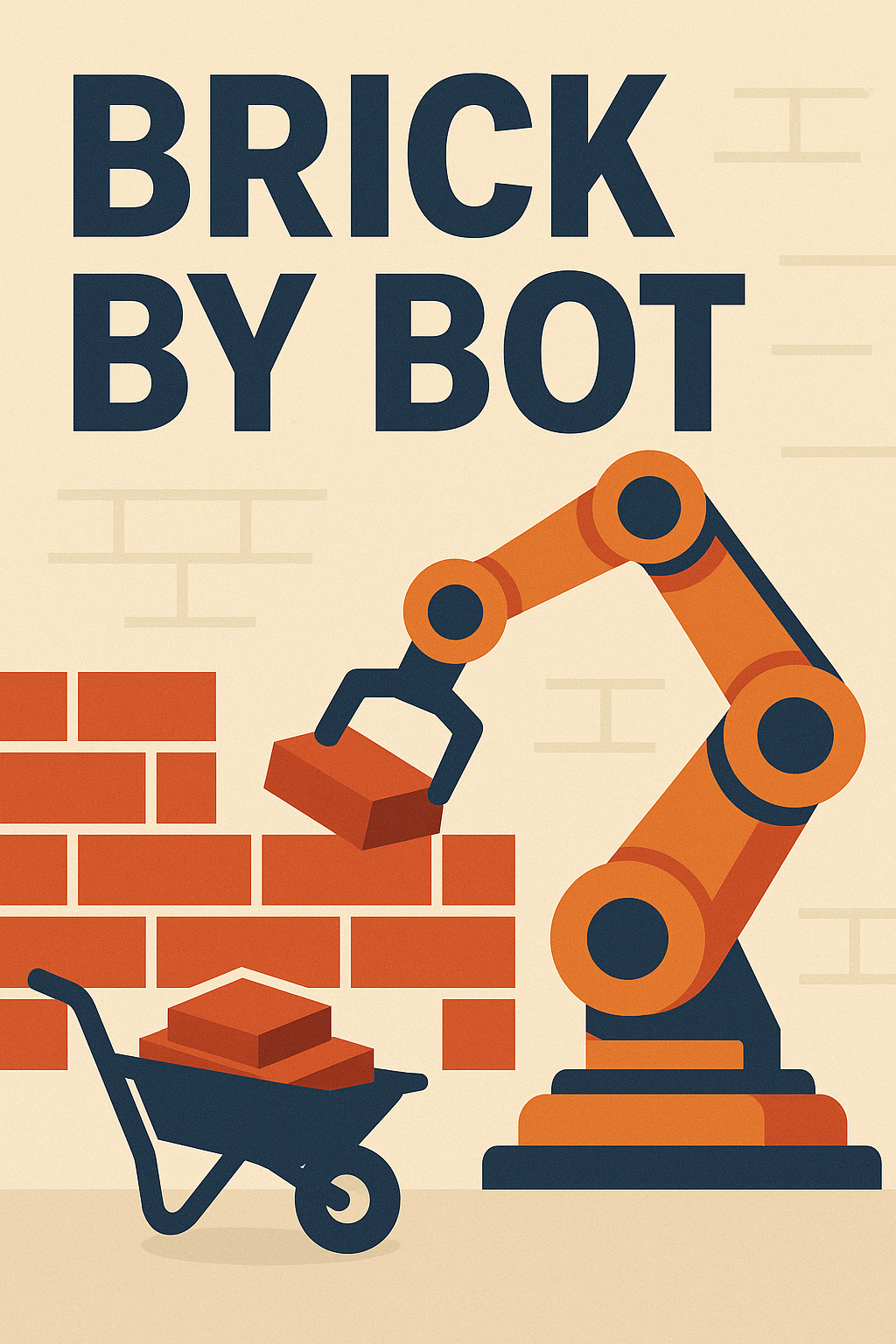
AI construction robots can lay a thousand bricks per hour without fatigue, misalignment errors, or scaffold falls. The SAM100, developed by Construction Robotics in the United States, has been operating on commercial construction sites since 2015, working alongside human bricklayers who manage material supply and quality checking while the robot handles the physical repetition. That early deployment was a proof of concept. What is happening now on construction sites across Japan, Australia, and parts of Europe is a systematic integration of AI construction robots that is beginning to change not just how buildings are built but how they are designed, scheduled, and managed.
Construction is one of the least digitised major industries in the global economy. Productivity growth has lagged virtually every other sector for decades, and the industry’s safety record remains poor relative to its economic scale. AI and robotics are being applied to both problems simultaneously, with results that are promising at the pilot stage and challenging to scale in an industry characterised by project-by-project diversity and a supply chain dominated by small and medium enterprises.
AI Construction Robots on the Building Site
The range of robotic systems now operating in construction environments reflects the diversity of construction tasks. Bricklaying, concrete pouring, rebar installation, welding, painting, and floor finishing all have robotic equivalents in commercial operation. Autonomous excavators and grading machines, guided by AI systems trained on site survey data, can prepare ground to specification with a precision that manual operation cannot consistently achieve.
Inspection drones equipped with computer vision systems survey construction progress against design specifications, identifying deviations in real time and flagging them to site managers before they become expensive defects to correct. Exoskeleton systems augmenting the physical capability of human construction workers represent a different model of AI integration, one in which the technology enhances rather than replaces human presence on site. Research from the UK Health and Safety Executive has examined exoskeleton use in construction, identifying meaningful reductions in musculoskeletal strain at the cost of adaptation time and the learning curve required for effective use.
AI in Design and Project Management
AI’s contribution to construction begins before any physical work starts. Generative design tools can produce hundreds of structurally valid building configurations that satisfy a specified brief, optimised across parameters including material use, energy performance, cost, and constructibility. Building Information Modelling, long established in major construction projects, is being enhanced by AI layers that can identify clashes between structural, mechanical, and electrical systems in the virtual model before they manifest as expensive problems on site.
Predictive scheduling tools trained on data from comparable past projects can identify likely delay risks weeks before they materialise, enabling proactive management rather than reactive crisis response. AI design and management tools are becoming standard practice in large commercial and infrastructure projects, and the quality and schedule benefits they deliver at scale are making them increasingly relevant in smaller commercial projects too.
Safety and the Construction Fatality Rate
Construction kills more workers per head than almost any other industry. In the United States, construction accounts for roughly twenty percent of all workplace fatalities despite representing a much smaller share of the workforce. Falls, struck-by incidents, and equipment accidents are the leading causes. AI monitoring systems deployed on construction sites, computer vision cameras that identify unsafe behaviours, proximity sensors that alert workers when heavy machinery is nearby, and wearables that track fatigue and physiological stress, are being evaluated as interventions against this mortality burden.
Early results from AI safety monitoring deployments are encouraging. Sites using computer vision safety monitoring have reported reductions in near-miss incidents. The US Occupational Safety and Health Administration has begun engaging with AI safety monitoring as a supplement to regulatory inspection, acknowledging that algorithmic continuous monitoring can cover ground that an inspection regime operating on annual or biennial cycles cannot.
The Skills Transition and the Workforce
The construction workforce transition driven by AI construction robots is not primarily about job elimination in the short term, the industry has a chronic labour shortage in most developed markets that robots are not yet capable of filling. The near-term challenge is skills transition: the workers most valued on AI-integrated construction sites are those who can operate, supervise, and maintain robotic systems, not those whose value lay in the physical repetition those systems replace.
Retraining a bricklayer to supervise AI construction robots requires a different skills set and a significant learning investment. Most construction employers are not currently providing that training at the scale the transition requires. The broader workforce transition challenge posed by AI automation is particularly acute in construction because the workers most exposed to physical task automation are also those with the fewest formal credentials and the fewest transferable pathways to adjacent roles.
The industry has an opportunity to use AI construction robots to address its safety, productivity, and labour shortage problems simultaneously rather than sequentially. The parallel with robotic deployment in care settings is instructive: technology deployed to augment human workers produces better outcomes than technology deployed primarily to replace them.
Modular Construction and the Financial Divide
The pattern of AI construction robots delivering the largest productivity gains in large, well-resourced operations while smaller contractors struggle mirrors the financial AI divide, where tools that could benefit smaller operators most are least accessible to them. Modular construction and off-site manufacturing represent a further frontier where AI and robotics are changing building economics. Factory-built components produced with robotic precision and AI quality monitoring achieve tolerances that site-based construction rarely matches, though the capital investment required and the cultural shift from a craft model to a manufacturing model make coordination difficult across the industry’s fragmented ownership structure.
The Environmental Case
The environmental dimension of AI-enhanced construction deserves more attention than it typically receives. Buildings account for roughly forty percent of global energy consumption and a comparable share of carbon emissions. AI-optimised design tools that minimise material use, improve thermal performance, and reduce construction waste address one of the largest single contributors to the climate problem. The environmental case for AI construction robots is, in some respects, stronger than the productivity case, and the combination of both makes the investment argument for AI adoption in the sector compelling for developers who take long-term asset performance seriously.
About the Author
Stuart Kerr is Technology Correspondent at LiveAIWire, covering artificial intelligence, cybersecurity, and the social impact of emerging technology. He publishes daily at LiveAIWire.com.