
By
Stuart Kerr, Technology Correspondent,
LiveAIWire
An Avatar Speaks in Parliament
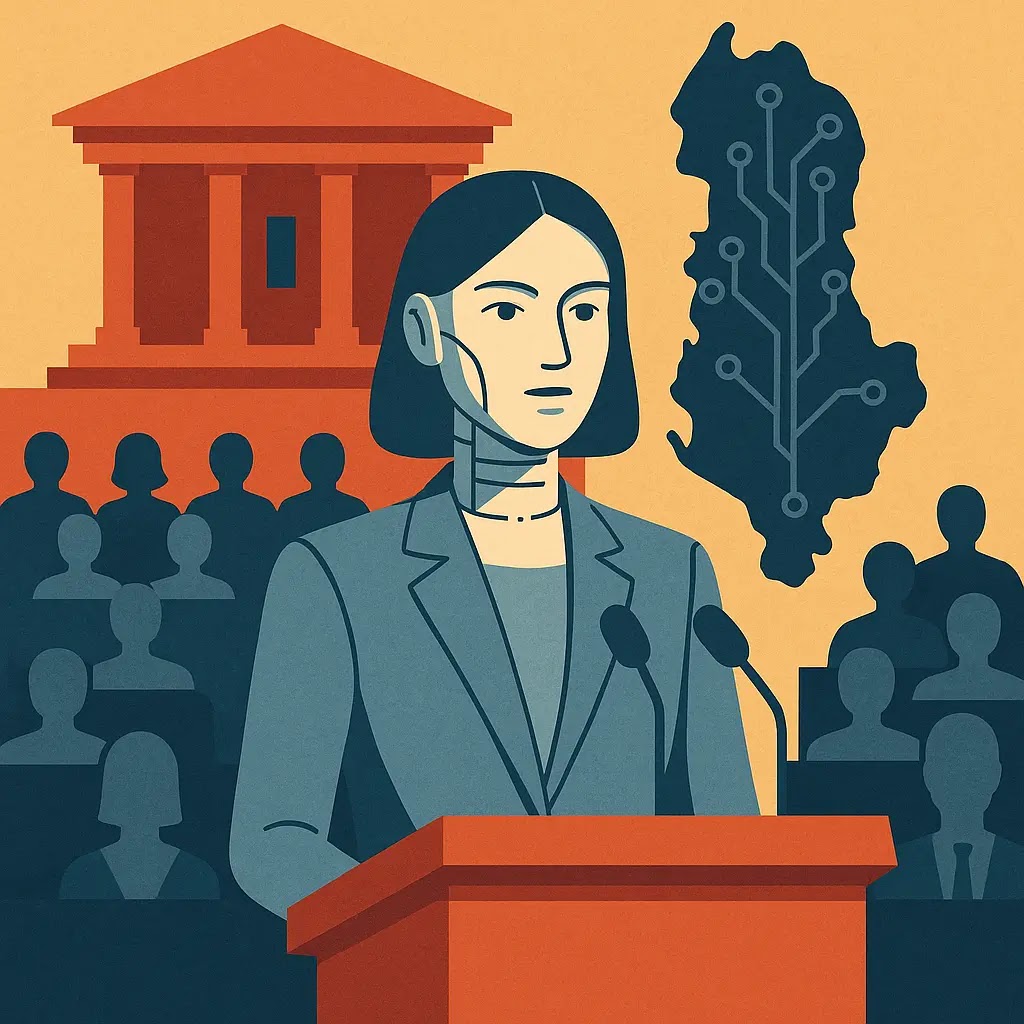
On 18 September 2025, Albania’s prime minister, Edi Rama, introduced Diella, the country’s first AI-generated “minister,” during a three-minute speech delivered via video in parliament. Presented in traditional Albanian dress, Diella declared that she is not there to replace human ministers but to promote transparency and non-discriminatory government services. The avatar promised to tackle public procurement corruption and serve citizens without personal ambition, according to AP News.
What Diella’s Role Really Means
Originally launched as a virtual assistant on the e-Albania platform in January 2025, where she handled a large volume of user requests and digital documents, Diella’s AI minister role is now formal: managing and awarding public tenders. Rama claims this AI appointment will ensure that government contracting becomes “100 percent free of corruption.” But some legal experts question how a non-human, non-citizen entity fits within constitutional norms, as Reuters reported.
Transparency or Symbolism?
Supporters argue that Albania’s AI minister experiment is a bold move toward better governance. In our earlier reporting on how political leaders are using AI, we explored how algorithmic oversight can curb bias and enforce procedural fairness in government decisions. Our piece on whether AI is triggering new kinds of public delusion similarly examined public trust in emerging technologies beyond spectacle. These pieces suggest that citizens may support innovation if it delivers genuine accountability, a claim The Guardian has also scrutinised closely.
Legal and Ethical Crosswinds
The opposition has been vocal: they argue that Diella’s appointment is unconstitutional since ministers must be citizens and human under current law. Human oversight of Diella’s decisions remains poorly defined, raising concerns about bias, lack of accountability, and vulnerability to manipulation. As Sky News reports, lawmakers protested and boycotted the initial vote on the government programme, though the measure ultimately passed.
What’s at Stake for EU Accession
Albania aims to join the European Union by 2030, and advancement on corruption, rule of law, and governance reform are central to that bid. By appointing an AI minister, the government is signalling its commitment to innovation, but also exposing itself to international scrutiny. The Guardian notes that even well-meaning tech can be used for show if not underpinned by legal safeguards and independent oversight.
Risks That Could Undermine the Promise
Diella’s performance depends heavily on how transparent her algorithms are, who programs her, and how her decision logs are audited. Without clear procedures, there’s risk of algorithmic bias, hidden influence, and loss of accountability. Moreover, in a country long challenged by corruption scandals, public scepticism is high, as ABC reporting on public reaction has noted. As some citizens already worry, technology alone cannot resolve deeply rooted structural issues.
What to Watch Over the Next Months
Key markers to follow include whether Diella’s AI minister role becomes subject to legal statutes, whether public tender decisions become traceable and transparent, and whether her appointment sparks similar AI governance experiments in the Balkans or elsewhere. Also crucial will be public sentiment: whether Albanians perceive tangible improvements or only theatre.
About the Author
Stuart Kerr is Technology Correspondent at LiveAIWire, covering artificial intelligence, cybersecurity, and the social impact of emerging technology. He publishes daily at LiveAIWire.com.