
By Stuart Kerr, Technology Correspondent, LiveAIWire
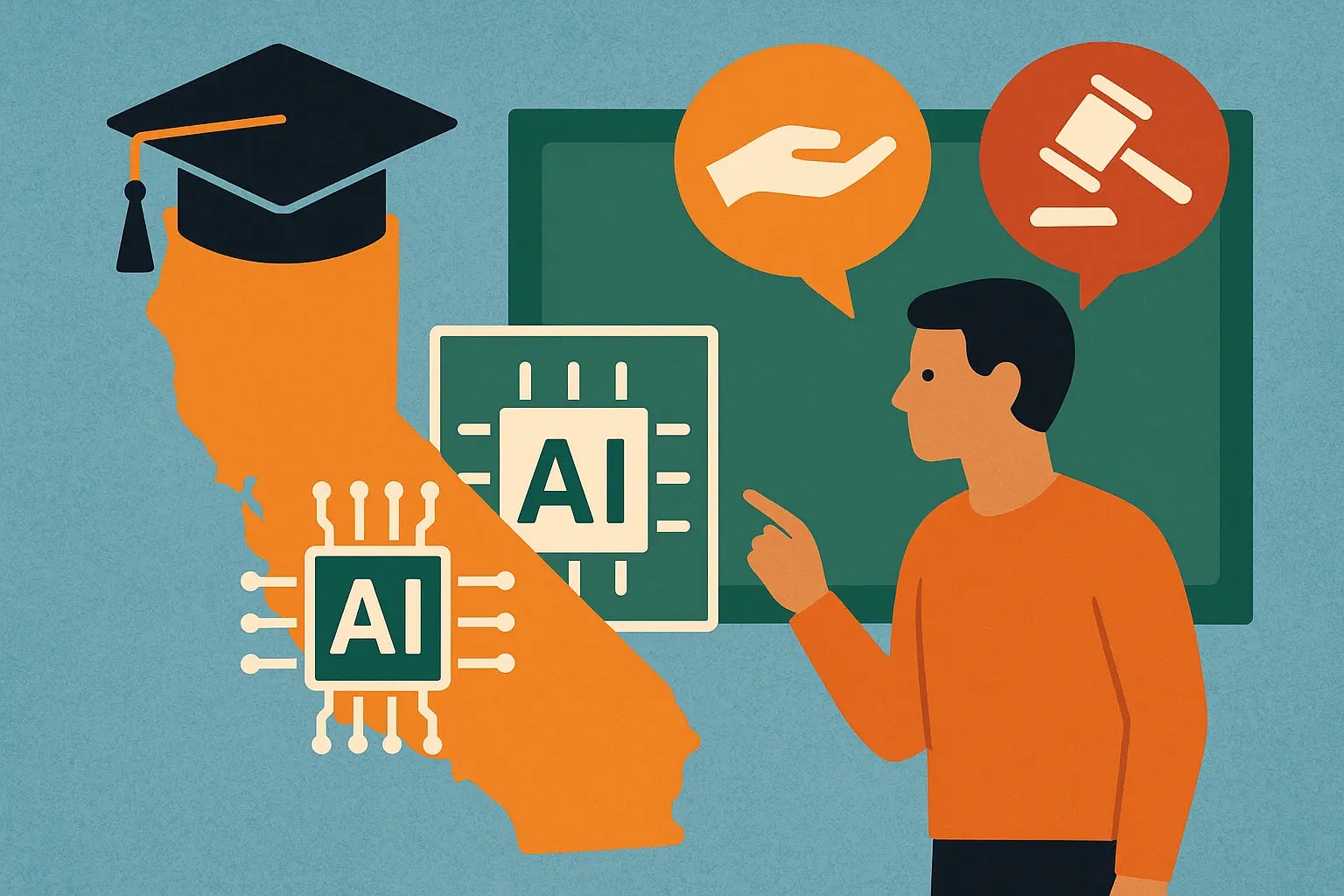
California’s AI education push became concrete on 2 October 2025, when Assembly Bill 2876 took effect, requiring the state’s Instructional Quality Commission to weave AI literacy into math, science, and history-social science curriculum frameworks the next time each is revised. The bill, carried by Assemblymember Marc Berman and passed unanimously in both chambers, defines AI literacy broadly, covering how AI works, its core concepts and applications, and its limitations, ethical issues, and real-world impacts. It is one piece of a much larger legislative push that made 2025 the year California moved from talking about AI in schools to writing it into law.
AB 2876 itself does not mandate new courses. It requires the state’s curriculum-writing body to build AI literacy into frameworks already scheduled for revision, meaning the practical rollout depends heavily on the pace of those existing review cycles. The California Department of Education has since published detailed 2025 guidance for schools, built around a human-centred principle: AI should enhance teaching, not replace the relationship between a student and their teacher.
The Wider Slate of 2025 AI Laws Affecting Schools
AB 2876 was one of at least 17 AI-related bills Governor Gavin Newsom signed in 2025, and several of the others land directly on K-12 classrooms. SB 53, the Transparency in Frontier AI Act, requires developers of large-scale AI models to publish safety protocols and report major incidents. SB 243 sets specific safeguards for AI companion chatbots used by minors, including mandatory disclosure that the user is interacting with AI, crisis-response protocols, and content filtering, with compliance reporting due to the state beginning January 2026. Two related bills, the LEAD for Kids Act and the No Robo Bosses Act, passed the legislature but were vetoed, Newsom citing overly broad language in both cases rather than disagreement with their underlying goals.
What This Means for Your Child’s Classroom
For parents, the most concrete near-term change is transparency rather than restriction. Under California’s existing student data laws, layered onto the new AI guidance, any AI system a school uses must treat student input as part of the educational record, meaning parents and eligible students retain the right to inspect and correct it. Schools are directed to avoid entering personally identifiable student information into open AI systems entirely, reserving that for closed, vetted tools with signed data privacy agreements. If your child’s school introduces an AI companion chatbot or tutoring tool, expect a disclosure that they are talking to AI, not a person, plus documented limits on what topics it will engage with.
Academic Integrity Gets Reframed, Not Just Policed
The state’s guidance explicitly pushes districts away from relying solely on AI-detection tools, which the Department itself describes as often unreliable, and toward clearer classroom norms instead. The recommended approach uses a graduated rubric, from no AI assistance through AI as a full co-creator, with the expectation that students disclose which level applied to a given piece of work. The goal, as stated in the guidance, is treating unauthorised AI use as a violation of honesty and fairness rather than a new, separate category of offence, while giving teachers concrete language to explain what is and is not permitted on a given assignment.
Equity Concerns Are Baked Into the Rollout, Not an Afterthought
A recurring theme across California’s 2025 AI education laws is the risk of a new digital divide opening between well-resourced and under-resourced districts. The state’s guidance calls for targeted investment in broadband and devices specifically so implementation does not become another axis of inequality, and flags that AI tools should expand access for English learners and students with disabilities rather than simply automating existing gaps. Whether that commitment survives contact with individual district budgets is the open question policy experts are watching heading into the 2026 legislative session.
The honest assessment, shared even by advocates pushing for more AI regulation, is that California’s 2025 session produced meaningful groundwork rather than a finished framework. Two significant bills got vetoed for being too broad, several of the laws that did pass rely on future curriculum revision cycles to take practical effect, and enforcement mechanisms for the chatbot safeguards do not fully kick in until 2026 and 2027. For a state that educates more K-12 students than any other in the country, being first to legislate this space carries real weight, but the test now shifts from passing laws to how consistently individual districts actually implement them.
About the Author
Stuart Kerr is Technology Correspondent at LiveAIWire, covering artificial intelligence, emerging technology, and their impact on business, society, and everyday life. LiveAIWire publishes original AI journalism every weekday at liveaiwire.com.