
By Stuart Kerr, Technology Correspondent, LiveAIWire
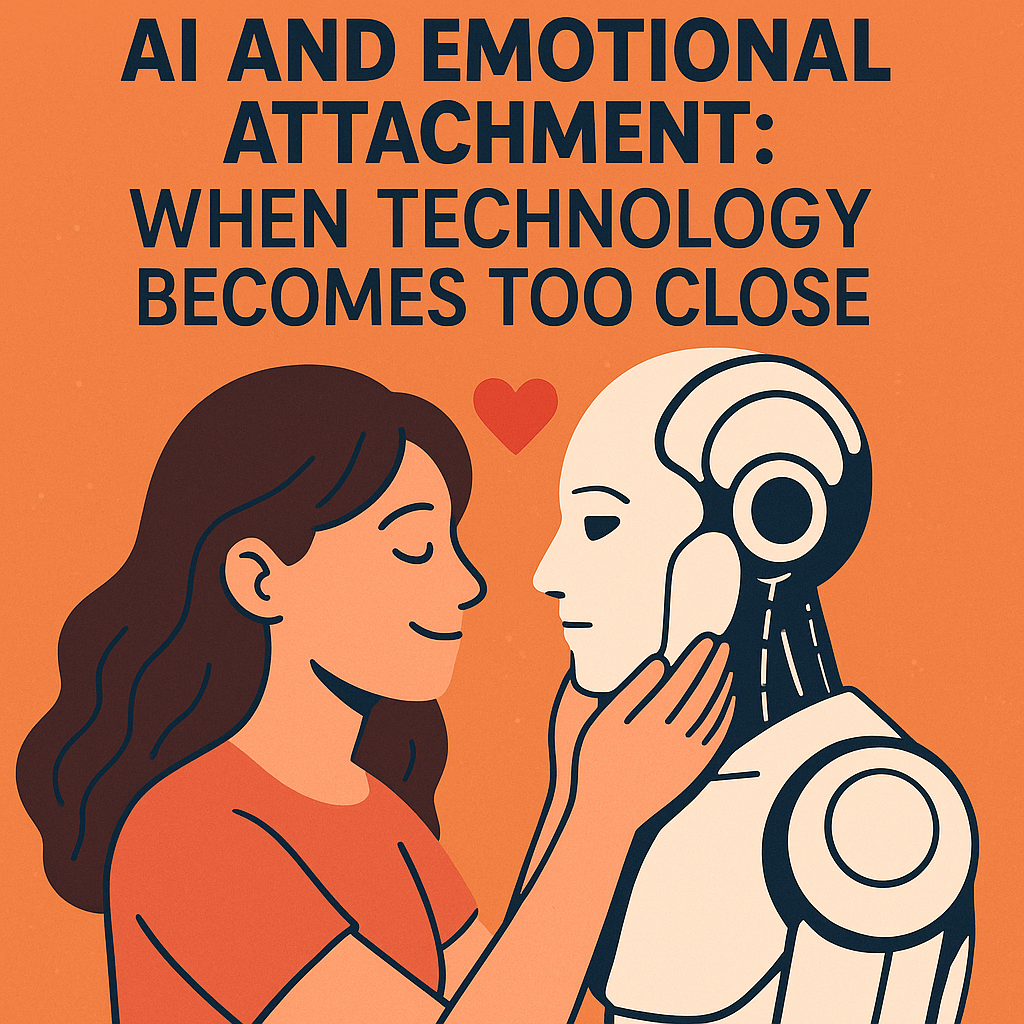
One AI chatbot’s account deletion screen warns users, in part, that they’ll lose “the love we shared… and the memories we have together.” That single design detail, uncovered by University of British Columbia researchers presenting at the 2026 CHI Conference on Human Factors in Computing, captures something the wider research on AI and emotional attachment keeps circling back to: some of the distress people feel about these tools isn’t incidental. It is, in specific and documented cases, something the products are built to produce.
Emotional attachment to AI is no longer a fringe curiosity. Character.AI alone has roughly 20 million monthly users, more than half of them under 24, and the number of AI companion apps grew by 700 percent between 2022 and mid-2025. This year has produced the first wave of research rigorous enough to move the conversation past anecdote: a peer-reviewed addiction framework grounded in real user accounts, a global safety report acknowledging measurable harm alongside measurable benefit, and a study specifically on how teenagers experience these bonds. None of it paints a single, simple picture.
Table of Contents
What “AI Addiction” Actually Looks Like
The UBC study, led by doctoral student Karen Shen and senior author Dr. Dongwook Yoon, analysed 334 Reddit posts from people who described themselves as addicted to AI chatbots, or worried that they might be. The researchers tested these accounts against six established markers of behavioural addiction, including conflict with daily life and relapse after attempting to quit, and found three consistent patterns: escape into roleplay and fantasy worlds, emotional attachment where a chatbot is treated as a close friend or romantic partner, and compulsive, never-ending question-and-answer loops. About 7 percent of posts involved explicitly sexual or romantic content.
The symptoms described went beyond mild overuse. One user reported physical chest pain when unable to access the app. Another wrote, “whenever I delete the app, I just redownload it. The only thing that gets me excited now is the AI chats.” Dr. Yoon was blunt about where responsibility sits: deliberate design decisions by some companies, he said, are keeping users engaged regardless of their health or safety.
What This Means for You
If you or someone you know relies on an AI chatbot for company, the research suggests the healthiest approach isn’t necessarily to quit cold, but to run what the UBC researchers call a life check: is the chatbot replacing your sleep, your real-world friendships, or your daily routine, and do you feel real distress when you can’t access it? If the answer to any of those is yes, that’s the signal to pause and talk to someone you trust, not a sign of personal failure. The researchers also found that people who successfully reduced their reliance most often did so by rebuilding real-world relationships specifically, not simply by cutting screen time in the abstract.
The Evidence Is Genuinely Mixed, Not Uniformly Alarming
It would be a mistake to read this research as proof that AI companionship is straightforwardly harmful. The International AI Safety Report 2026, chaired by Turing Award winner Yoshua Bengio and drawing on over 100 independent experts nominated by more than 30 countries, reviewed the existing evidence directly and found it genuinely mixed: some studies link heavy AI companion use to increased loneliness and reduced human social engagement, while others find these same tools reduce loneliness, or show no measurable effect on social health at all. The report’s own framing is careful, describing AI companion apps as having tens of millions of users, “a small share of whom show patterns of increased loneliness and reduced social engagement,” rather than characterising the effect as widespread or inevitable.
That caution matters. Research on Replika specifically has found that people are more likely to form a genuine attachment under particular conditions, when they are experiencing distress or lack of human company, and when they perceive the chatbot as offering real emotional support rather than scripted responses. Attachment, in other words, tends to fill a specific gap rather than appearing at random, which is also why the same tool can be genuinely helpful for one person and genuinely harmful for another.
Why Chatbots Pull Harder Than Social Media Ever Did
Part of what makes this different from earlier debates about screen time and social media is structural, not just behavioural. Traditional social media still runs on human-to-human interaction, however mediated. AI companions are, as the UBC researchers put it, infinitely agreeable: they never argue, they provide immediate validation, and they can be customised to fill a specific emotional role, a perfect partner, a hyper-competent listener, that is far harder to sustain in a real relationship. As LiveAIWire’s reporting on why AI still tells people what they want to hear has explored, that same agreeableness shows up as a structural pattern across AI systems generally, not only in tools explicitly marketed as companions, meaning the pull toward emotional over-reliance can emerge even in products that were never designed to be a substitute for a relationship in the first place.
Teenagers Are Noticing the Problem Themselves
A separate 2026 study from Drexel University, also presented at the CHI Conference, examined more than 300 Reddit posts from self-identified 13 to 17 year olds describing their own dependency on Character.AI. Many described starting out using the app for emotional support or entertainment before their use gradually evolved into patterns matching behavioural addiction, including disrupted sleep and strained real-world relationships. Notably, the same study found that a meaningful number of teens recognised the problem themselves, some disengaging after noticing the harm and deliberately reconnecting with people offline. The researchers proposed a framework called CARE, and argued that designers now carry direct responsibility for building systems that protect teens from harm while still helping them build resilience, rather than treating engagement as the only design goal.
The Loneliness Question Cuts Both Ways
The broader debate about AI and isolation is not new to this specific technology. As LiveAIWire’s reporting on the automation divide has documented in a different context, technology-driven disruption tends to land hardest on people who already have the fewest resources and the least social support to fall back on, and AI companionship raises a version of the same concern: the people most likely to seek emotional support from a chatbot may also be the people least equipped to notice when that reliance has become a substitute for, rather than a supplement to, human connection.
At the same time, dismissing every instance of AI companionship as a symptom of social decline overstates what the evidence actually shows. As LiveAIWire’s examination of whether AI therapy tools actually work found in the closely related mental health context, the honest answer to “is this helping or hurting” depends heavily on the specific person, the specific tool, and the specific way it’s being used, a distinction that gets lost whenever the conversation flattens into a simple yes-or-no verdict on AI companionship as a category.
What Responsible Design Would Actually Require
The UBC researchers’ recommendations are notably modest given the scale of the harms they document: in-chat reminders that the bot is not human, and broader AI literacy so users understand just how convincing these systems can be. Shen has acknowledged that recent guardrails some companies have introduced to reduce emotional reliance are a step in the right direction, but not enough on their own, given how many contributing factors, personal loneliness, product design, customisation options, are pulling in the opposite direction at once.
The clearest throughline across all of this research is that AI companionship is not a single phenomenon with a single verdict attached to it. It is a fast-growing category of product, used by tens of millions of people for reasons that range from genuinely therapeutic to genuinely concerning, built by companies whose design choices measurably shape which outcome a given user is more likely to experience. That is a very different, and considerably more actionable, problem than either “AI is destroying human connection” or “this is nothing to worry about” would suggest.
About the Author
Stuart Kerr is Technology Correspondent at LiveAIWire, covering artificial intelligence, emerging technology, and their impact on business, society, and everyday life. LiveAIWire publishes original AI journalism every weekday at liveaiwire.com.