
By Stuart Kerr, Technology Correspondent, LiveAIWire
AI power concentration is not incidental to how the industry has developed. Five companies control the infrastructure on which the global AI economy runs. Their cloud platforms host the training clusters, the inference endpoints, the data pipelines, and the application layers that billions of people and millions of businesses depend on daily. The concentration reflects the economics of AI development, where the capital requirements for frontier model training are so large that only a handful of organisations can sustain them. The question is whether this constitutes a new form of digital feudalism, and whether AI will entrench it or eventually disrupt it.
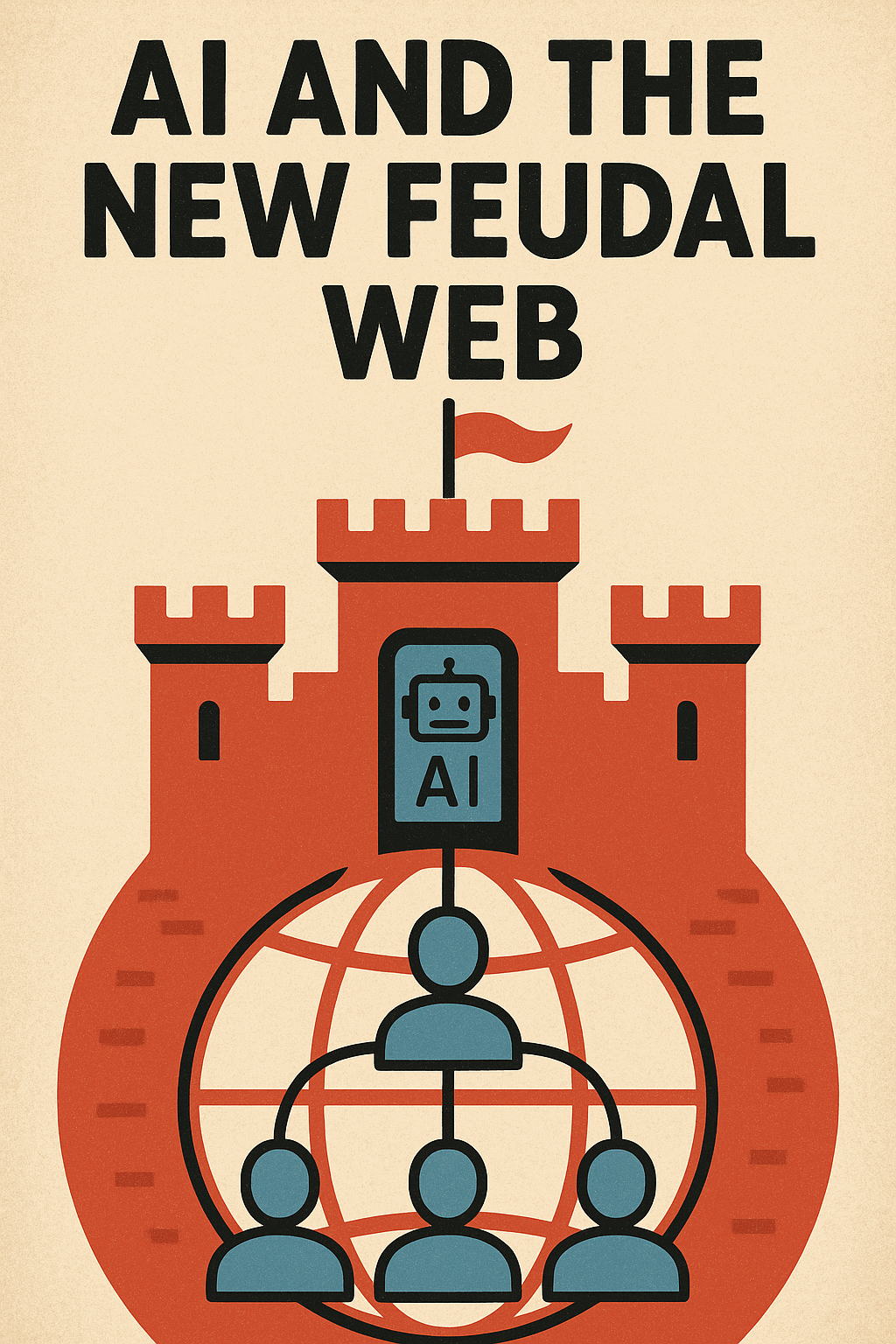
The feudal analogy has limits, but its proponents make a serious point. In a feudal system, those who control the land extract rent from those who work it. In the AI economy, those who control the compute, the data, and the frontier models extract value from the application builders, the enterprise customers, and the end users who depend on their infrastructure. The terms of that dependency are set by the platform owners, not by those who depend on them.
How AI Power Concentration Builds Across the Stack
The AI technology stack has a natural tendency toward concentration at each layer. At the infrastructure level, the capital requirements for large-scale GPU clusters favour hyperscale cloud providers. At the model level, the data and compute requirements for frontier model training favour organisations with existing data advantages and deep capital reserves. At the application level, network effects favour platforms that already have large user bases, because user data improves model performance which attracts more users.
The result is a stack in which competitive moats compound across layers. A company that leads at the infrastructure level can offer preferential pricing to allied model developers. A model developer with the best-performing foundation model can attract the most application builders. Research from the Stanford AI Index has consistently documented the concentration of AI research and development capacity among a small number of institutions, both corporate and national. This same dynamic runs through the trillion-dollar capital race LiveAIWire has tracked in our coverage of the AI arms race between Google, Amazon, and Meta.
Small Players, Dependent Ecosystems
The application layer of the AI economy is more diverse than the infrastructure and model layers, but diversity does not necessarily mean independence. A startup building an AI-powered legal tool on top of a major foundation model API is dependent on the pricing, terms of service, and continued availability decisions of the model provider. If the provider raises API prices, changes its content policies, or discontinues a model version, the startup’s product is affected without recourse.
What this means for anyone building on AI infrastructure: the terms on which you depend on platform providers deserve the same scrutiny as any other critical supplier relationship. The decentralised AI models being explored through blockchain and federated architectures represent one response to this dependency risk, though they face significant technical challenges relative to the performance of centralised systems.
Open Source as a Counterweight to AI Power Concentration
The open-source AI movement represents the most significant structural counterweight to platform concentration. Meta’s release of the Llama model family, Mistral’s open-weight models, and the broader ecosystem of open-source models available through Hugging Face have created genuine alternatives to proprietary API dependence for many use cases.
The counterweight has limits. Open-source models currently lag the performance of frontier proprietary models on many benchmarks, particularly for complex reasoning tasks. Research from the Electronic Frontier Foundation on AI and digital rights has examined open source as a democratic counterweight to AI concentration, noting that genuine openness requires not just model weight availability but transparency about training data, evaluation methodologies, and the governance of the organisations that produce and maintain models.
Regulatory Responses and Their Limits
Antitrust regulators on both sides of the Atlantic have begun examining AI power concentration. The UK Competition and Markets Authority published a foundational model review in 2024 identifying concentration risks in the AI stack. The EU’s AI Act and Digital Markets Act together provide a framework for addressing the most egregious forms of self-preferencing and platform lock-in, though enforcement is in early stages.
The fundamental challenge for competition regulators is that market concentration in AI is partly an artefact of genuine scale economies rather than anticompetitive conduct. The parallel with the hidden infrastructure dependencies that underpin the AI economy is direct: the power relationships embedded in AI infrastructure are not visible to most users, and their consequences for innovation, pricing, and access are felt long before they become the subject of regulatory attention.
Breaking the Web or Reinforcing It
The honest answer to whether AI will break or reinforce AI power concentration is that current trajectories reinforce it, and the forces that might disrupt those trajectories are present but not yet dominant. Open-source models are improving. Regulatory attention is increasing. National AI strategies in Europe, India, and elsewhere are investing in AI infrastructure that is not dependent on US hyperscalers.
Whether those countervailing forces are sufficient to loosen AI power concentration and produce a genuinely competitive AI economy, or whether the compounding advantages of the current leaders prove durable enough to consolidate a two or three-player global AI market, will be determined in the next five years. The stakes are not just commercial: who controls AI infrastructure increasingly determines who controls the economic and informational environment in which everyone else operates.
China’s approach to AI development, state-directed investment in national champions, data localisation requirements, and restricted access to foreign AI services, represents one model for national AI sovereignty. The EU’s approach of regulatory standards and strategic investment in European AI infrastructure represents another. The US approach of private sector leadership with evolving regulatory oversight represents a third. None of these models has yet demonstrated that it can combine the innovation dynamism of competitive markets with the public accountability that AI power concentration requires.
About the Author
Stuart Kerr is Technology Correspondent at LiveAIWire, covering artificial intelligence, cybersecurity, and the social impact of emerging technology. He publishes daily at LiveAIWire.com.