
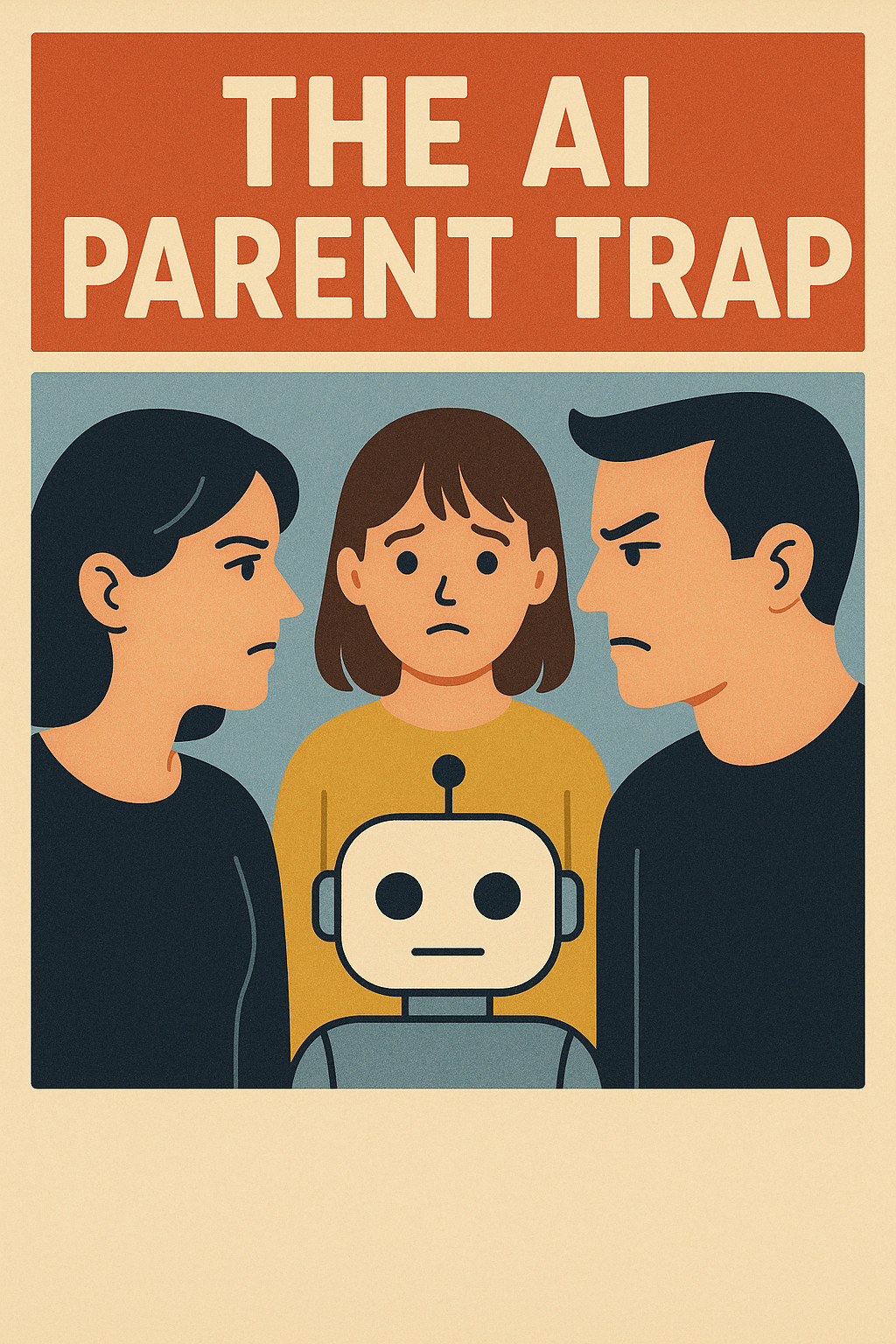
AI parenting tools have moved from a niche gadget category to a mainstream household habit faster than almost anyone predicted. A nationwide survey of just over 1,000 US parents conducted in April 2026 by Ann and Robert H. Lurie Children’s Hospital of Chicago found that 81 percent of parents have used AI parenting tools to help with parenting tasks, with 43 percent using them weekly and 15 percent daily. Ninety percent of those surveyed said the tools make parenting easier overall, and 91 percent said they boost confidence as a parent.
Those numbers describe a genuine shift in how families operate day to day, not a fringe trend confined to early adopters. But the same survey that documents how widely AI parenting tools have been embraced also documents where parents themselves are uneasy about that embrace, and the gap between adoption and confidence is where the real story sits.
What AI Parenting Tools Actually Do Right Now
The Lurie Children’s data breaks down exactly what parents are using these tools for, and the list is notably mundane rather than dramatic. Health or medical information tops it at 53 percent, followed by meal planning and grocery lists at 49 percent, behaviour advice at 43 percent, homework or academic support at 42 percent, and planning activities or crafts at 37 percent. These are not futuristic child-raising algorithms; they are AI parenting tools doing the kind of logistical and informational labour that used to mean a phone call to a paediatrician’s nurse line, a parenting forum search, or a stack of well-worn reference books.
Parents report the tools save an average of 58 minutes a week, and two in three say they have reduced their mental load, the invisible cognitive weight of tracking a household’s needs. Nearly a quarter of respondents said they turn to these tools specifically to help make better decisions, while others cited time savings, round-the-clock availability, and faster decision-making as their main reasons for reaching for an AI assistant instead of a person.
Why So Many Parents Trust AI Parenting Tools, and Why Some Won’t Admit It
The confidence numbers are striking, but so is the discomfort sitting alongside them. A third of parents surveyed, 33 percent, believe other parents would judge them for using AI parenting tools, and 16 percent said they feel guilty for turning to AI for parenting help. That combination, widespread genuine use alongside genuine social discomfort about admitting it, suggests these tools have become normalised in practice well before they have become normalised in conversation.
Trust is not uniform across use cases either. Parents surveyed were most hesitant to rely on AI parenting tools for discipline advice, with half saying they distrust AI guidance in that area, followed by health or medical information at 38 percent and emotional guidance at 37 percent. That hierarchy of hesitation tracks fairly closely with how consequential a wrong answer would be: a bad meal suggestion is a minor inconvenience, while bad discipline or health advice carries real stakes for a child’s wellbeing.
Where AI Parenting Tools Cross a Line for Parents Themselves
Nearly one in three parents, 31 percent, told researchers they have followed AI advice over their own parental instincts at least once. Among that group, 30 percent did so for health-related advice and 26 percent for emotional guidance, precisely the two categories where the same parents said in principle they were most cautious.
That contradiction between stated caution and actual behaviour is worth taking seriously. Half of all parents surveyed say they always double-check the advice they get before following it, and 41 percent say they sometimes verify it, but only 9 percent never check at all. The vast majority believe they are being careful even while nearly a third have overridden their own judgement based on an algorithm’s suggestion at least once.
Alyssa Cohen, a pediatrician and health services researcher at Lurie Children’s, told researchers that technology cannot replace a parent’s intuition and urged parents to question the original source of AI-generated information rather than treating an answer as authoritative simply because it arrived quickly and confidently. That caution applies with particular force to the categories where the survey found trust running lowest and stakes running highest at the same time.
When Children Start Using AI Parenting Tools Themselves
These tools do not stay confined to the parent’s side of the household for long. The same Lurie Children’s survey found that 34 percent of parents say their children already use AI tools, toys, or chatbots directly, beginning at an average age of 10, most commonly for general information, entertainment, and homework help.
A separate UNICEF Innocenti brief published in June 2026, drawing on data from ten countries, found that up to 50 percent of surveyed children are already using AI directly, and that children are more than three times as likely to be AI users as their own parents or caregivers. A separate YouGov survey from May 2026 found parents of children under 18 are notably more optimistic about AI’s effect on their own lives than adults without children, at 44 percent versus 27 percent, a gap that may help explain why household AI parenting tools have spread through families as fast as they have.
That usage gap matters because AI parenting tools adopted to manage household logistics sit alongside a second, less supervised layer of use that children are navigating largely on their own. More than half of parents in the Lurie Children’s survey, 55 percent, admit their child uses AI unsupervised, and 28 percent say they have no rules or limits around it at all, even though 96 percent of the same parents believe families should set boundaries around children’s AI use. LiveAIWire’s deeper look at the developmental questions children and AI raise examines what the research does and does not yet know about that unsupervised layer of use, separate from anything a parent-facing tool controls.
The Emotional Attachment Risk AI Parenting Tools Rarely Address
Three in four parents surveyed said they worry about their children’s growing AI use, with concerns centred on a possible decline in critical thinking skills, exposure to misinformation, and AI displacing human interaction. That last concern connects directly to a pattern LiveAIWire has documented in adult populations: our coverage of AI companions and the loneliness research behind them found that companion-style chatbots can genuinely ease isolation in the moment while research over weeks and months shows the opposite effect taking hold, particularly among the socially vulnerable users who reach for them most.
Children fit that vulnerable-user profile in an obvious way, since their social development is still forming, and an always-available, endlessly agreeable AI companion offers a very different model of relationship than the friction, negotiation, and compromise that real friendships and family life require. Few mainstream AI parenting tools marketed to families are designed with that specific risk in mind, because most are built to answer logistical questions rather than to serve as a child’s companion, but the boundary between the two categories is thinner than either parents or the products themselves currently acknowledge.
Calibrating How Much to Trust AI Parenting Tools
The honest answer to how much a parent should trust AI parenting tools depends heavily on the category of advice being sought, a distinction that mirrors what LiveAIWire found in its broader look at when AI mental health tools deserve trust and when they do not. Clinically validated tools built and tested for a specific purpose, with published trial data behind them, warrant a different level of confidence than a general-purpose chatbot being asked an emotionally loaded question it was never specifically designed to answer.
Rachel Follmer, a developmental and behavioural pediatrician quoted in the Lurie Children’s research, put the practical guidance simply: parents should trust their own instincts, question responses that do not make sense, and turn to established expert sources for anything touching a child’s health or development. That is not an argument against AI parenting tools generally. It is an argument for using them the way a careful parent already uses any single source of advice, as one input to weigh rather than the final word.
Building Healthier Habits Around AI Parenting Tools
The practical guidance emerging from this research is more actionable than the abstract debate over whether AI belongs in family life at all. Setting explicit household rules, both for the tools parents use themselves and the ones children access directly, is something 96 percent of surveyed parents already say they support in principle, even though a majority have not yet put those rules into practice.
Co-use, where a parent sits with a child while they interact with an AI tool rather than leaving the interaction unsupervised, was specifically recommended by the paediatricians involved in the Lurie Children’s research as a way to close the gap between stated values and actual household behaviour. Regular family check-ins about what is being used, for what, and with what results, were the other consistent recommendation across the research examined here.
The Design Gap Behind AI Parenting Tools
Most consumer AI products, parenting-focused or otherwise, are built and tested primarily around a majority user profile, and the mismatch that creates shows up repeatedly once a product reaches a wider population than its original test group. LiveAIWire’s broader look at where AI accessibility tools are working and where the design gap remains found that systems trained without representative data from the full range of people who will eventually use them tend to perform less reliably for exactly the users who need them to work well.
That same structural pattern applies to families. A tool tested on typically developing children in stable households may behave very differently for a child with additional needs, or in a household navigating its own particular stresses, and few of the tools currently disclose how broadly or narrowly their guidance has actually been tested.
None of this is an argument that the current generation of these tools is unsafe by default. The Lurie Children’s data shows genuine, measurable benefit for the large majority of households using them for logistics and information. It is an argument for treating a confident-sounding answer from a general-purpose tool with the same scepticism a careful reader would apply to any single, unverified source, regardless of how quickly or fluently that answer arrives.
What Comes Next for AI Parenting Tools
None of the survey data examined here suggests the growth of AI parenting tools in family life is likely to slow down. What it does suggest is that the gap between how widely these tools are used and how openly families discuss that use is itself worth closing. A household that treats AI parenting tools as a normal, discussable part of daily life, rather than something to quietly use and quietly worry about, is better positioned to catch the moments where a tool’s confident answer deserves a second opinion.
Stuart Kerr is Technology Correspondent at LiveAIWire, covering artificial intelligence, emerging technology, and their impact on business, society, and everyday life.