
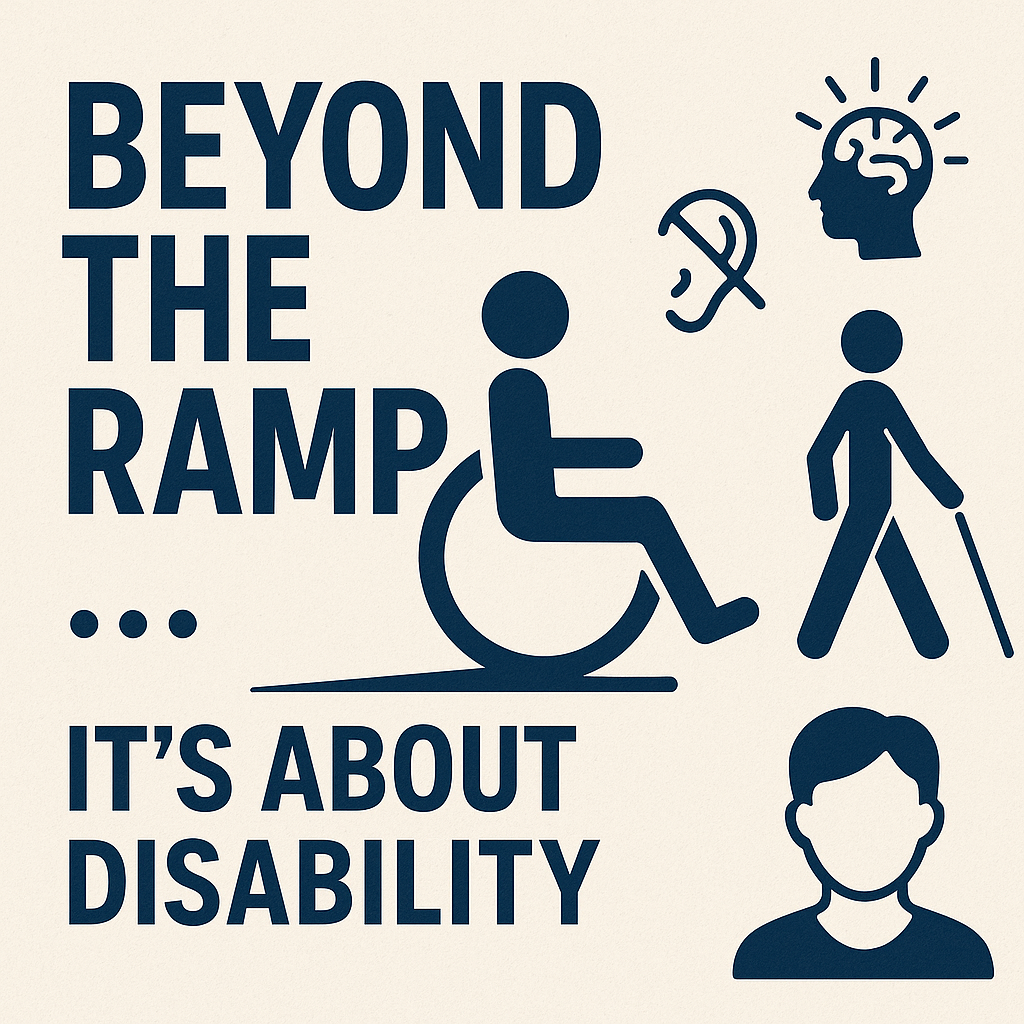
By Stuart Kerr, Technology Correspondent, LiveAIWire
For Haben Girma, the first DeafBlind graduate of Harvard Law School, AI accessibility technology has always been the difference between access and exclusion. She communicates through a braille display connected to a laptop, receiving transcribed audio as tactile text in real time. AI-powered speech recognition and real-time transcription have improved the accuracy of what her display receives to the point where she can participate in conversations that were previously inaccessible. The technology is not perfect. It is dramatically better than what existed ten years ago.
The AI accessibility revolution is real and is changing lives in concrete, measurable ways for the hundreds of millions of people worldwide living with disabilities. It is also uneven, incomplete, and at risk of being sidelined by a technology industry that treats accessibility as a compliance requirement rather than a design priority. Whether AI fulfils its potential as an equaliser depends on choices being made now about who designs it, who funds it, and whose needs it is trained to serve.
Where AI Accessibility Is Already Working
Screen readers and image description tools using computer vision now provide people with visual impairments meaningful access to the visual content that constitutes an increasingly large share of digital communication. Microsoft’s Seeing AI app, Be My Eyes enhanced with AI description, and similar tools can describe photographs, read handwriting, identify products and currency, and navigate physical environments in ways that were not possible before the current generation of vision models.
Real-time speech transcription and captioning has transformed access for deaf and hard-of-hearing users across professional and social contexts. Augmentative and Alternative Communication devices for people with limited speech have been transformed by AI language models that can predict intended communication from partial input, reducing the time and cognitive effort required to compose a message. Research published in Augmentative and Alternative Communication has documented meaningful improvements in communication rate and user satisfaction from AI-enhanced AAC systems.
Navigation, Independence, and Physical Access
AI accessibility tools are extending independent mobility for people with visual impairments beyond what GPS alone could deliver. Systems that combine computer vision, real-time mapping, and voice guidance can describe the immediate environment, identify obstacles, read signage, and guide users through complex interior spaces that are not covered by conventional mapping.
What this means for you or a family member with a disability: the practical capability of AI accessibility tools has advanced significantly, but the availability of those tools through mainstream channels, the training required to use them effectively, and the cost of access remain barriers that do not affect all users equally. Technology that exists in a research lab or in an expensive specialist device is not the same as technology that is accessible to everyone who needs it.
The Design Gap and Its Consequences
AI systems trained without representative data from disabled users are less effective for those users, and sometimes actively harmful. Voice recognition systems trained predominantly on able-bodied speakers perform poorly for users with dysarthria, stuttering, or atypical speech patterns. Navigation systems designed for walking users require adaptation for wheelchair users navigating environments where kerb cuts, ramp availability, and surface quality determine the accessible route.
The Web Accessibility Initiative has documented extensively how digital systems designed without disability inclusion in mind create barriers that are not experienced by the majority of users and therefore may not surface as priorities in development cycles focused on mainstream user feedback. This same pattern, where systems trained on majority-population data underperform for exactly the people who need them to work well, echoes what LiveAIWire has traced in our coverage of AI sentencing bias in predictive risk tools, where historical bias in training data compounds into unequal outcomes.
Mental Health and Cognitive Accessibility
AI tools are increasingly relevant to cognitive and mental health accessibility: applications that help people with ADHD manage task organisation, tools that support people with dyslexia in reading and writing, and AI companions that provide emotional support for people with social anxiety or autism spectrum conditions. The evidence base for these applications is growing, though the research rigour varies considerably across the range of products marketed in this space.
The risk of over-reliance and the potential for harm from poorly designed mental health AI tools is significant. An app that provides emotional support without adequate crisis protocols, or that reinforces avoidance behaviours in users with anxiety, can cause harm that its developer did not intend. The broader connection to AI-assisted mental health therapy is direct: the same tools that offer genuine benefit when designed and deployed responsibly carry genuine risks when they are not.
Policy, Procurement, and the Accessibility Mandate
Public sector AI procurement is a lever that governments have not yet pulled consistently in the direction of accessibility. When government services, healthcare systems, and educational institutions procure AI tools that perform poorly for disabled users, they are effectively institutionalising inequality through technology choices. Accessibility requirements in public procurement, equivalent to the physical accessibility standards mandated for public buildings, could drive meaningful market change by making accessibility a procurement criterion rather than an optional extra.
The digital divide that already disadvantages older users and others less connected to the technology mainstream overlaps significantly with disability: people with disabilities are disproportionately likely to face barriers to technology access while also being among the potential beneficiaries of AI accessibility tools. Closing that gap requires policy ambition that matches the technical ambition the field has already demonstrated.
For AI accessibility specifically, procurement reform is one of the most direct levers available to governments. When public agencies specify accessibility standards as a condition of contract, they create market incentives that voluntary commitments alone do not generate. The EU Web Accessibility Directive and the emerging AI Act provide frameworks for extending these requirements to AI systems, a policy step that accessibility advocates are pushing for and regulators are beginning to consider.
About the Author
Stuart Kerr is Technology Correspondent at LiveAIWire, covering artificial intelligence, cybersecurity, and the social impact of emerging technology. He publishes daily at LiveAIWire.com.