
By Stuart Kerr, Technology Correspondent, LiveAIWire
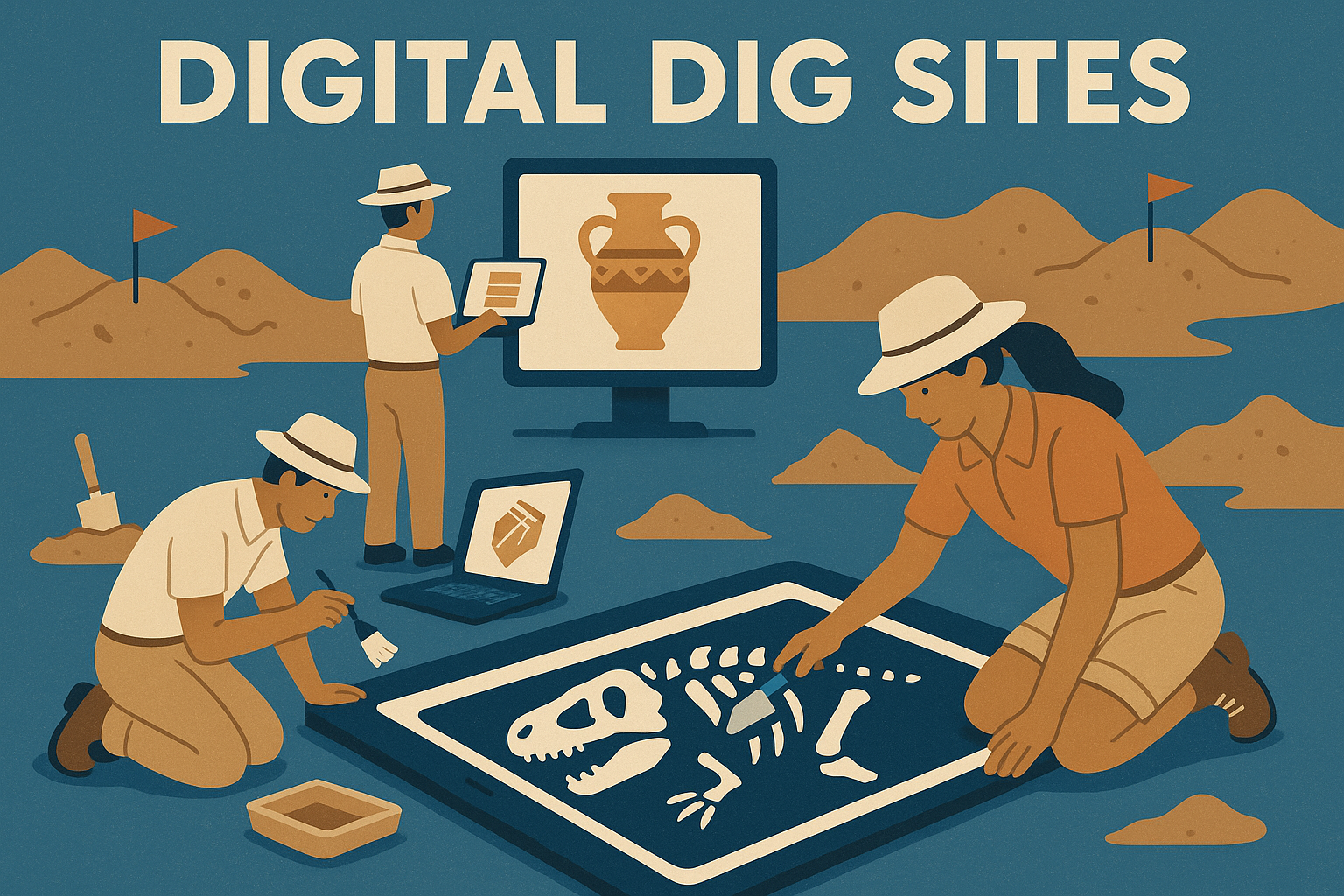
AI archaeology has always been a discipline of reconstruction: working backward from fragments of material culture to the lives of people who left no living testimony. Artificial intelligence does not change this fundamental reality, but it is changing the speed, scale, and precision with which fragments can be identified, analysed, and connected. The applications range from the detection of buried sites from satellite imagery to the reassembly of shattered ceramic vessels, the decipherment of damaged manuscripts, and the digital reconstruction of structures lost to conflict or time.
Seeing Through the Ground: AI Archaeology from Space
Machine learning systems trained to recognise the spectral or topographic signatures of archaeological features can process satellite imagery, aerial photography, and LiDAR data at regional and continental scale. Research published in Nature Astronomy in 2022 documented the discovery of hundreds of previously unknown Nazca geoglyphs in Peru using machine learning analysis of aerial photography, more than doubling the number of known figures in the region.
In Honduras, LiDAR analysis revealed the full extent of a lost Maya city whose surface remains had been known but whose scale was only apparent from aerial survey data. The Antiquity journal has published multiple studies demonstrating AI archaeology identifying things that human analysts would not find at all within realistic resource constraints, not merely finding them more slowly.
Reassembly and Reconstruction: The Puzzle-Solving Machine
Computer vision systems trained on three-dimensional scan data can identify matching edges, surfaces, and curvature profiles between fragments in datasets of thousands of pieces, generating reassembly suggestions for human experts to evaluate. The Antikythera Mechanism, the ancient Greek astronomical computer recovered in fragmentary form in 1901, benefited from AI-assisted analysis of X-ray and surface scan data published in 2021 that produced the most detailed reconstruction yet proposed of its complete structure and function.
Digital reconstruction of heritage sites enables accessible visualisations of places that are physically inaccessible, partially destroyed, or located in regions that most visitors cannot reach. The reconstruction of Palmyra’s Arch of Triumph, destroyed in 2015, using AI-assisted photogrammetric analysis of pre-destruction photography became both a scholarly record and a component of public heritage advocacy. Similar projects are now underway for heritage sites damaged in Ukraine, Yemen, and Afghanistan. As LiveAIWire has covered in analysis of AI transforming traditional knowledge domains, AI is most valuable when it augments deep domain expertise rather than attempting to replace it, and archaeology is no exception.
Decipherment: Reading What Was Unreadable
The Vesuvius Challenge, launched in 2023, offered prizes for the use of AI archaeology techniques to read carbonised scrolls from Herculaneum preserved but rendered illegible by the 79 CE eruption of Vesuvius. By the end of 2023, teams using machine learning trained on CT scan data had successfully read substantial portions of scroll text, including philosophical content inaccessible for nearly two thousand years. The British Library’s digital scholarship blog documents multiple projects using machine learning for handwriting recognition, date estimation, and identification of scribal hands across its digitised manuscript collection.
Repatriation, Ethics, and the Digital Double
Digital reconstruction of cultural heritage objects raises complex questions for communities whose material culture was removed through colonial acquisition. A high-resolution AI-generated digital model does not restore the relationships between communities and their material heritage that physical repatriation would. At the same time, digital access provides forms of connection and scholarship that are genuinely valuable. As LiveAIWire has examined in our coverage of who benefits from AI-generated value derived from communities’ knowledge and labour, this is a consistent ethical challenge across the technology’s current phase, whether the underlying source is cultural heritage or content annotation.
Preservation at Scale
Climate change, conflict, urban development, and the simple passage of time are destroying archaeological sites at a rate that conventional documentation methods cannot keep pace with. The International Council on Monuments and Sites has identified AI archaeology and heritage documentation as a priority capability, recognising that the combination of photogrammetry, LiDAR, multispectral imaging, and machine learning analysis can capture material characteristics of a site in more detail than any previous documentation method.
Training the Next Generation of AI Archaeology Tools
The effectiveness of AI archaeology depends fundamentally on the quality and comprehensiveness of the training data available to machine learning systems. Archaeological datasets present particular challenges: they are heterogeneous in format and quality, they reflect the historical biases of a discipline that has concentrated excavation resources in certain regions and periods, and they are often held by institutions that have not yet made their holdings fully digitally accessible.
Several initiatives are working toward this goal. The Archaeological Data Service in the UK aggregates and preserves digital archaeological datasets, and its holdings are increasingly being used as training data for machine learning research. ARIADNE, the European archaeological research infrastructure, is building interoperable data standards and access systems that will enable AI researchers to train on datasets spanning multiple national traditions and time periods.
The participation of archaeologists in the development of AI tools for their discipline is equally important, since domain expertise is essential for defining appropriate training datasets, evaluating model outputs critically, and identifying the failure modes that purely technical evaluation would miss, a collaborative model that echoes what LiveAIWire has found in our coverage of AI language diversity, where community involvement in dataset creation consistently produces better outcomes than passive data extraction.
About the Author
Stuart Kerr is Technology Correspondent at LiveAIWire, covering artificial intelligence, cybersecurity, and the social impact of emerging technology. He publishes daily at LiveAIWire.com.