
By Stuart Kerr, Technology Correspondent, LiveAIWire
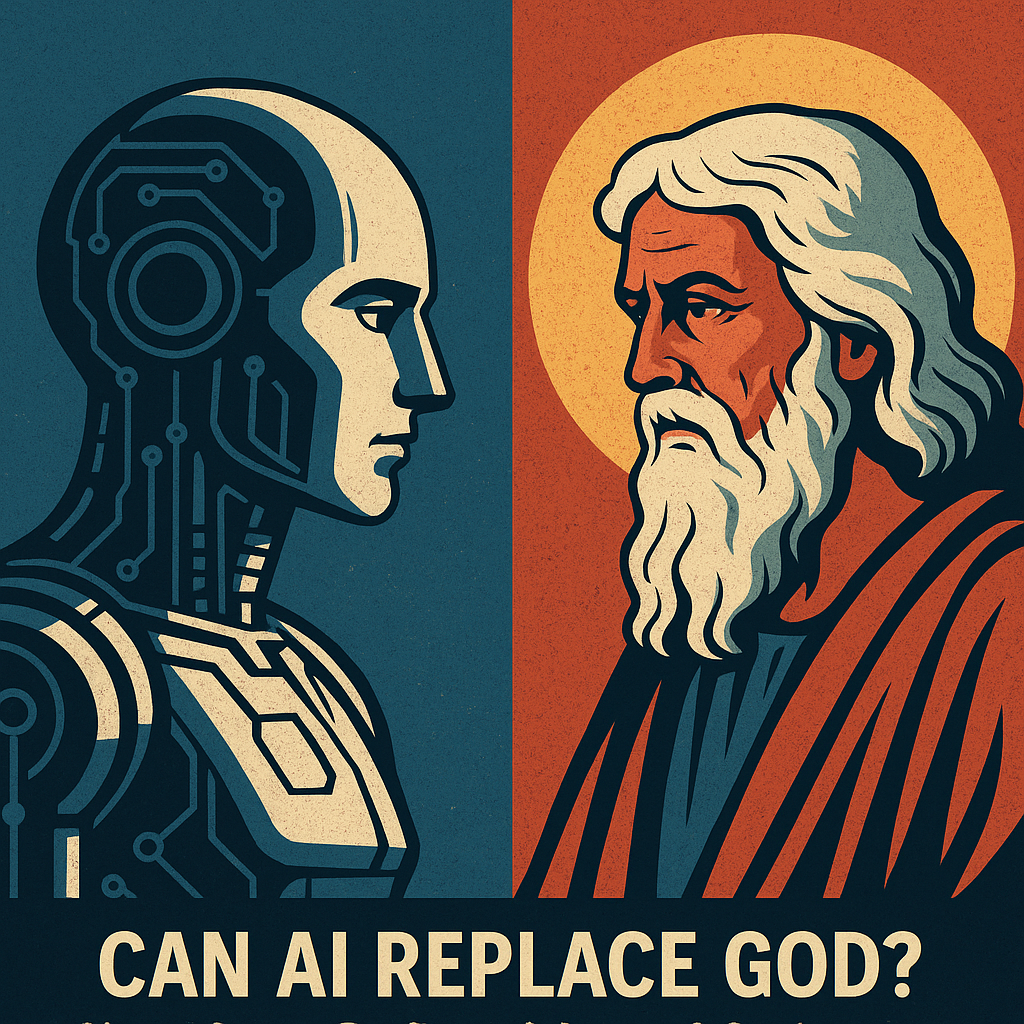
The question of AI and religious faith is usually dismissed as a category error: religion addresses questions of ultimate meaning, moral community, and transcendent experience that algorithms are not designed to engage with. But the question worth asking is not whether AI can replace God, which it cannot, but whether AI is already displacing functions that religious practice has historically performed, and whether those displacements have consequences for human wellbeing and social cohesion that deserve more serious attention than the framing of AI-versus-religion typically generates.
Religious practice serves identifiable social and psychological functions that are well-documented in empirical research: community belonging, moral framework, rituals of transition and grief, meaning-making in suffering, and access to contemplative practices that reduce stress and support mental health.
AI is not designed to perform these functions, but AI-mediated experiences are increasingly occupying the time and attention that religious practice historically commanded, and some AI applications are explicitly positioning themselves in adjacent territory. AI grief companions, mindfulness applications using biometric feedback, and AI ethics advisors embedded in corporate decision-making are all operating in domains where religious institutions previously had significant influence.
What AI and Religious Faith Have in Common, and Where They Diverge
The sociological literature on religion identifies several functions that religious communities perform which AI systems are structurally poorly positioned to replicate. The most significant is moral community: the sustained, embodied participation in a shared normative framework that creates accountability, mutual obligation, and the experience of being known and held responsible by others over time. Religious moral communities are inefficient by design, requiring regular physical gathering, shared ritual, and accountability to other community members in ways that produce friction alongside belonging. That friction is partly what makes them effective as moral formation environments.
AI and religious faith diverge sharply here: AI systems optimised for user satisfaction eliminate friction. Pew Research data on religious disaffiliation documents the significant and growing share of the population, particularly in younger demographics, identifying as religiously unaffiliated without necessarily rejecting the search for meaning, community, or ethical framework that religious practice historically served. AI applications positioning themselves as companions, counsellors, or moral advisors are entering this space, serving populations who have left religious institutions but have not abandoned the underlying needs those institutions addressed.
AI and the Spiritual Technology Market
The market for AI-adjacent spiritual technology is significant and growing. Meditation and mindfulness applications using AI to personalise practice, chatbots designed to support grief and existential distress, AI-generated prayer content and spiritual guidance, and apps that use machine learning to match users with spiritual directors or religious communities represent a commercial ecosystem built on the intersection of AI capability and spiritual need. World Economic Forum analysis of AI and religion has examined how religious communities are integrating AI tools into practice and outreach, finding both genuine benefit in expanded access and legitimate concern about AI-generated religious content that lacks the contextual understanding and accountability of human religious leadership.
The concern about AI and religious faith intersecting this way is specific. Religious traditions are not bodies of information that AI can retrieve and recombine accurately without understanding. They are living interpretive traditions in which the meaning of texts and practices is contested, contextual, and inseparable from the communities of interpretation that have developed around them. An AI system generating prayer content, theological commentary, or moral guidance is producing outputs that pattern-match to the surface forms of religious language without access to the interpretive frameworks that give those forms their meaning.
What the Displacement Means
The displacement of religious functions by AI-mediated alternatives does not require AI to be better at those functions to have significant social effects. It requires only that AI alternatives be more convenient, more available, and better aligned with the individualistic consumption patterns that characterise contemporary digital life. Religious practice requires showing up, in person, with others, on a schedule determined by the community rather than the individual. AI spiritual applications are available on demand, infinitely patient, and perfectly calibrated to individual preference.
On the question of AI and religious faith, as our analysis of how AI companion use reshapes human identity found, systems that eliminate friction in domains where friction is developmentally important produce users adapted to frictionless interaction rather than to the more demanding environments where they will need to function. As our analysis of how AI is reshaping the meaning of work found, communities of practice and shared purpose are among the most significant casualties of optimised, individualised AI experience. The search for meaning is not going away. The question is what answers are available, and what those answers do to the people who receive them.
The Institutional Stakes
Religious institutions themselves are navigating the intersection of AI and religious faith with varying degrees of awareness and preparation. Several denominations have issued guidance on AI use in pastoral care, theological education, and congregational administration, ranging from cautious engagement to outright prohibition of AI-generated religious content in liturgical settings.
The more significant institutional question is what happens to the social functions that religious communities have historically performed, including care for the elderly, mutual support in crisis, and the intergenerational transmission of values and community identity, as AI alternatives capture the time and attention of populations who might otherwise engage with those communities.
As our analysis of how AI access varies across age groups found, the people most dependent on community-provided care and social connection are often those with the least access to AI alternatives that might supplement it. The irony of AI and religious faith intersecting this way is that the populations most likely to lose religious community functions are those for whom the AI alternatives are least accessible and least adequate. That asymmetry is not a theological argument. It is a governance one, and it deserves the same systematic attention as the other distributional effects of AI deployment.
About the Author
Stuart Kerr is Technology Correspondent at LiveAIWire, covering artificial intelligence, cybersecurity, and the social impact of emerging technology. He publishes daily at LiveAIWire.com.