Beyond Buzz – AI Designed for Lasting Engagement
By Stuart Kerr, Technology Correspondent
Published: 30 November 2025 | Last updated: 9 May 2026
Contact: [email protected] | Follow @LiveAIWire on X
Author Bio: https://liveaiwire.com/p/to-liveaiwire-where-artificial.html
The AI Hype Cycle Is Finally Over
Designing AI for long-term engagement has moved from a nice-to-have philosophy to a business survival requirement in 2026. The last few years saw a tidal wave of flashy AI launches, chatbots promising wisdom, tools promising creativity, assistants promising miracles. The hype was intoxicating. But for many users and organisations, the excitement passed. Features went unused. Tools gathered digital dust. AI became background noise. The real challenge today is not inventing the next shiny product. It is building AI that stays useful, builds trust, and earns its place in people’s daily lives over the long haul.
That shift from buzz to backbone requires a very different design mentality, one that prioritises user needs, genuine value, and sustainable growth rather than marketing splash. In 2026, that mentality is no longer optional. According to a recent analysis of enterprise AI adoption, the challenge is no longer overpromising. It is underutilising. Companies built the capability but forgot to ask whether anyone actually wanted it.
What Flashy Hype Gets Wrong
Too many AI products start with the question of what cool thing AI can do rather than what problem needs solving. The result is a proliferation of features that feel more like gimmicks than genuine solutions. Research has consistently found that up to 80 percent of AI features added to products go unused, disconnected from core workflows, demanding new behaviours from users, or simply lacking clear value. They become digital wallpaper.
On a broader scale, organisations are realising that adopting AI is one thing and proving it delivers value is quite another. A 2025 McKinsey global survey found that while many organisations are hiring for AI-related roles, relatively few have embedded robust frameworks to measure real impact. That mismatch between hype and sustained value erodes trust, lowers engagement, and turns potential long-term gains into sunk costs. AI washing, overstating capabilities for short-term attention, is increasingly drawing regulatory scrutiny and in some cases legal consequences.
As explored in AI and the New Workplace Divide, the organisations that are thriving with AI are those that started with real problems, not impressive demos.
What Long-Term Engagement Actually Looks Like
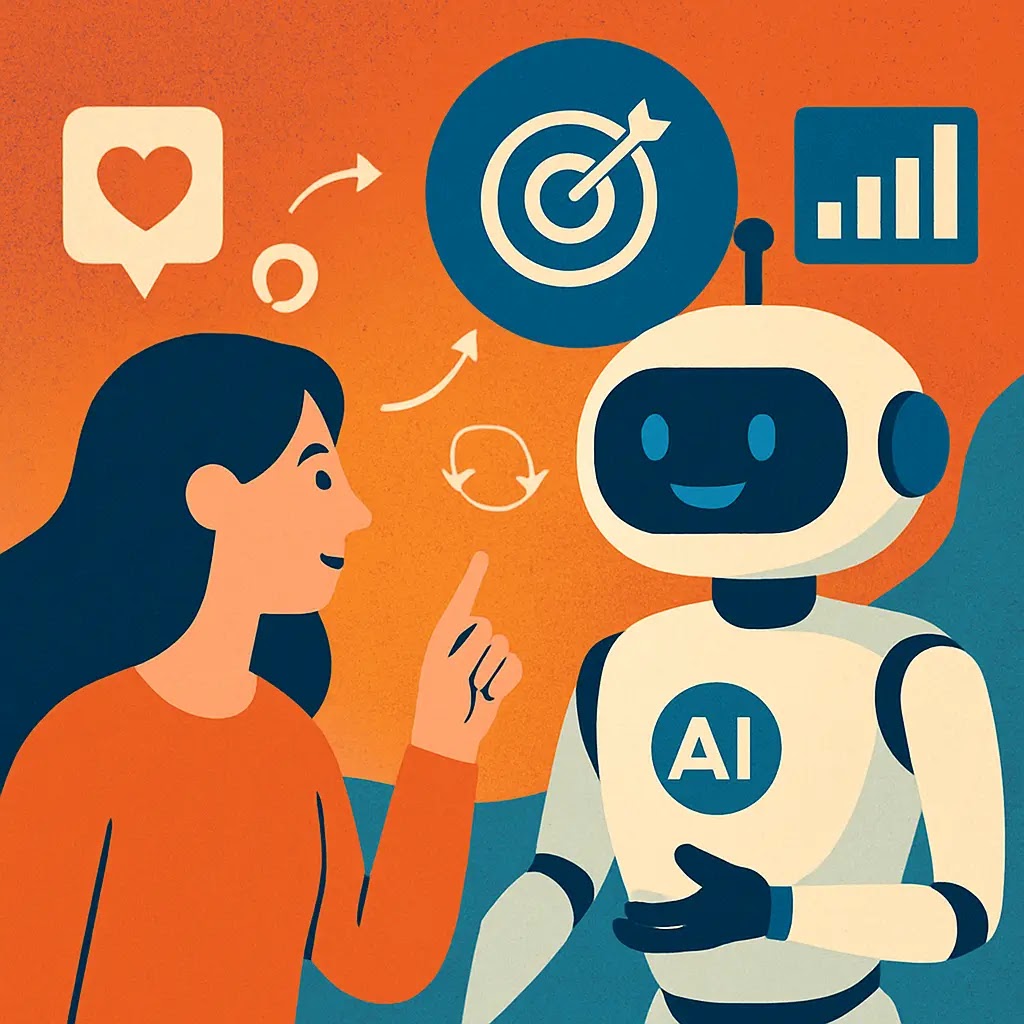
The good news is that the shift is already happening. In 2026, UX teams and product leaders are moving away from the AI feature arms race and towards something more grounded. Users increasingly expect AI to feel like a background layer that just knows a bit more about their context, suggesting the next step, pre-filling obvious details, summarising long content, and highlighting things that need attention. But they also expect control and transparency. Good AI design in 2026 avoids magic tricks that cannot be explained. It shows why something was recommended, gives users simple ways to refine or correct suggestions, and uses plain language rather than technical jargon.
Sustainable AI design means building tools people actually return to. That requires alignment between AI capabilities and real human needs rather than alignment between AI capabilities and a product roadmap driven by investor excitement. Experts consistently argue that true value comes when developers treat AI as part of a product’s core, not as a feature bolted on afterwards. The AI should solve genuine frustrations, make work measurably easier, or enable something that was previously difficult or impossible.
The 2026 Design Principles That Are Actually Working
The first principle is prioritising real needs over novelty. Start with the user’s problem, not the technology’s capability. When AI is shoehorned into a product for the sake of appearing modern, it becomes digital clutter that erodes trust rather than building it.
The second is embedding AI thoughtfully into existing workflows. Effective AI should enhance primary workflows rather than asking users to adopt entirely new behaviours. Transparency, control, and minimal friction are critical. Tools that demand significant behavioural shifts from users rarely achieve sustained adoption.
The third is designing with feedback and adaptability in mind. Unlike static software, AI creates genuine value when it can learn, adapt, and improve over time. Continuous feedback loops and regular updates build long-term relevance in a way that a fixed product cannot match.
The fourth is measuring value honestly rather than chasing hype metrics. Download counts and launch headlines matter far less than retention, user satisfaction, and measurable impact on productivity. Organisations that embed governance, return on investment tracking, and honest assessment into their AI programmes consistently outperform those that treat AI as a marketing exercise.
As covered in The Critical Rise of Explainable AI, the demand for AI that can account for its own decisions is now coming from users, regulators, and investors simultaneously.
Why This Moment Matters
The first wave of AI was hype-driven, fast-moving, and often superficial. What remains, and what will define AI’s next chapter, is substance. In 2026, product design is pulling away from AI-generated sameness and moving towards intention, craft, and choices that only a human with genuine domain knowledge would make. You cannot stand out by following prompts anymore. You stand out by solving problems that matter.
Companies and creators who build AI with care, discipline, and user focus stand to gain better retention, deeper trust, and sustainable revenue. Those relying on buzz alone risk fading into irrelevance as users grow increasingly sophisticated and regulators grow increasingly watchful.
In a world growing weary of overpromised silicon dreams, practical, human-centred, persistent AI is the real frontier. If you are building with AI, treat it as a long-term partner. Start with real problems, design for real people, and measure real impact. That way, AI becomes not just a headline but a foundation.
About the Author
Stuart Kerr is Technology Correspondent at LiveAIWire. He reports on how AI reshapes work, media, business and the systems people rely on. Contact: [email protected] | Follow @LiveAIWire on X.
Labels (under 200 characters):
ai-news, ai-trends, ai-tools, ai-business, ai-society, artificial-intelligence, machine-learning, ai-ethics
Image alt text:
AI long term engagement design 2026 beyond hype
Image title:
Beyond Buzz: Why the AI Hype Cycle Is Over and What Comes Next
Meta description:
The AI hype cycle is fading. In 2026 the winners are those building tools people actually use, not tools that grab headlines.