The AI Emissions Paradox
By Stuart Kerr, Technology Correspondent — LiveAIWire
Published: 21 Oct 2025 | Updated: 21 Oct 2025 • Contact: liveaiwire@gmail.com
AI’s appetite for electricity is real, but so are the places where it lowers emissions across the wider economy. The baseline is set by the International Energy Agency’s Energy and AI overview, which shows data-centre demand climbing while the same methods powering AI also help grids run cleaner through forecasting, balancing and load shifting—see the IEA’s executive summary and the broader power-sector context in Electricity 2025. For readers who want the deep dive on assumptions and scenarios, the full IEA report is the reference point.
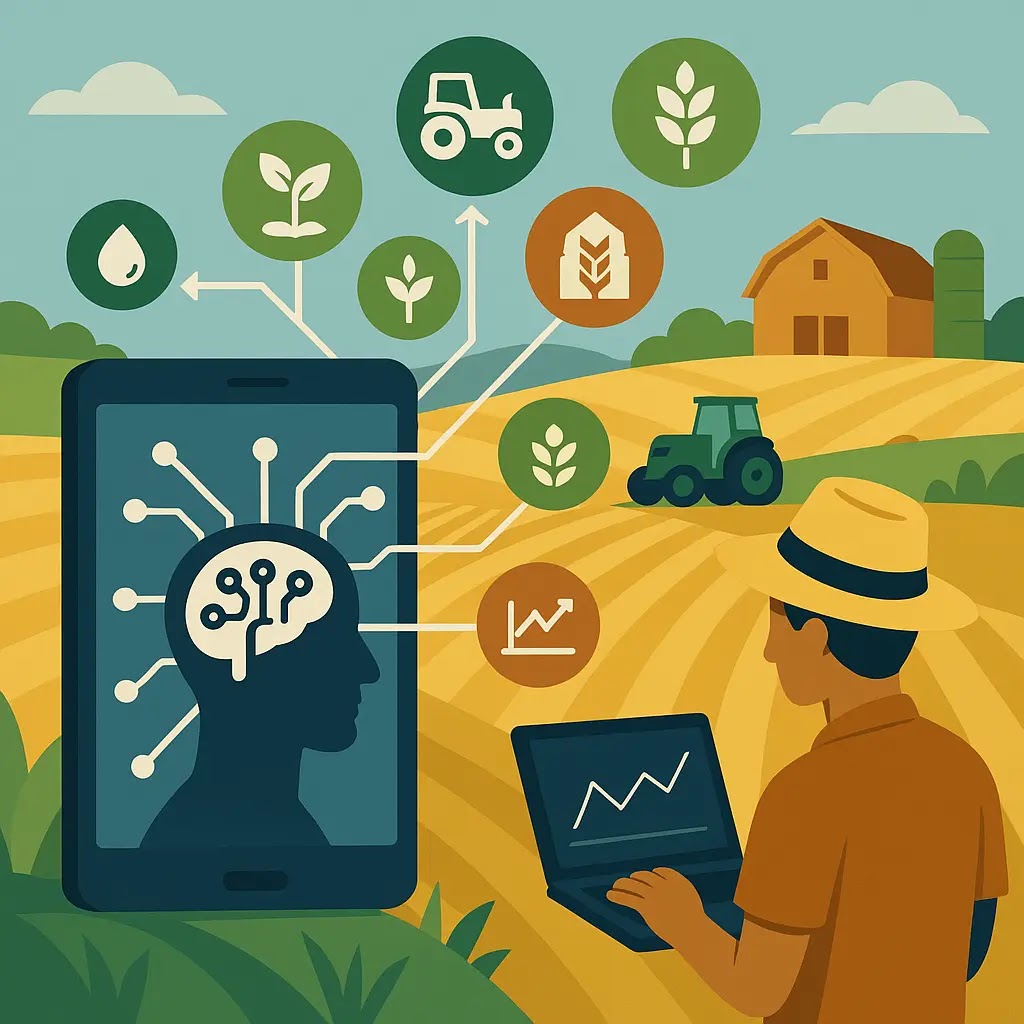
Start in the field, where precision agriculture turns a hectare into a dataset. Soil maps, canopy models and hyper-local weather feed into prescriptions for fertiliser, irrigation and the number of tractor passes. The Food and Agriculture Organization has documented these effects in its survey of precision-agriculture methods, showing inputs falling per tonne produced when AI guides timing and dosage. Targeting reduces nitrous-oxide emissions and diesel burn, and when scaled across cropping systems those per-hectare savings become meaningful offsets against the energy used to train and run farm analytics.
The grid is where AI pays back in real time. Better wind and solar prediction narrows reserve margins; dispatch tools nudge flexible demand into cleaner hours; and storage is co-optimised to avoid gas peakers. The IEA’s framing in Electricity 2025 and the scenarios set out in the Energy & AI report point to the same conclusion: pair forecasting and control with firm clean procurement and you reduce the carbon intensity of each kilowatt-hour even as total consumption rises.
Buildings and data centres offer a two-for-one. In the built environment, model-predictive and reinforcement-learning controls curb HVAC drift; inside data centres, similar optimisation trims cooling energy and workload waste. The climate arithmetic depends on rigorous measurement, which is why our own The Energy Crisis of AI scrutinises how “100% renewable” narratives can miss fossil-heavy real-time consumption, and AI and Climate Change: Can Machines Help Save the Planet? tracks where optimisation is already measurable rather than aspirational.
Heavy transport adds another lever. In shipping, voyage plans are continuously re-optimised for weather, currents and speed profiles that minimise fuel burn, with operational gains verified against vessel telemetry and fuel logs. Each tonne of fuel avoided by smarter routing is a metered, auditable saving that offsets emissions elsewhere in the system—exactly the sort of system-level effect missing when the debate fixates on server rooms alone.
Accounting discipline keeps the narrative honest. The OECD’s methodology for measuring AI’s environmental impacts distinguishes the direct emissions from compute and hardware lifecycles from the indirect effects when AI optimises high-emitting activities, an approach set out in its report. That separation prevents greenwashing and avoids fatalism: the test is whether sector-level savings in farms, grids, buildings and ships scale faster than AI’s own footprint. For fairness and governance guardrails around these deployments, our AI Bias Guardrails: Building a Fairer Future for Algorithms lays out how to audit models, set retention limits and keep purpose tight as optimisation spreads.
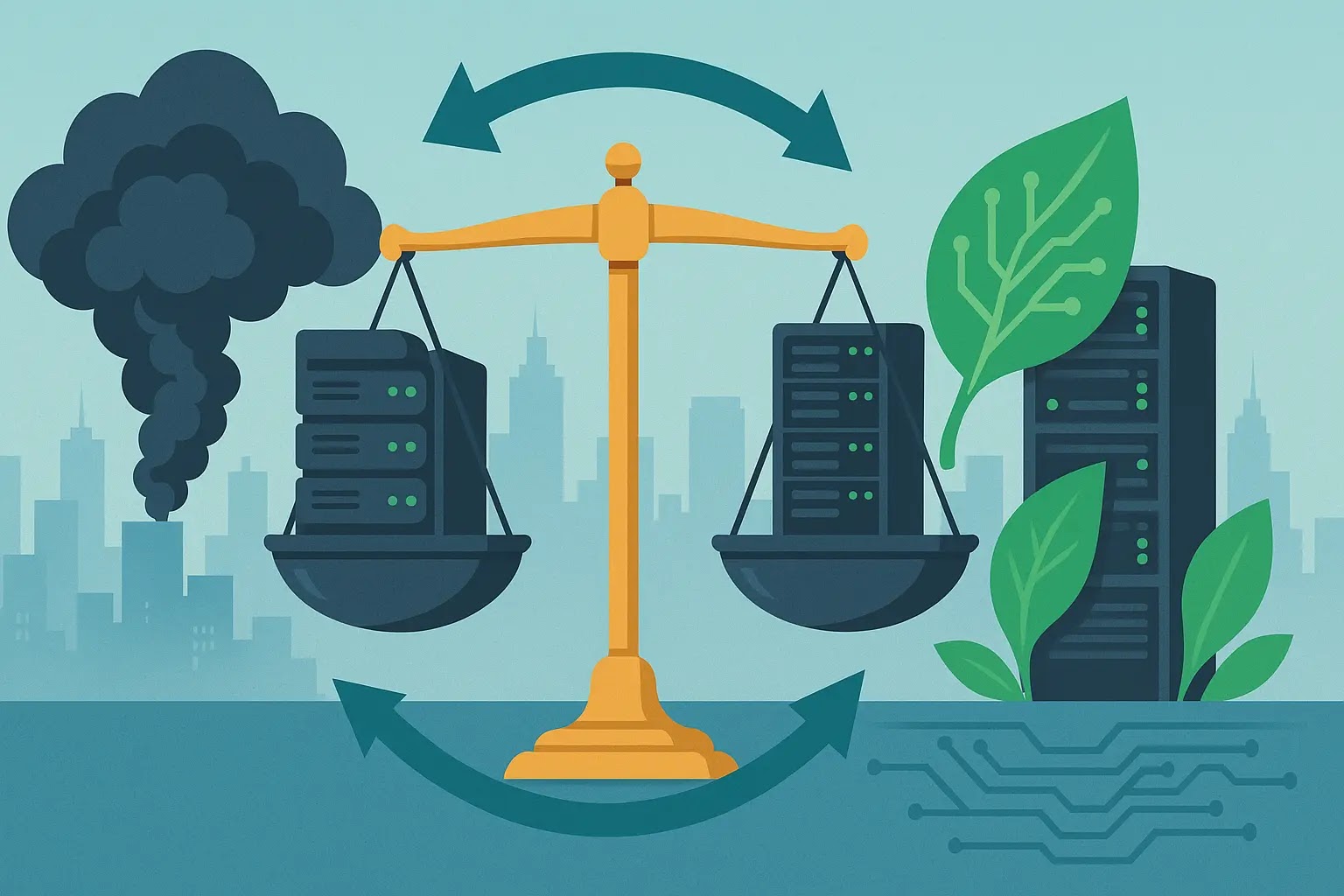
If there is a paradox here, it is a useful one. AI raises electricity demand and—used well—pulls waste out of the systems that emit the most. Precision farming that trims inputs, forecasting that tames variability, controls that stop HVAC drift, and routing that sips rather than gulps fuel are not abstractions. They are measurable changes in how energy is produced and used, and they are how compute earns its keep.
About the Author
Stuart Kerr is Technology Correspondent at LiveAIWire. He reports on AI’s impact on energy, infrastructure and the systems people rely on. Read more: https://liveaiwire.com/p/to-liveaiwire-where-artificial.html