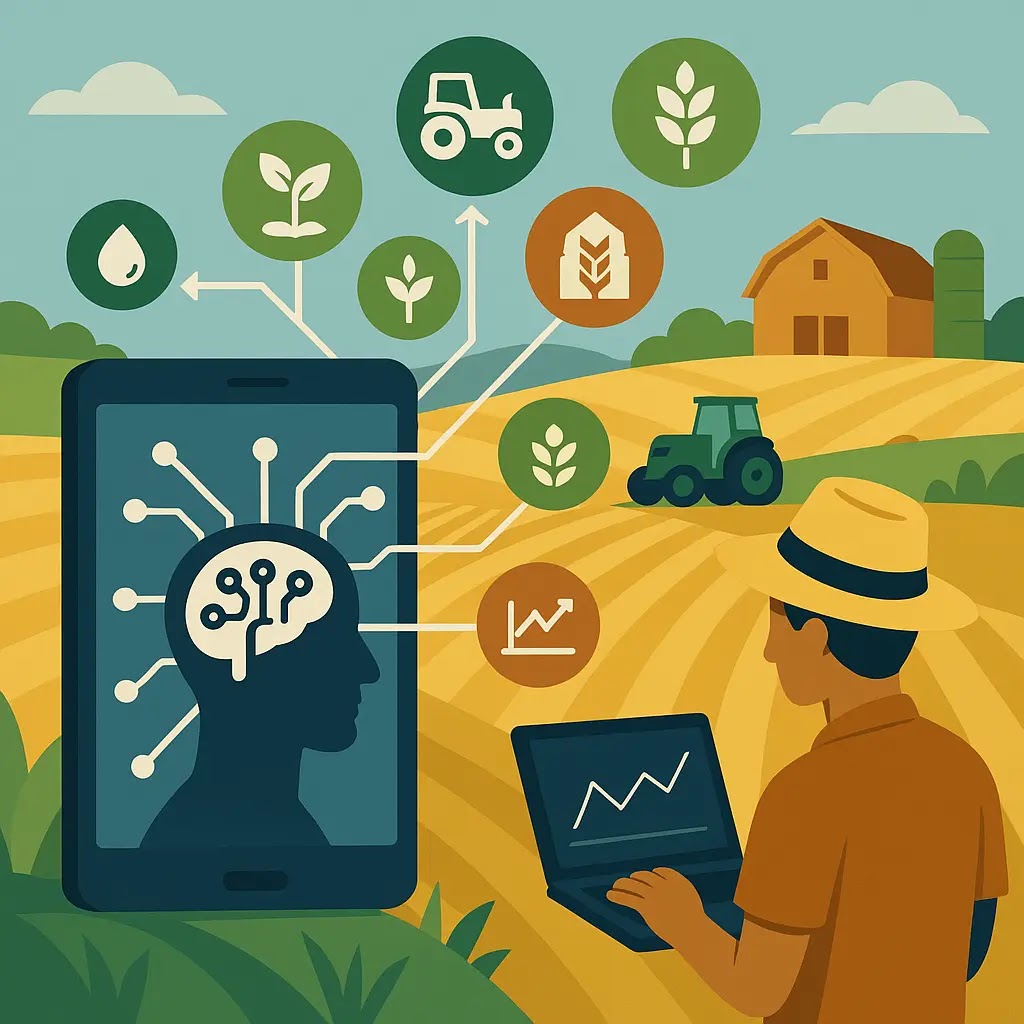
9 Ways AI Governance Platforms Is Upending Agriculture
As farms meet algorithms and data becomes a crop input, the rise of AI governance platforms is silently reshaping agriculture. In this article we unpack nine ways these systems are changing how we grow, regulate and consume food.
By Stuart Kerr Published 03/11/2025 Updated 03/11/2025
Agriculture has always been one of the most tradition-bound sectors on the planet: fields, seasons, soil, human judgement. But now a new force is entering the scene. AI governance platforms—systems that manage, audit and regulate artificial-intelligence tools—are starting to influence how crops are grown, how supply chains are tracked, and how regulations are enforced. In fact our previous look at robotics in care settings, “From Cradle to Care Home” (embedded link) showed how machines expand human roles. In agriculture the expansion is subtler but equally profound.
One major shift is in data standardisation and traceability. Organisations such as the Organisation for Economic Co‑operation and Development in a recent report highlighted how AI models forecast harvest times, predict pest outbreaks and monitor crop health with unprecedented accuracy—but only when frameworks enforce transparency, inclusion and robust governance. oecd.ai The platform layer that governs these AI tools becomes the backbone of everything that happens in the field.
Second, risk management is undergoing transformation. AI governance platforms are enabling large agrifood businesses to comply with regulations such as the EU’s deforestation rules by providing audit trails, model-monitoring and compliance dashboards. Reuters Third, they are enabling precision interventions: drones, sensors and satellite imagery feed into AI platforms that decide exactly when and where farms use water, fertiliser or pesticides. Studies such as “AI in Agriculture: Top Use Cases” show these systems are already increasing yields while reducing inputs. SmartDev
Fourth, platforms are boosting small-holder inclusion, though unevenly. While only large farms may afford full AI stacks, governance frameworks aim to extend access and prevent bias that favours commercial operations over smaller growers. FAOHome Fifth, they are enabling supply-chain visibility and accountability: digital platforms can track produce from seed to supermarket shelf, offering both environmental and ethical assurance (for example, tracking labour conditions, chemical use and provenance).
Sixth is the rise of adaptive regulation: AI governance platforms allow regulators to monitor AI tool performance, bias and outcomes in near real-time rather than waiting for years. Seventh, we’re seeing new business models: companies that provide AI governance as a service, offering agrifood firms compliance, audit and lifecycle monitoring of models in use. Eighth is resilience to climate change: governance platforms help ensure AI tools are aligned with sustainability targets, enabling farms to meet climate goals through data-driven strategies.
Ninth and finally, these platforms are creating ecosystem-level shifts. Farms, tech providers, regulators and financiers are now part of a digital ecosystem where governance platforms mediate interactions, data flows, and compliance. In our earlier piece “AI Gender Trap” (embedded link) we explored how technology reflects human biases—but in agriculture there is a chance to reset that through well-governed AI platforms.
The takeaway for businesses, farmers and policy-makers is clear: ignore the governance layer at your peril. The robots, drones and sensors may grab the headlines, but it’s the unseen software that decides whether they deliver value or failure. To stay ahead, audit your AI tools, demand governance transparency, consider how data flows into decisions, and build governance into your agricultural strategy from day one.
About the Author
Stuart Kerr, Technology Correspondent
https://liveaiwire.com/p/to-liveaiwire-where-artificial.html