AI tips
By Stuart Kerr, Technology Correspondent
Published: 26 June 2025 | Last updated: 9 May 2026
Contact: [email protected] | Follow @LiveAIWire on X
Author Bio: https://liveaiwire.com/p/to-liveaiwire-where-artificial.html
AI Stock Trading Has Moved From Wall Street to Main Street
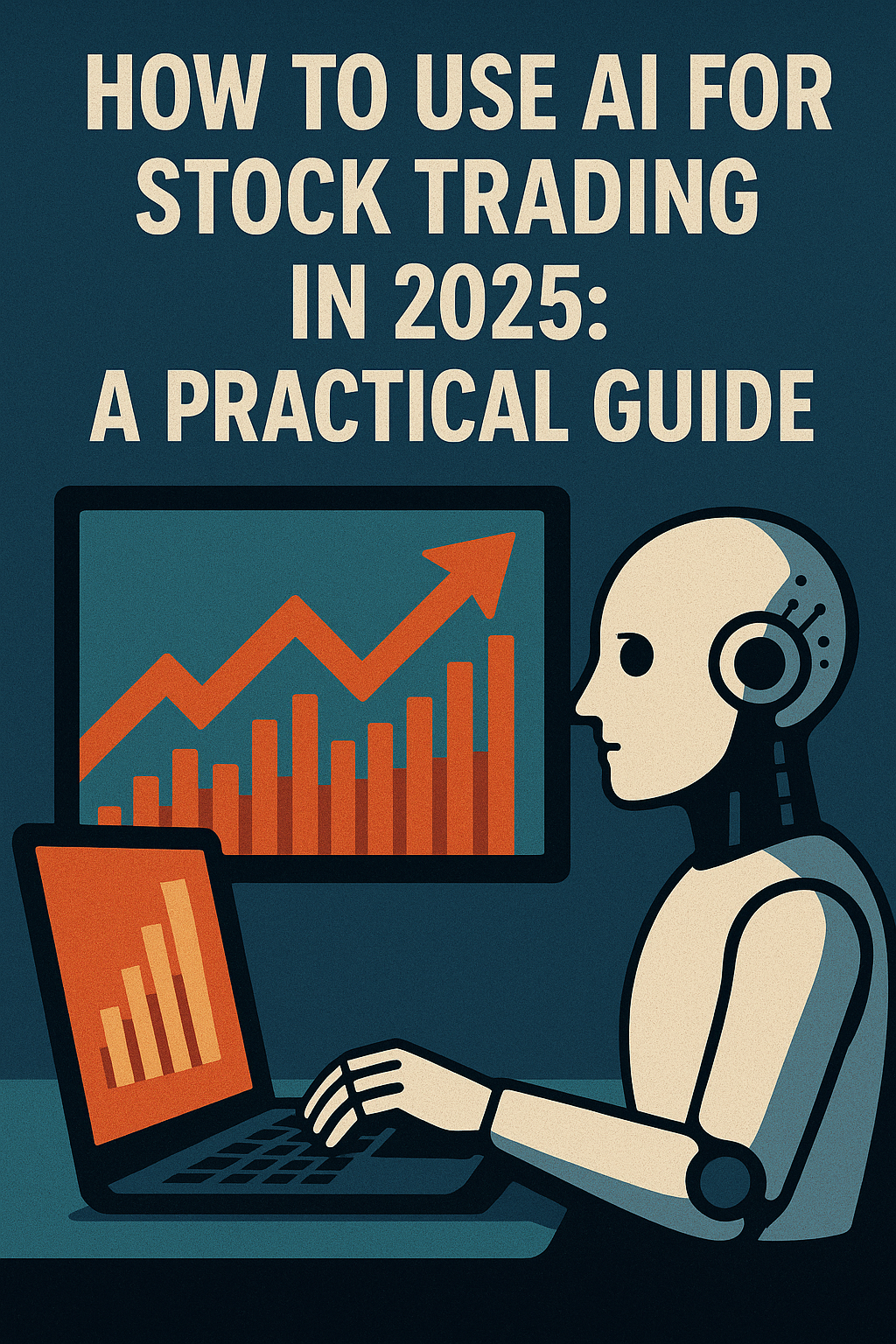
AI stock trading tools are no longer the exclusive preserve of hedge funds and institutional desks. In 2026, individual retail investors are using the same data-driven, emotion-free execution tools that Wall Street has relied on for years, and the platforms making this possible have become significantly more accessible, more powerful, and more practical than anything available even twelve months ago. According to J.P. Morgan research, over 60 percent of successful traders now use artificial intelligence tools in their daily operations. This guide will show you how to implement AI effectively in your trading strategy, whatever your experience level or account size.
The key principle to understand before diving in is that AI works best as a system. Consistent results come from combining specialised tools for research, execution, and risk management rather than relying on a single all-in-one solution. AI can scan markets and execute rules, but strategy, risk tolerance, and final decisions always depend on human judgment. That balance has not changed in 2026, even as the tools have become dramatically more capable.
Understanding Your Options
For beginners, AI research assistants are the natural starting point. Tools like ChatGPT and Gemini can analyse market reports, summarise earnings calls, and help you understand the implications of economic data releases. These require fifteen to thirty minutes of daily engagement and no technical background. They work best for investors who make occasional trades and want to improve the quality of their research without building complex systems.
For active traders, AI-powered platforms represent the next level. TradingView combines best-in-class charting with AI-powered pattern recognition that automatically identifies over 220 chart patterns and candlestick formations across stocks, forex, and crypto. Trade Ideas is widely regarded as the leading AI stock scanner for day traders in 2026, built around its Holly AI engine which generates five to eight high-probability trade ideas daily with specific entry points, exit points, and stop-loss levels. TrendSpider automates the manual labour of technical analysis, drawing trendlines, identifying support and resistance zones, and running multi-timeframe pattern detection automatically.
For serious investors and professionals, full automation systems using platforms like QuantConnect allow you to build, backtest, and deploy algorithmic strategies across stocks, futures, forex, and crypto. These require more time investment to set up but offer institutional-grade flexibility and transparency.
Conducting AI-Assisted Market Research
The quality of your AI research depends almost entirely on the quality of your prompts. Instead of asking vague questions, use specific prompts that generate actionable insights. Rather than asking whether you should buy a particular stock, try something like this: analyse the company’s last quarterly report comparing revenue growth versus competitors, production capacity changes, and new product pipeline, then provide a risk assessment based on the last three years of data.
The essential data sources to feed into your AI research remain SEC filings for fundamental analysis, Federal Reserve economic reports, earnings call transcripts, and global market sentiment indicators. In 2026, platforms like TradeEasy.ai now aggregate financial news in real time and apply sentiment analysis to every article, classifying each as bullish, neutral, or bearish and estimating its market impact, giving traders a structured view of how news is likely to move prices before they react.
Developing Your Trading Strategy
Backtesting no longer requires programming knowledge. Most platforms now offer visual backtesting tools that let you upload historical price data, define your entry and exit rules, select your indicators, and run simulations across different market conditions without writing a single line of code. This is one of the most significant democratising developments in AI trading over the past year.
Every AI-assisted strategy should include automatic stop-loss protection, position sizing limits where you never risk more than two percent of your capital per trade, sector diversification alerts, and news monitoring for sudden market shifts. In 2026, Tickeron has become notable for assigning confidence levels to each AI prediction and publicly auditing the historical accuracy of its AI robots across specific patterns and stocks, adding a layer of transparency that earlier-generation tools lacked.
Your Daily Routine With AI
Before markets open, review AI-generated overnight market summaries, check for earnings surprises or economic data releases, and update your watchlist. During trading hours, monitor AI alerts for entry and exit signals and watch for unusual volume or price movements flagged by your scanner. After the close, analyse performance, adjust strategy parameters if needed, and prepare for the next session’s potential opportunities.
As explored in Beyond Buzz: Why the AI Hype Cycle Is Over, the tools that deliver sustained value are those built around real problems and disciplined processes rather than novelty. That principle applies as much to trading as to any other domain.
Avoiding Common Mistakes
The most important mistake to avoid is over-reliance on AI. Always apply human judgment to AI recommendations and understand why the AI is making a specific suggestion before acting on it. AI excels at pattern recognition and data processing but can miss broader economic shifts, geopolitical events, and structural regime changes that no model fully anticipates.
The second common mistake is chasing performance by jumping between different AI systems. Stick to a proven strategy and give it sufficient time to demonstrate results before making changes. The third is ignoring fundamentals entirely. AI tools should complement fundamental analysis, not replace it.
The Regulatory Context in 2026
It is worth noting that AI trading tools are increasingly coming under regulatory scrutiny. The SEC has identified AI-driven threats to data integrity and third-party vendor risk as examination priorities for 2026. Investors using AI trading platforms should ensure they understand the data practices, transparency standards, and liability frameworks of any tool they rely on. This connects to the broader governance landscape covered in AI Governance and the Open-Source Dilemma.
Getting Started
Start with one AI tool and master it before adding complexity. Paper trade for at least two weeks before committing real capital. Join communities of traders using the same platforms to learn from shared experience. And remember that AI is a powerful tool, but successful trading still requires discipline, risk management, and the willingness to stay accountable to your own strategy.
For personalised guidance, reach out to the LiveAIWire team at [email protected].
About the Author
Stuart Kerr is Technology Correspondent at LiveAIWire. He writes about artificial intelligence, ethics, and how technology is reshaping everyday life. Follow @LiveAIWire on X.