
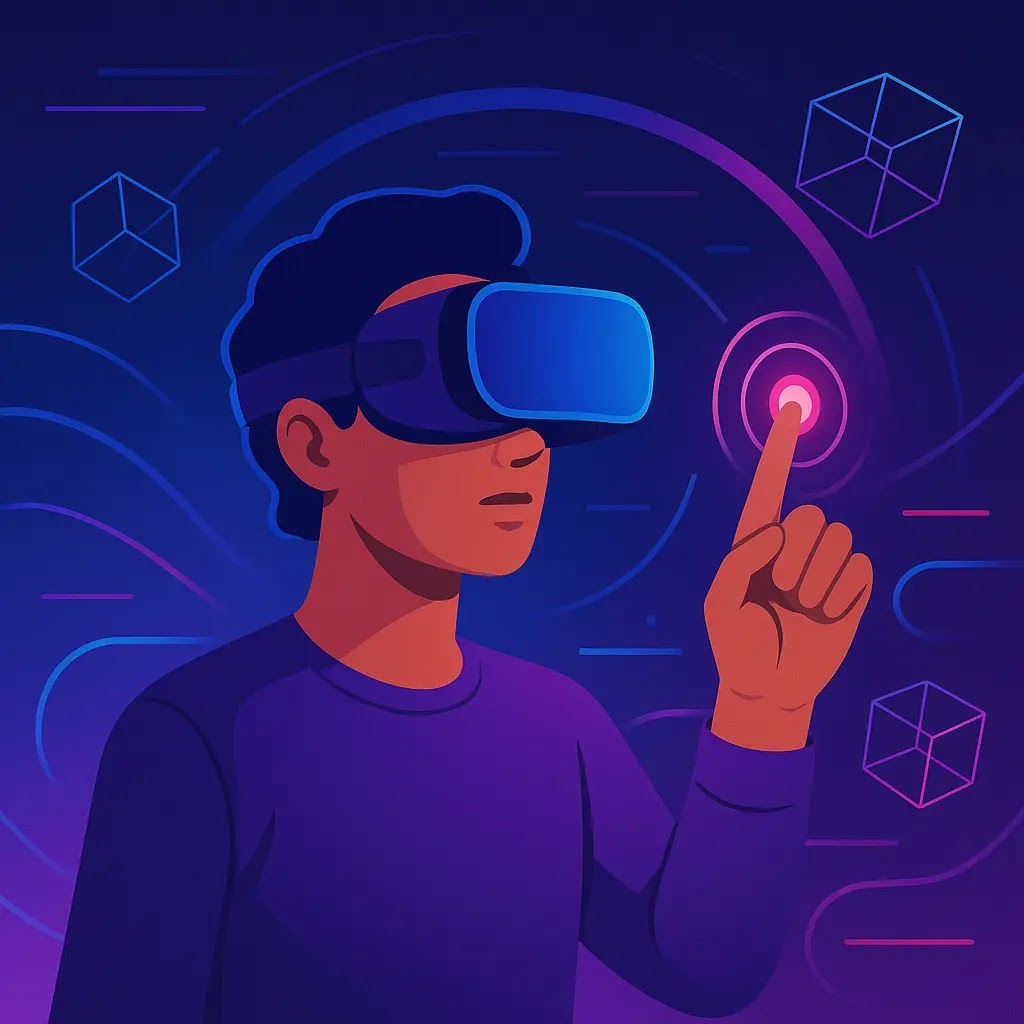
Extended reality is no longer a technology you can afford to wait out. XR, which covers virtual reality, augmented reality, and mixed reality, is moving rapidly beyond gaming and into classrooms, hospitals, factory floors, and everyday workplaces, and the institutions moving first are already documenting measurable results rather than speculative promise. Higher education leaders now describe extended reality as requiring genuine institutional strategy rather than opportunistic experimentation, according to EDUCAUSE’s guidance on XR adoption, which highlights that colleges piloting XR labs and hybrid classrooms must think ahead about privacy, ethics, and infrastructure rather than treating the technology as a novelty add-on.
The gap between organisations that prepared deliberately and those that did not is already visible in outcomes. Earlier waves of XR investment produced plenty of abandoned pilots, expensive headsets gathering dust in supply closets, and training programmes nobody completed. The difference this time is that the technical and organisational obstacles that killed those earlier efforts, content scarcity, device fragility, and motion sickness, have genuinely improved, and the institutions and individuals preparing properly now are positioned to benefit rather than repeat the same expensive mistakes.
Why This Extended Reality Wave Is Different From the Last One
Extended reality has been deployed before, often with mixed results, and understanding why previous attempts stalled is the first step to avoiding the same fate. Content scarcity was a persistent early barrier: XR platforms could only take learners as far as their content library allowed, and building new immersive material required specialist 3D design skills that few institutions had in-house.
Generative AI tools that can now produce usable 3D assets from a text description have meaningfully lowered that barrier, expanding what a modest budget can actually populate an XR environment with. As LiveAIWire’s coverage of where spatial computing actually stands in 2026 found, this same AI-generated content shift is what separates the enterprise traction spatial computing is finally getting from the metaverse hype cycle that preceded it.
Hardware reliability was the second obstacle. Early headsets were fragile, difficult for IT teams to manage at scale, and required constant troubleshooting that consumed more staff time than the learning outcomes justified. Device management has matured considerably since, with vendor-supported fleet management tools now standard rather than improvised. The third obstacle, motion or XR sickness, affected as many as one in four users in early deployments, discouraging repeat use. Improved displays, better tracking, and simple best practices like shorter session lengths have substantially reduced this problem, though it has not disappeared entirely and remains worth testing for before any large rollout.
Three Moves That Actually Prepare You
Preparing for extended reality, whether as an individual professional, an educator, or an institution, comes down to three concrete moves rather than a long list of abstract considerations. The first is accessibility and skill readiness: choosing devices and software that work smoothly for your actual users, and building familiarity through small, low-stakes XR experiences before committing to anything larger. Trying a consumer headset or a free mobile AR app is a legitimate first step, not a shortcut around serious evaluation.
The second move is integration into existing workflows rather than treating XR as a parallel activity bolted onto normal work or study. The honest question to ask before any XR investment is whether the immersive format genuinely enhances the specific task at hand, understanding spatial relationships, rehearsing a physical procedure, visualising a three-dimensional structure, or whether a conventional screen would do the job just as well at a fraction of the cost and complexity. XR earns its place when the task benefits specifically from spatial presence. It does not earn its place simply because it is available.
The third move is planning for the ethical, infrastructural, and cost-related implications before rather than after deployment. Poor connectivity, insufficient staff training, and incompatible hardware are the most common reasons XR investments fail to deliver, and all three are foreseeable with modest upfront planning. Institutions that budget for ongoing technical support and instructor training alongside the hardware itself see meaningfully better outcomes than those that treat the devices as a one-time purchase.
What the Evidence Actually Shows
The benefits reported by early adopters are genuine rather than marketing claims. Teachers using XR in applied sciences have reported that immersive three-dimensional environments help students grasp abstract concepts that are difficult to convey through text or two-dimensional diagrams, particularly in fields like chemistry, anatomy, and engineering where spatial understanding is central to the material.
Enterprise deployments confirm the same pattern outside education: Apple’s own developer platform has documented businesses like JigSpace using immersive product demonstrations to compress sales cycles from months to weeks, evidence that the value is concrete rather than aspirational when the use case genuinely fits the format.
Users consistently report higher engagement and richer learning experiences when XR is deployed for tasks that genuinely benefit from immersion, rather than for content that would work equally well as a video or a slide deck. The privacy dimension of always-on immersive sensors is worth taking seriously too, a concern LiveAIWire examined in its coverage of the accountability tools people are building to push back on AI surveillance.
The challenges are equally real and worth stating plainly rather than glossing over. Equipment cost remains a genuine barrier for under-resourced institutions and individuals. Teacher and staff training takes real time and real budget that many organisations underestimate.
Long-term studies of learning outcomes are still comparatively thin, which means the evidence base for XR’s superiority over conventional methods is stronger for some applications, such as spatial and procedural training, than for others, such as general knowledge transfer. Equitable access is a genuine concern: an institution that deploys XR only for students who can afford their own hardware risks widening the gap it intended to close. As LiveAIWire’s guide to designing technology people actually keep using found, the products that earn genuine long-term adoption are built around a real problem rather than a demo moment, and that discipline applies directly to XR procurement decisions.
What to Watch Over the Next Three Years
Three trends will define how extended reality actually reaches most people over the coming years. The first is deeper integration with AI, producing adaptive, personalised learning and training environments that adjust to an individual’s pace and prior knowledge rather than delivering identical content to everyone. The second is a shift from isolated single-user devices toward collaborative, social experiences, group learning sessions and remote teamwork conducted inside shared immersive spaces rather than through a video call. The third is falling cost and improving convenience, with head-mounted displays and mobile-based AR steadily reducing the price and friction that kept XR a niche technology for most of the past decade.
None of these trends will deliver value automatically. They depend on the same foundations discussed above: reliable connectivity, a clear articulation of what problem the immersive format actually solves, properly trained instructors or facilitators, and inclusive design that does not assume every user has the latest hardware. Extended reality has the genuine potential to reshape how people learn, train, and collaborate, but only for those who treat it as a deliberate strategic choice rather than a flashy gadget purchased because the technology was available. The revolution, when it arrives, will be about the experience and its relevance to a real problem, not about the headset itself.
About the Author
Stuart Kerr is Technology Correspondent at LiveAIWire, covering artificial intelligence, cybersecurity, and the social impact of emerging technology. He publishes daily at LiveAIWire.com.