
By
Stuart Kerr, Technology Correspondent,
LiveAIWire
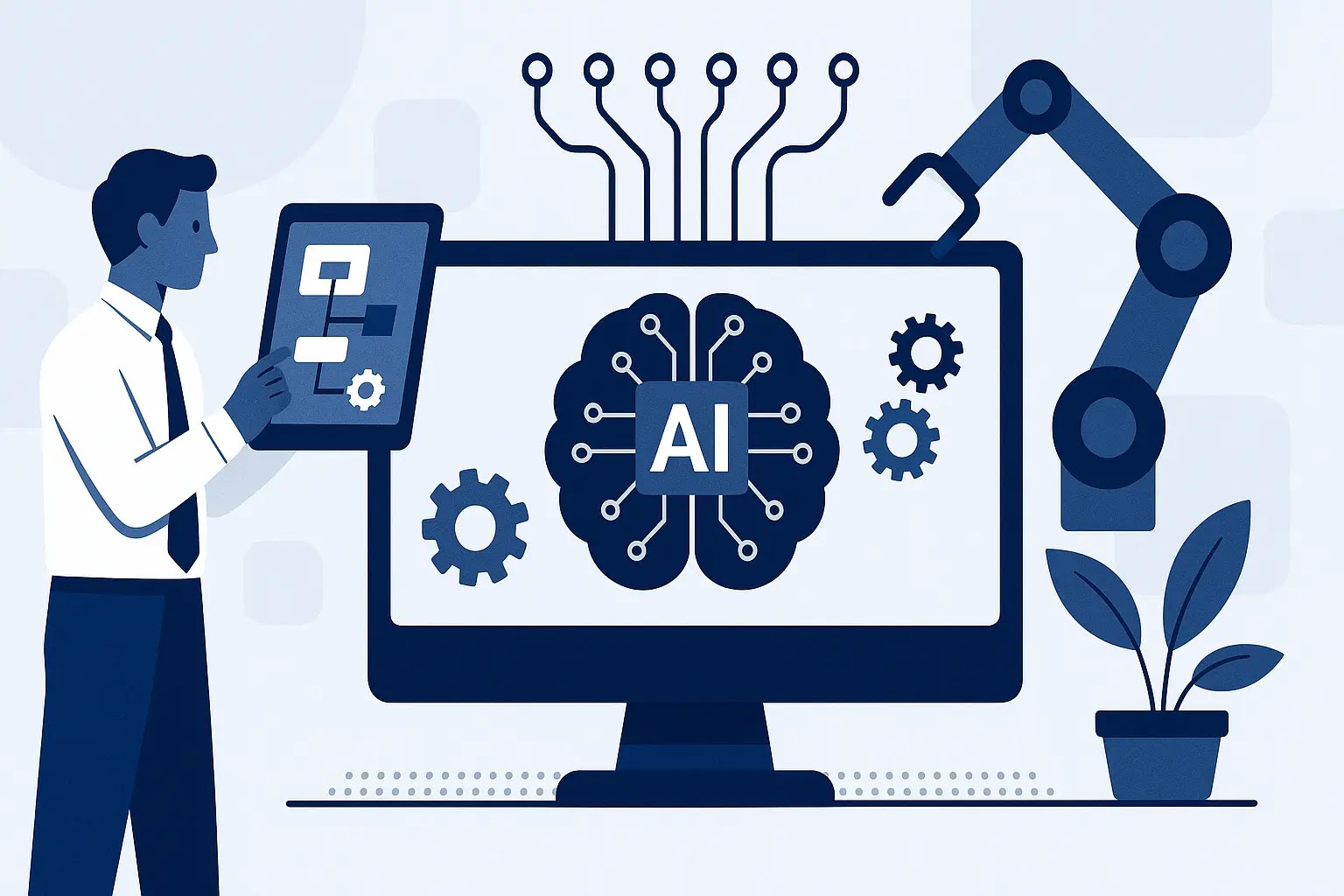
Automation has always promised efficiency, but in 2025 the conversation has changed. Artificial intelligence is no longer about replacing routine tasks; it is about reconfiguring the entire structure of work. AI workflow automation is weaving itself into workflows across industries, creating new roles, eliminating old ones, and challenging long-held assumptions about productivity.
For workers, the unease remains real. As explored in our recent piece on job displacement data, employees are asking whether their jobs are secure in an era where algorithms can write reports, manage logistics, and even advise on legal cases. The fear of an automation-driven exodus still lingers, particularly in industries already vulnerable to disruption. Yet the story is not simply one of displacement. It is increasingly one of transformation.
AI Workflow Automation as Collaborator, Not Competitor
Research from IBM suggests that the new wave of AI agents is designed less to replace employees and more to act as collaborators, handling repetitive tasks so people can focus on higher-level decision-making. This reframing positions AI workflow automation not as a competitor but as an assistant, freeing up human capacity to innovate, strategise, and engage in more meaningful work.
The shift is visible in enterprise strategy. According to McKinsey’s Superagency in the Workplace research, forward-thinking organisations are experimenting with what the report calls superagency models, in which AI systems operate alongside teams as empowered co-workers. McKinsey’s survey of nearly 4,000 employees and executives found that workers are already using generative AI three times more than their leaders realise, and that the biggest barrier to scaling AI workflow automation is not employee readiness but leadership hesitation. These setups give individuals more leverage, allowing them to manage bigger portfolios, analyse complex data in real time, and respond faster to customer needs. In this sense, automation becomes an amplifier of human ability rather than its adversary.
The Transparency Problem
Still, transparency remains a sticking point. When AI workflow automation is embedded into daily operations, businesses must ensure that outcomes are not only efficient but also explainable. McKinsey’s own research found that only 39 percent of C-suite leaders currently use benchmarks to evaluate their AI systems, and of those who do, just 17 percent prioritise measuring fairness, bias and transparency over raw performance metrics. Interpretability is crucial if employees and clients are to trust machine recommendations. A decision that cannot be explained may save time in the short run but risks undermining confidence in the long run.
The data supports this trajectory. Stanford HAI’s AI Index shows widespread adoption of automation technologies across sectors, from manufacturing and finance to healthcare and education. Yet adoption rates correlate strongly with organisational readiness: organisations that invest in training and integration tend to see higher productivity gains than those that simply deploy AI tools without redesigning processes around them.
Even traditionally human-driven fields are being reimagined by AI workflow automation. Instant website-building platforms now compress tasks that once took days into minutes, opening new opportunities for small businesses and entrepreneurs who previously lacked technical expertise. The effect is not just efficiency, it is empowerment for organisations that could not previously afford dedicated technical staff.
Cost-Cutting Tool or Foundation for Something Better?
What emerges is a dual narrative. On one side, automation displaces familiar tasks, forcing workers and companies to adapt. On the other, it creates opportunities to reimagine work at a deeper level, reshaping not just what people do but how they do it. The critical question for 2026 is whether businesses will treat AI workflow automation as a cost-cutting exercise or as a foundation for a more agile, human-centred workplace.
The answer may well define the future of work. Those who embrace AI workflow automation as a partner, investing in transparency, training, and ethical deployment, will set the tone for sustainable growth. Those who resist or cut corners risk not only inefficiency but a breakdown in trust. The future of automation is not about machines replacing humans, it is about redesigning work so that both can thrive together.
About the Author
Stuart Kerr is Technology Correspondent at LiveAIWire, covering artificial intelligence, cybersecurity, and the social impact of emerging technology. He publishes daily at LiveAIWire.com.