
Microsoft’s
data centre electricity consumption grew by 34 percent in fiscal year 2024,
according to its own sustainability report, a figure that contributed to the
company missing its carbon reduction targets for the third consecutive year
despite significant investment in renewable energy procurement. Google’s
water consumption for data centre cooling increased by 17 percent in 2023.
Amazon Web Services, the largest cloud computing provider in the world, does
not publish disaggregated data on the energy consumption of its AI workloads
specifically, making independent assessment of AI’s contribution to AWS’s
environmental impact impossible without significant inferential assumptions.
The tech giants are, to varying degrees, publishing sustainability data. They
are not publishing the specific data on AI energy consumption that would
allow meaningful accountability for the fastest-growing component of their
environmental footprint.
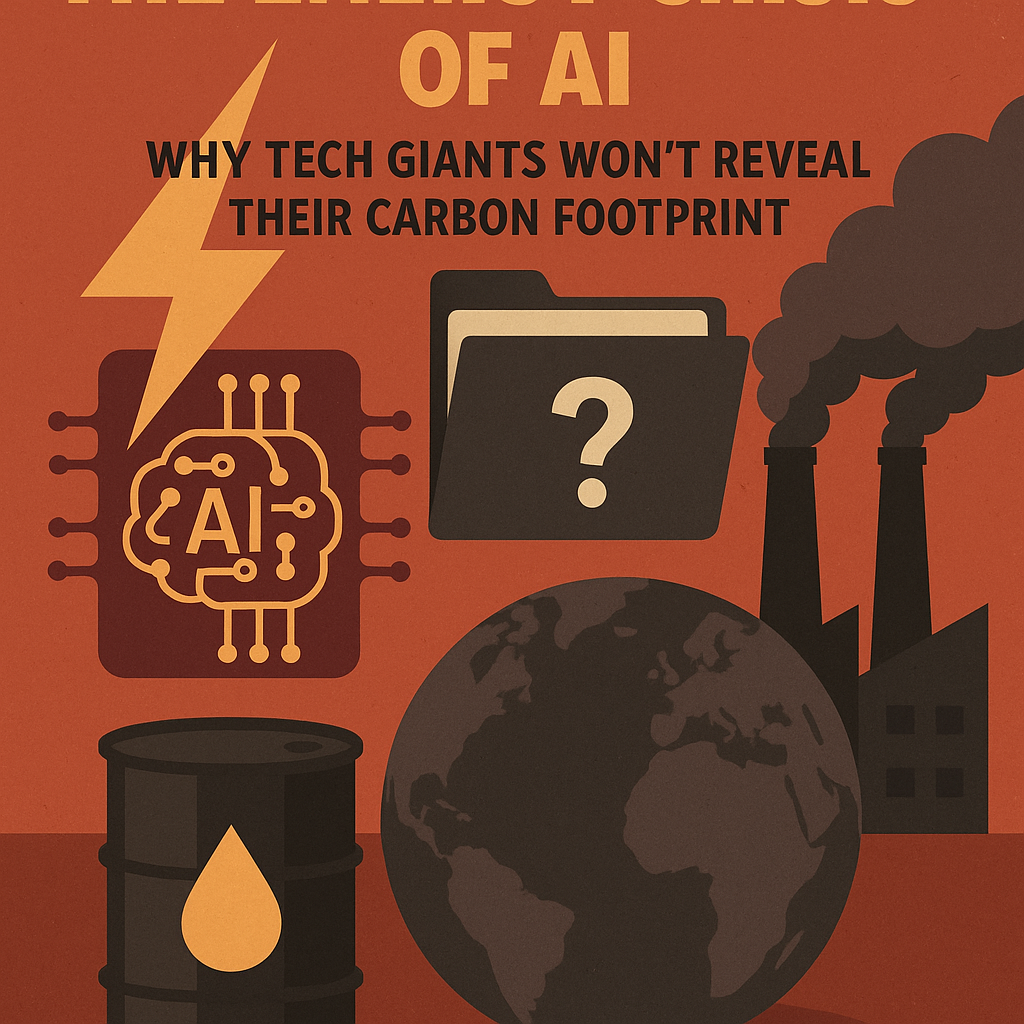
The reluctance to disclose AI-specific energy and carbon data is
not accidental. AI workloads are the most energy-intensive component of cloud
computing and the component growing fastest; disaggregating AI energy
consumption from other cloud workloads would make visible a figure that
creates uncomfortable tension with the sustainability commitments these
companies have made and the climate technology narrative they often promote.
The asymmetry between the prominence with which AI companies discuss AI’s
potential to help address climate change and the opacity with which they
treat their own AI-related emissions is one of the more striking examples of
corporate sustainability washing in the current technology
sector.
What the Data Shows
The energy consumption of AI can be estimated from publicly
available information combined with reasonable technical assumptions, and
researchers have done this work. Training a large frontier AI model like
GPT-4 is estimated to consume 50 to 100 gigawatt-hours of electricity,
depending on hardware efficiency and training duration. Inference, running
the model to answer queries, consumes less energy per query but operates
continuously at scale; a model serving millions of daily users accumulates
substantial inference energy consumption that can exceed training consumption
over the model’s operational lifetime. The University of Massachusetts, the
AI Now Institute, and Stanford’s HAI institute have all
published estimates of AI energy consumption that converge on figures
representing a significant and growing fraction of data centre energy
demand.
The trajectory is concerning. Data centre electricity consumption
globally is projected to roughly double between 2023 and 2026, driven
primarily by AI workload growth. The International Energy Agency has
published analysis showing that this growth in electricity demand is
outpacing the addition of clean energy capacity in most major markets,
meaning that the marginal electricity powering AI growth is often generated
from fossil fuels. Countries including Ireland, where a large fraction of
European cloud infrastructure is concentrated, face grid stress from data
centre demand growth that is straining renewable energy targets and competing
with domestic and industrial consumers for clean electricity
capacity.
The Water Problem
Water consumption for data centre cooling receives less attention
than energy consumption but represents an equally significant environmental
concern in water-stressed regions. Evaporative cooling systems, which are
more energy-efficient than air-cooled alternatives, consume significant
quantities of fresh water. The UC Riverside study estimating that training
GPT-3 consumed approximately 700,000 litres of fresh water and that each
ChatGPT conversation requires roughly 500ml of cooling water has been widely
cited and contested by OpenAI, which argues the estimates are based on
unverified assumptions about its infrastructure. The absence of verified
disclosure makes it impossible to resolve this dispute, which is precisely
the problem that mandatory disclosure requirements would address. Water Footprint
Network research on the water intensity of digital infrastructure
provides the methodological framework that mandatory AI water reporting
should adopt.
The Disclosure Gap and Why It Matters
The absence of standardised, mandatory AI energy and carbon
disclosure creates several distinct harms. It prevents investors from
accurately pricing the environmental risks associated with AI company
operations. It prevents regulators from developing evidence-based
environmental standards for the AI industry. It prevents researchers from
accurately modelling AI’s contribution to energy demand and carbon emissions.
And it prevents consumers and organisations from making informed choices
about the environmental cost of different AI services and providers. These
are not trivial information gaps; they affect multi-trillion-dollar
investment decisions, national energy planning, and the credibility of
corporate sustainability commitments across the technology
sector.
What This Means for You
The energy crisis of AI is not a problem you can personally solve,
but it is one you can meaningfully influence. Supporting regulatory
developments that mandate AI energy and carbon disclosure, favouring AI
providers that publish detailed and independently verifiable sustainability
data over those that do not, and engaging with the public consultation
processes of energy and climate regulators when they address AI and data
centre energy policy are all forms of civic participation that affect the
trajectory of AI’s environmental impact. The technology is not going to
become less energy-intensive through market pressure alone; the incentive
structure for AI companies is strongly weighted toward performance over
efficiency, and only regulatory requirements create the accountability
necessary to change this. The geographic concentration of AI energy
consumption creates specific policy challenges that national energy planning
has not adequately addressed. Data centre clusters in Northern Virginia,
Dublin, Singapore, and a handful of other locations are consuming electricity
at rates that affect regional grid stability and renewable energy targets.
Regulators in Ireland, where data centres account for over 20 percent of
national electricity consumption, have imposed moratoria on new data centre
connections in parts of the grid where capacity is constrained. The UK is
beginning to face similar pressures in regions where planned data centre
developments, including hyperscale AI facilities, represent significant
increments to local grid demand. Managing AI energy demand within the
constraints of the national electricity system requires coordination between
planning authorities, energy regulators, and technology companies that
current institutional frameworks do not provide efficiently. The Ofgem review of data
centre connections policy is developing frameworks for managing this demand
growth that balance the economic benefits of AI infrastructure investment
against the grid management challenges it creates. For related analysis, see
our coverage of AI’s
hidden carbon costs and the
renewable energy transition.
The policy tools available to
address AI energy consumption are straightforward in principle: mandatory
disclosure requirements, energy efficiency standards for AI hardware and data
centres, carbon pricing that internalises the environmental cost of AI energy
consumption, and renewable energy additionality requirements for large AI
workloads. Each of these tools has precedents in other energy-intensive
sectors and would produce measurable improvements in AI energy accountability
and efficiency if implemented. The political challenge is that the AI
industry has significant resources to resist regulation and frames AI energy
consumption primarily as a clean energy demand driver rather than a carbon
liability, a framing that regulators need to critically evaluate rather than
accept. The Climate
Change Committee has identified data centre emissions as a growing
category requiring specific policy attention.
Transparency on AI energy
consumption also matters for the companies buying AI services. Large
enterprises with their own net zero commitments need accurate scope 3
emissions data from AI providers to meet their reporting obligations. The
absence of AI-specific energy disclosure from major cloud providers creates a
gap in corporate carbon accounting that sustainability reporting frameworks
including the GHG Protocol are beginning to address through updated guidance
on digital services emissions.
About the Author
Stuart Kerr is a technology correspondent at LiveAIWire, covering
artificial intelligence, digital innovation, and the social impact of
emerging technologies. Follow LiveAIWire for daily analysis at liveaiwire.com.