
By Stuart Kerr, Technology Correspondent, LiveAIWire
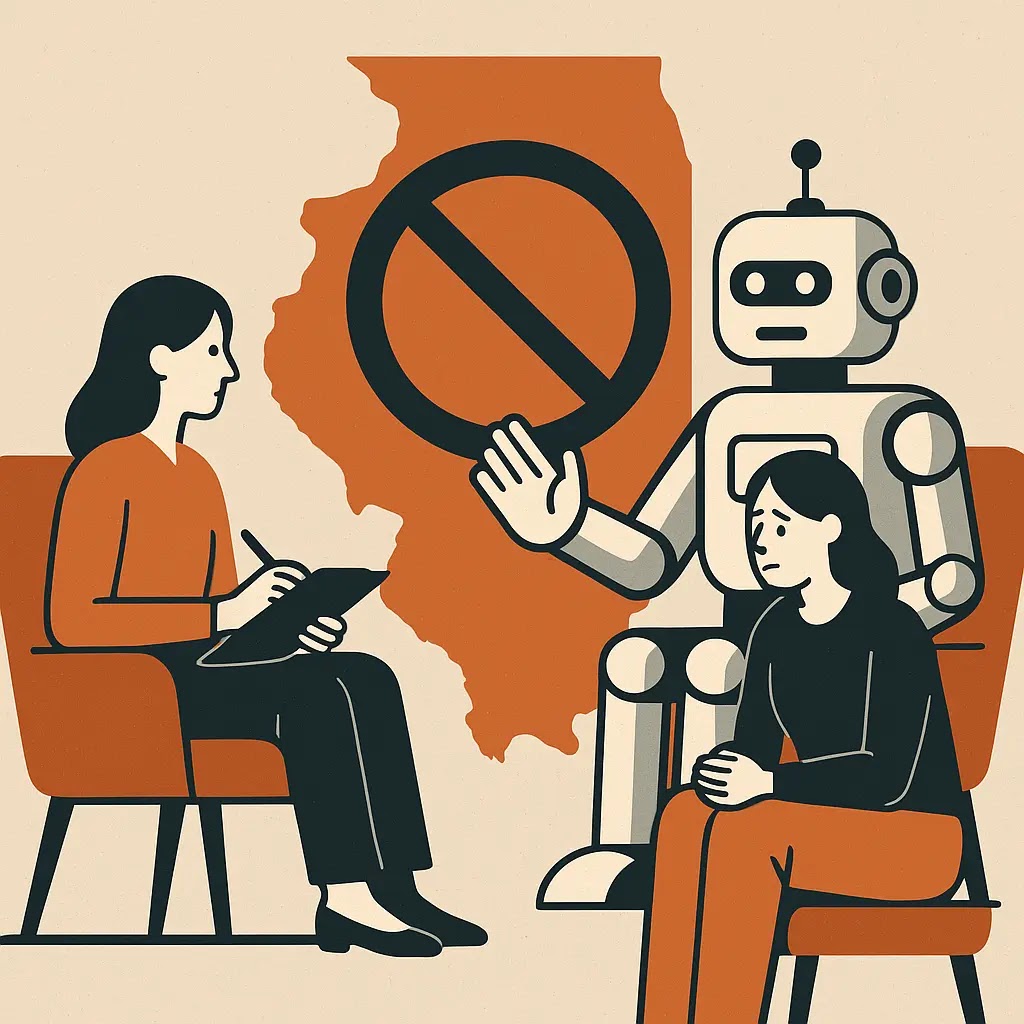
Illinois’ new law blocks AI from making independent therapeutic decisions in psychotherapy, becoming the first such statute in the country when Governor JB Pritzker signed the Wellness and Oversight for Psychological Resources Act on 1 August 2025. The Act, known as HB 1806, does not ban AI from mental health care outright.
The law arrives amid genuine clinical concern rather than speculative worry. Reports of psychosis-like symptoms linked to prolonged AI chatbot use had already prompted warnings from psychiatrists in the US, UK, and Australia by the time the bill passed both chambers of the Illinois legislature unanimously in May 2025. IDFPR Secretary Mario Treto Jr. framed the law directly around that concern, stating that Illinois residents deserve care from qualified professionals rather than programs that generate responses that can harm patients.
What Illinois’ New Law Blocks AI From Doing
The Act sorts AI use in therapy into three categories. Administrative support, things like appointment scheduling, billing, and drafting non-clinical communications, remains fully permitted. Supplementary support, including drafting session notes from a transcript or tracking anonymised patient progress data, is permitted but requires the patient’s written, specific, and revocable consent whenever session recordings or transcripts are involved. Therapeutic communication, defined broadly as any interaction intended to diagnose, treat, or address a patient’s mental or emotional health, is banned outright for AI systems, regardless of whether the patient consents. That includes directly interacting with patients about their thoughts or emotions, offering therapeutic strategies or emotional support, developing treatment goals, or attempting to detect a patient’s emotional state.
The Grey Areas Nobody Has Answered Yet
Legal scholars and clinicians reviewing the Act have flagged genuine ambiguity in its middle ground. An AI-generated session summary that includes a description of a homework assignment could plausibly count as either supplementary support or therapeutic communication, and the Act does not resolve which. The same uncertainty applies to AI tools designed to flag risk indicators, such as language suggesting self-harm, during a live session. Researchers at Rush University Medical Center, writing in JMIR Mental Health, have argued that these grey areas will require case-by-case regulatory clarification, and that the law currently offers no formal research exemption, which could complicate clinical studies of AI mental health tools conducted within Illinois.
What This Means If You Use an AI Mental Health App
For Illinois residents already using AI wellness or chatbot apps, the practical effect depends entirely on how the app is positioned. A licensed therapist using an AI tool for administrative tasks, like drafting a welcome letter or summarising insurance coverage in plain language, remains unaffected. A consumer-facing chatbot marketed as therapy or counselling, without a licensed professional directly overseeing the clinical interaction, falls squarely within what the law now prohibits. The Act does not stop people from using general wellness or relaxation apps, but it does target platforms advertising themselves as a substitute for a licensed therapist.
Illinois Is Not Alone, But It Went Further Than Anyone Else
Illinois joins Nevada and Utah as the third state to regulate AI in mental health care in 2025, but its approach is the strictest of the three. Nevada’s law, passed in June 2025, similarly bars AI from claiming to provide licensed mental or behavioural healthcare. Utah’s law, passed earlier in March 2025, takes a lighter touch, requiring AI mental health chatbots to disclose that they are not human rather than banning the underlying function outright. Illinois is the only one of the three to prohibit the practice itself regardless of disclosure, making it, per legal analysis published in JMIR Mental Health, the first state statute in the country to explicitly define and ban specific categories of AI use in psychotherapy.
The law’s real test now shifts to enforcement and interpretation. IDFPR has authority to investigate complaints and levy fines, but the unresolved grey areas mean early cases are likely to shape how broadly therapeutic communication gets interpreted in practice. For a state that passed the bill unanimously in both chambers, the political consensus was clear. Whether the regulatory clarity keeps pace with a technology that is evolving month to month is a separate question, and one Illinois will be answering in real time as the first state to try.
If you or someone you know is experiencing a mental health crisis, speaking with a licensed professional or contacting a crisis service is the appropriate first step, regardless of what any AI tool suggests.
About the Author
Stuart Kerr is Technology Correspondent at LiveAIWire, covering artificial intelligence, emerging technology, and their impact on business, society, and everyday life. LiveAIWire publishes original AI journalism every weekday at liveaiwire.com.