
By Stuart Kerr, Technology Correspondent, LiveAIWire
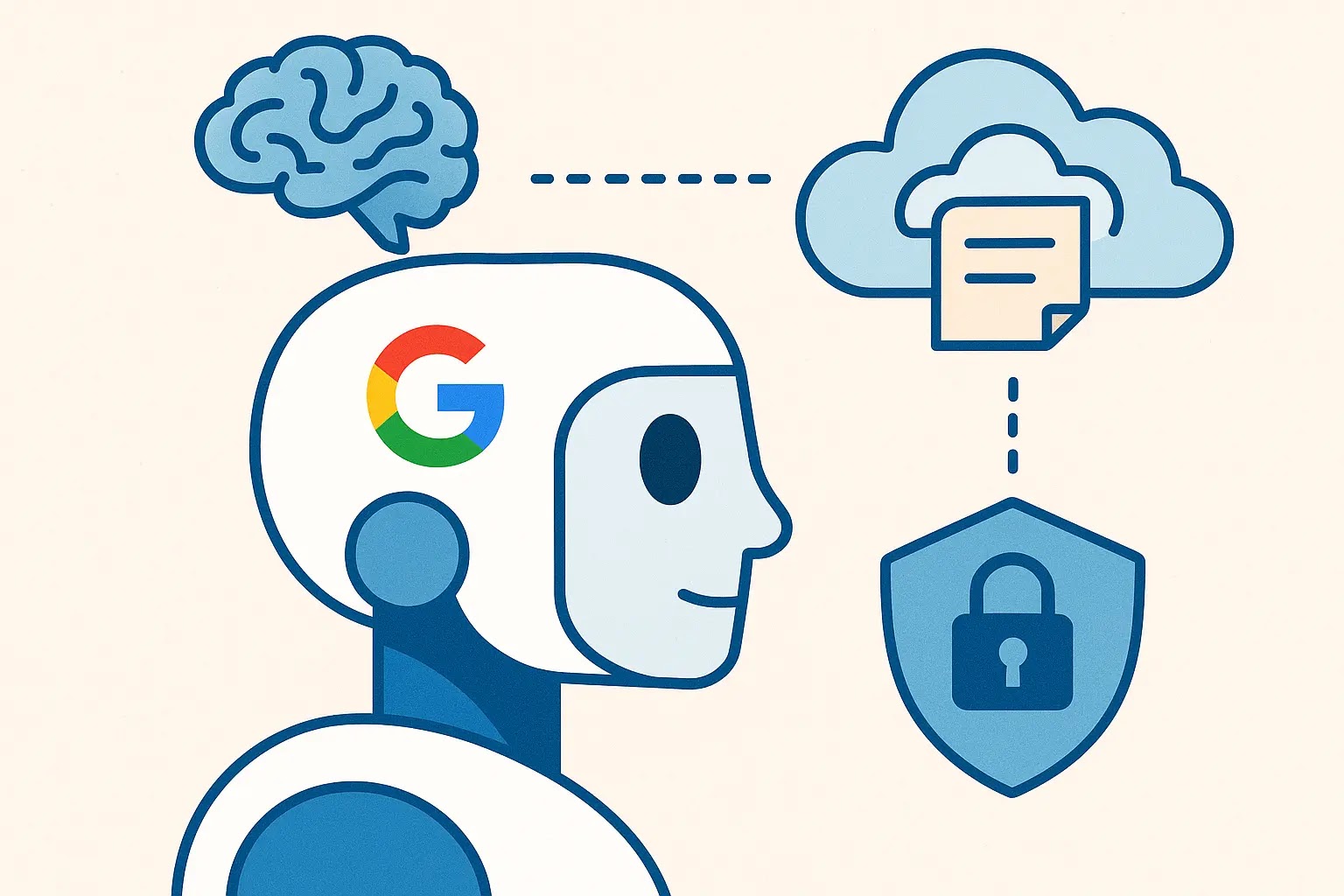
Google’s Gemini gets smarter memory as of 13 August 2025, when the company rolled out automatic recall of past conversations alongside a new privacy feature called Temporary Chats. The update, detailed in an official Google blog post by Michael Siliski, senior director of product management for the Gemini app, marks a shift from a chatbot that answers prompts in isolation to one that learns a user’s preferences over time and applies them unprompted. The feature launches enabled by default on the Gemini 2.5 Pro model in select countries, with Gemini 2.5 Flash and additional regions to follow in the coming weeks.
The timing is not incidental. Two weeks earlier, TechCrunch reported that thousands of ChatGPT conversations shared via a public link had been indexed by Google and other search engines, some containing personal details users had not expected to become searchable. OpenAI pulled the feature within hours of the report. Google’s own update arrives into a climate where every AI company’s memory and data-handling choices are receiving unusually close scrutiny, and the privacy controls bundled alongside Gemini’s new memory feature read as a direct response to that mood.
How the New Memory Actually Works
When the personal context setting is switched on, which it is by default for eligible users, Gemini analyses previous conversations to identify recurring interests and preferences, then applies that context to future requests without the user needing to restate it. Google’s own example describes a user who previously discussed ideas for a Japanese culture YouTube channel; when that user later asks for new content ideas, Gemini can now suggest filming a traditional craft or trying a specific dish, drawing on the earlier conversation rather than starting from a blank prompt. The feature builds on a more limited, manually triggered memory function Google introduced in February 2025.
Temporary Chats: The Privacy Counterweight
Alongside automatic memory, Google introduced Temporary Chats, a mode comparable to a browser’s incognito window. Conversations held in this mode do not appear in recent chat history, are not added to Gemini Apps Activity, and are not used to personalise future responses or train Google’s models. They are retained for up to 72 hours solely to process the response and any feedback the user provides, then deleted. The feature is aimed at sensitive queries, private brainstorming, or any interaction a user does not want influencing how Gemini behaves with them going forward.
What This Means for Your Gemini Settings
For existing Gemini users, the personal context setting is on by default, which means the practical decision is whether to leave it on rather than whether to turn it on. Turning it off, or reviewing what has already been stored, is done through Settings, then Personal context, then Your past chats with Gemini. Separately, Google renamed its Gemini Apps Activity setting to Keep Activity from 2 September 2025. When Keep Activity is switched on, a sample of future file and photo uploads may be used to help improve Google’s services more broadly, a distinct decision from whether Gemini remembers your conversations for personalisation. Users who already had Gemini Apps Activity switched off remained opted out of Keep Activity automatically.
How This Compares to ChatGPT, Claude, and Copilot
Gemini’s approach places it in the middle of the current field on memory philosophy. OpenAI’s ChatGPT has offered persistent, cross-conversation memory since April 2025 and applies it to personalise web search results within the app. Microsoft integrated a similar memory function into Copilot the same month, and xAI’s Grok followed with a comparable feature shortly after. Anthropic has taken a more deliberate approach with Claude, where memory is retrieved only when a user explicitly asks the assistant to reference past chats, rather than running continuously in the background. Gemini’s automatic, on-by-default model sits closer to ChatGPT’s approach than Claude’s, with Temporary Chats functioning as the escape hatch for users who want the more restrained behaviour by exception rather than default.
The broader pattern across the industry is now unmistakable. Persistent memory has become close to table stakes for a mainstream AI assistant, and the real point of competitive differentiation has shifted to how transparently each company handles the data that memory depends on. Google pairing automatic recall with clearly labelled, easy-to-find privacy controls, rather than burying them in settings, reads as a direct response to a summer where AI privacy mistakes made headlines more than AI capability did. Whether that balance holds as memory features get deeper and more automatic across the industry is the question worth watching over the next year, not whether AI assistants will remember you. That part is already decided.
About the Author
Stuart Kerr is Technology Correspondent at LiveAIWire, covering artificial intelligence, emerging technology, and their impact on business, society, and everyday life. LiveAIWire publishes original AI journalism every weekday at liveaiwire.com.