
By Stuart Kerr, Technology Correspondent, LiveAIWire
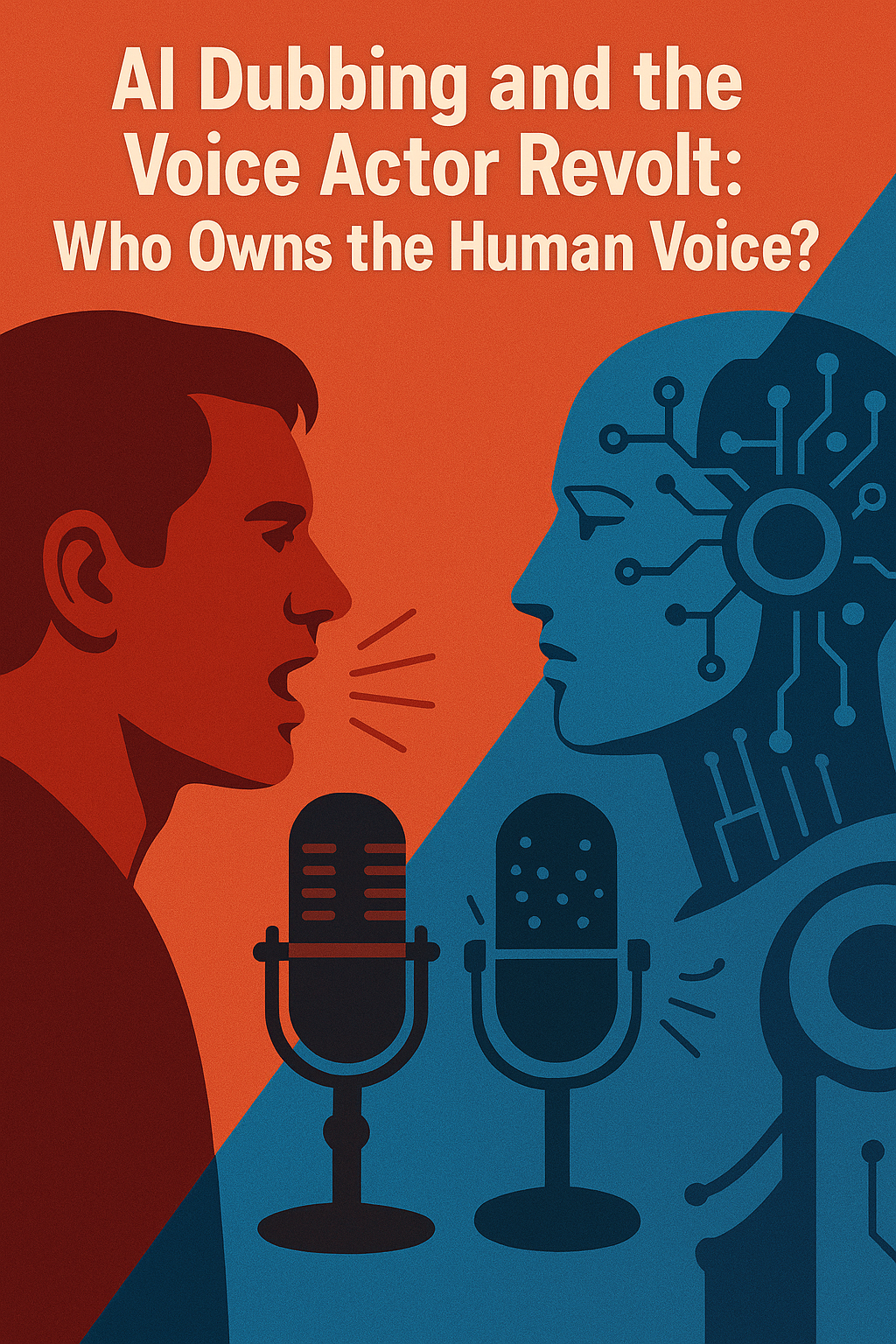
AI dubbing voice actor revolt reached a genuine turning point in mid-2025, not through protest alone but through a ratified labour agreement. Reuters reported in July 2025 that voice actor associations across Europe, spanning Germany, France, and beyond, were calling on the EU to tighten AI regulations after AI dubbing tools like DeepDub began making inroads into an industry long built on human performance. Boris Rehlinger, the French voice of Ben Affleck and Joaquin Phoenix, told Reuters he felt threatened even though his own voice had not yet been replaced, comparing the moment to the arrival of the automobile: we need legislation, just as after the car, which replaced the horse-drawn carriage, we need a highway code.
The revolt was not limited to public statements. In Germany, twelve well-known dubbing actors went viral on TikTok in March 2025, drawing 8.7 million views for a campaign urging audiences to protect artistic, not artificial, intelligence. A petition from the German voice actors’ association VDS called on lawmakers to require AI companies to obtain explicit consent before training systems on performers’ voices. That pressure translated into a binding outcome just weeks later, when SAG-AFTRA members in the United States ratified a new video game agreement carrying real consequences for how AI-generated voice replicas can be used.
What the SAG-AFTRA Agreement Actually Secured
The 2025 Interactive Media Agreement, approved by SAG-AFTRA members on 9 July 2025 with a 95.04 percent vote in favour, ended an 11-month strike that had specifically centred on AI protections rather than pay alone. The agreement requires consent and disclosure before a studio can create or use a vocal digital replica of a performer, and it gives performers the ability to suspend that consent entirely during a strike, closing a loophole that would otherwise let a company generate new dialogue from an actor’s past recordings while that actor was refusing to work. Payment structures were also formalised: a studio using a vocal digital replica must pay based on the number of lines generated, with one line defined as roughly ten words, rather than a single lump-sum buyout.
What This Means for the Content You Watch and Listen To
For viewers, the practical effect is less about noticing AI dubbing directly and more about which productions choose to use it and how transparently. Streaming platforms have already tested the technology publicly, and not always successfully. Amazon’s March 2025 pilot combining AI tools with human localisation professionals covered twelve licensed titles, explicitly aimed at content that traditional dubbing costs would otherwise make unavailable in certain languages. Consumer research firm GWI found audience reaction genuinely mixed: nearly half of viewers said learning that content was AI-generated would not change their opinion of it, while a smaller share said they would like it slightly less. The technology is not being universally embraced or rejected. It is being tested, title by title, against real audience tolerance.
The Deeper Legal Question Still Unresolved
Voice actors’ underlying argument extends beyond any single labour agreement. It centres on whether a performer’s voice constitutes a form of protected biometric identity or simply another data input a model can be trained on with sufficient technical access. That question sits at the heart of the broader deepfake consent debate playing out across the entertainment industry, illustrated most publicly when actor Bryan Cranston pushed OpenAI to tighten consent requirements inside its Sora 2 video tool after raising concerns through SAG-AFTRA. The shift OpenAI made, from an opt-out model requiring performers to proactively block their own likeness to an opt-in model requiring consent before use, is the same structural principle voice actors are now pushing dubbing companies and platforms to adopt for vocal replicas specifically.
Why Some in the Industry Believe Coexistence Is Possible
Not every voice in the industry frames this purely as replacement versus survival. Stefan Sporn, CEO of Audio Innovation Lab, which used AI to dub the Cannes Film Festival entry Black Dog from Chinese to German, told Reuters he believes AI will reshape voice work rather than eliminate it, since humans remain necessary for emotion, scripting, and language nuance, just not to the same extent as before. That framing, reduced scale rather than elimination, is echoed in the SAG-AFTRA agreement’s structure, which does not ban AI voice replicas outright but instead requires consent, disclosure, and fair payment whenever they are used, treating the technology as a governed practice rather than a banned one.
The dubbing industry’s experience offers a template other creative professions are already studying closely. A voice actor’s specific, technically coherent demand, consent before replication, disclosure of use, payment tied to actual usage, moved faster through negotiated agreement than it likely would have through legislation alone, even as European lawmakers continue working toward their own binding AI transparency rules. Whether that template holds as AI dubbing quality continues to improve, and as more studios weigh cost savings against audience trust, is the question the next round of contract negotiations across the industry will have to answer.
About the Author
Stuart Kerr is Technology Correspondent at LiveAIWire, covering artificial intelligence, emerging technology, and their impact on business, society, and everyday life. LiveAIWire publishes original AI journalism every weekday at liveaiwire.com.