
By Stuart Kerr, Technology Correspondent, LiveAIWire
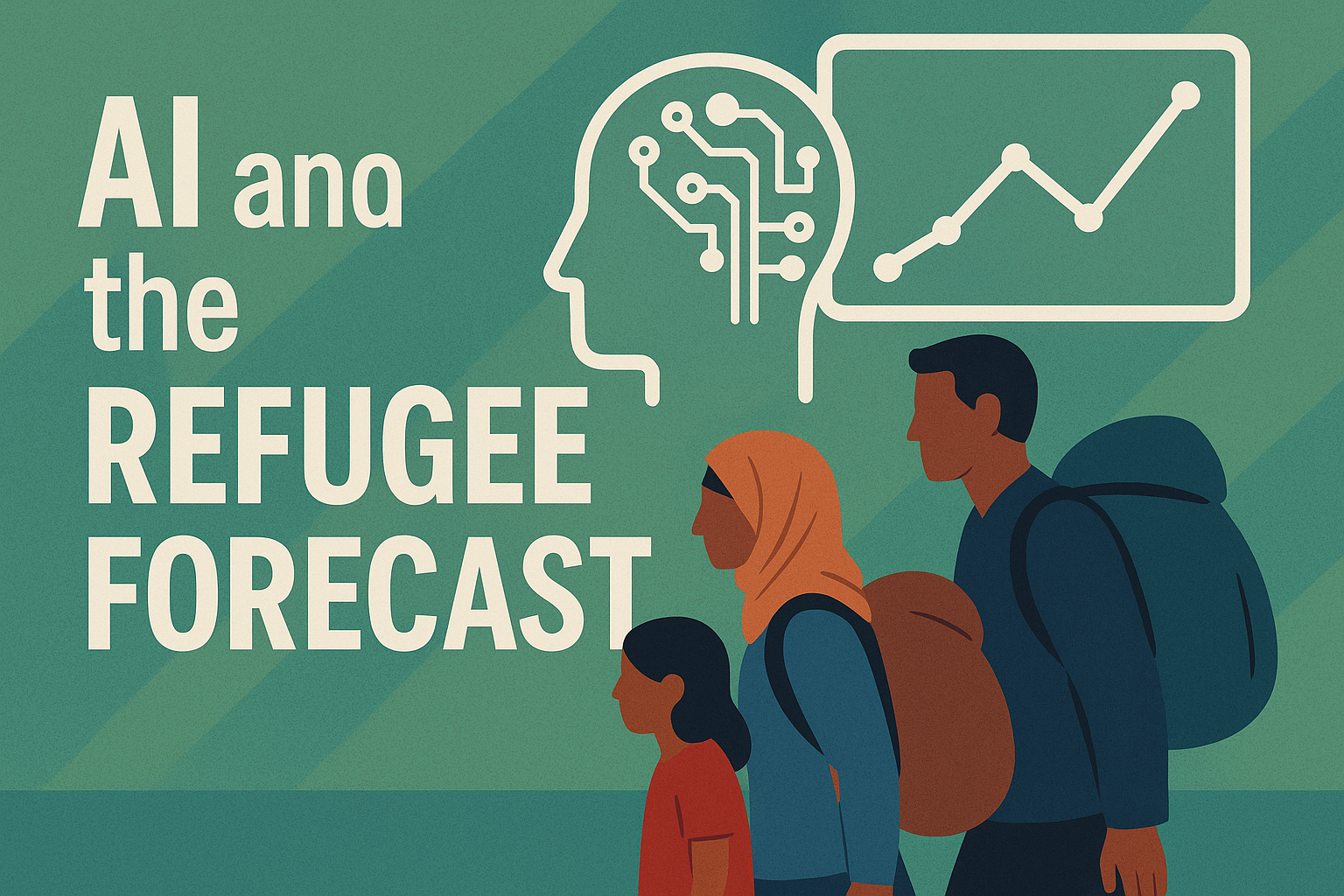
Can algorithms predict displacement before it happens? The World Bank has built a machine learning model that forecasts refugee inflows into Uganda from the Democratic Republic of the Congo and South Sudan with more than 80 percent accuracy on unseen data, four to six months before the people actually arrive. The model ingests more than 90 variables spanning conflict indicators, food prices, climate data, and even the volume and sentiment of online language about unfolding events. With more than 122 million people forcibly displaced worldwide, more than double the figure from a decade ago, the pressure to move from reactive relief to anticipatory planning has never been higher.
The practical payoff is specific: Uganda’s Displacement Crisis Response Mechanism previously released contingency funding only after refugee inflows had already strained local schools, clinics, and water points. With the predictive model integrated, that funding can now be triggered before the surge arrives, giving host districts time to build the capacity to absorb it. The World Bank frames this as strengthening Uganda’s existing commitment to including refugees in national services, not replacing the human planning process that decides how the money gets spent.
Table of Contents
Can Algorithms Predict Displacement Well Enough to Change Where People Are Sent?
A separate and more targeted question is not whether displacement can be predicted, but what happens to people once it occurs. Stanford’s GeoMatch tool, developed by the university’s Immigration Policy Lab, uses machine learning to recommend which specific community within a country a refugee is likely to succeed in economically, based on patterns from past arrivals with similar backgrounds. In trials published in the journal Science, the approach increased projected employment by roughly 40 percent in the United States and 75 percent in Switzerland, where it has been running as a large-scale randomized controlled trial since 2020.
Placement officers remain the final decision-makers in every GeoMatch deployment, a design choice the team built in deliberately. Researcher Elisabeth Paulson has focused specifically on fairness, building tools that let resettlement agencies check whether the algorithm’s recommendations produce equitable outcomes across subgroups such as country of origin or gender, rather than simply maximizing an aggregate number. The team has also had to account for what statistician Dominik Rothenhäusler calls distribution shift: refugees arriving in Europe today, largely from Ukraine, differ in important ways from those who arrived a decade earlier from Africa and the Middle East, and a model trained only on historical patterns can misjudge a population it has not seen before.
The Three-Year Forecast, and Its Blind Spot
The Danish Refugee Council’s Foresight tool takes a longer view, projecting displacement numbers one to three years into the future for 26 countries that together account for over 90 percent of global displacement. Built with IBM and funded by the EU and Danish government, the tool has projected that roughly 6.8 million more people would be displaced between 2024 and 2025, with Sudan’s displaced population alone potentially swelling toward 13 million by 2026 if the conflict there continues unresolved.
Charlotte Slente, the Danish Refugee Council’s secretary general, has described the goal as shifting resources toward preventing crises rather than only treating their symptoms, and a spin-off of the tool has already been used to trigger cash and water assistance ahead of drought in Somalia. But the tool has a documented blind spot: sudden, unexpected shocks. Senior analyst Alexander Kjærum has acknowledged that rapid-onset crises, such as Russia’s invasion of Ukraine or Myanmar’s Rohingya crisis, are not easy to predict in their first year, even though projections become more reliable once a crisis is already underway.
What This Means: Real Promise, and a Real Political Risk
The same data that helps humanitarian agencies prepare aid can also be read as ammunition in migration politics. Vincent Chetail, director of the Graduate Institute’s Global Migration Centre, has warned that displacement forecasts risk being used by politicians to stoke public fear over migration levels that, in reality, involve a small fraction of the global population. A separate EU-funded tool, EUMigraTool, uses social media data to forecast asylum applications and potential social tensions, and civil society groups have raised concerns it could be used to justify border restrictions rather than humanitarian preparedness, a criticism its developers reject.
This same divide between well-served and poorly-served populations shows up across humanitarian AI more broadly. LiveAIWire’s reporting on AI food security forecasting found that models trained on data-rich regions consistently perform worse when applied elsewhere, and that the Famine Early Warning Systems Network has spent decades building exactly the kind of local trust and contextual judgment that no algorithm can shortcut.
LiveAIWire’s broader analysis of algorithmic bias found the same structural pattern: systems trained on historical data tend to reproduce the inequities embedded in that data rather than correct for them, a dynamic that applies as much to displacement forecasting as it does to hiring, lending, or criminal justice algorithms.
Where UNHCR Draws the Line
The UN Refugee Agency’s own position, laid out in a press release published this month, is notably cautious for an organization actively testing predictive tools of its own, including a pilot in Somalia called Project Jetson. “Innovating with AI also means knowing when not to use AI,” said Hovig Etyemezian, UNHCR’s Head of Innovation. “Technology must support humanitarian judgment, not replace it. Decisions that affect people’s lives must remain in human hands.”
UNHCR has deliberately kept some of its predictive work internal rather than public, citing the risk that displacement data could be manipulated or used against the people it is meant to protect, a concern that runs directly counter to the incentives of governments that might prefer forecasts framed as security threats. Whether algorithms predict displacement responsibly or recklessly, in other words, depends less on the model itself and more on who controls it and what they are trying to do with the forecast.
LiveAIWire’s coverage of AI-powered border control found a similar pattern of well-intentioned tools deployed with far weaker oversight than their consequences warrant, and asylum seekers, who have the least legal recourse of any population these systems touch, consistently bear the highest risk when the technology gets it wrong.
So, Can Algorithms Predict Displacement?
The honest answer is yes, with real accuracy and real humanitarian value, for slower-building crises with enough historical data behind them. What algorithms cannot yet do is predict the sudden, unprecedented shock, whether that is an invasion, a coup, or a natural disaster with no clean historical precedent, and every organization building these tools, from the World Bank to Stanford to the Danish Refugee Council, says as much openly rather than overselling their own technology.
They also cannot be trusted to operate without the human judgment, local trust, and political awareness that every organization actually using these tools insists must remain firmly in charge of the decisions that follow. The gap between what a model can calculate and what a community actually needs is exactly where humanitarian expertise still does the work no algorithm has learned to do.
About the Author
Stuart Kerr is Technology Correspondent at LiveAIWire, covering artificial intelligence, emerging technology, and their impact on business, society, and everyday life. LiveAIWire publishes original AI journalism every weekday at liveaiwire.com.