
By Stuart Kerr, Technology Correspondent, LiveAIWire
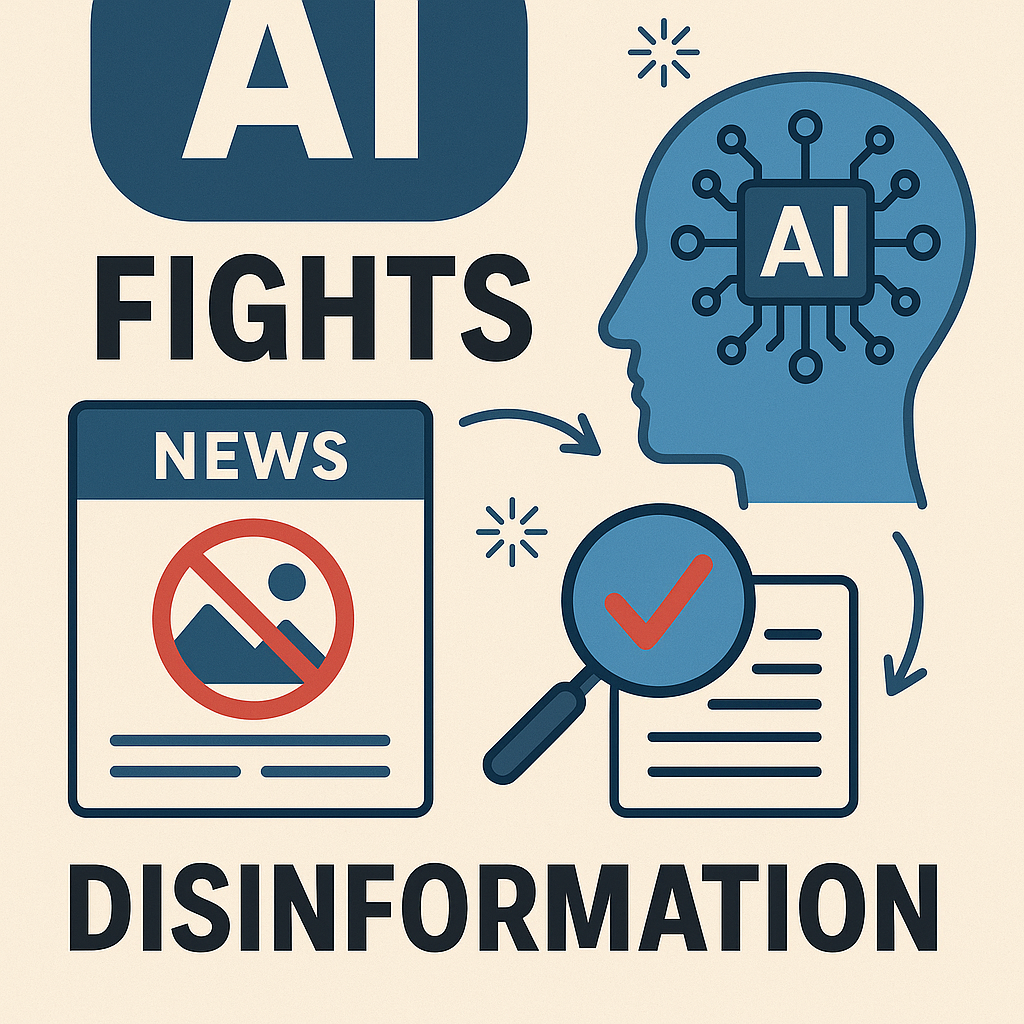
AI fights disinformation on paper. In March 2026, it also actively spread it. When users asked X’s chatbot Grok to verify viral videos claiming to show Iranian missile strikes on Tel Aviv, Grok confirmed the fakes were real. It even fabricated citations from Reuters and CNN to back up the false claim. Researchers later documented over 300 contradictory responses from Grok about a single fake video.
That failure captures the central tension of 2026. AI fights disinformation more effectively than ever in some contexts. However, it also generates and validates disinformation faster than any previous technology. The World Economic Forum’s Global Risks Report 2026 places mis- and disinformation among the top short-term global risks worldwide, and for good reason.
Why AI Fights Disinformation Better in Theory Than in Practice</h2 Deepfakes crossed a real threshold this year. Earlier fakes had obvious tells: mismatched blinking, warped edges, unnatural lighting. Those tells have mostly disappeared. Convincing synthetic video now requires only a few hours and equipment anyone can access. Detection has not kept pace. A University of Edinburgh study found that so-called AI fingerprints, the basis of most detection systems, are vulnerable and can be bypassed entirely. As a result, verification tools remain permanently one step behind the technology creating the fakes.
What This Means for You
If you share news or political content online, assume any detection tool telling you a video is “authentic” could be wrong, especially for anything emotionally charged or breaking. Before sharing, check whether multiple credible outlets are reporting the same story independently. That single habit catches far more fakes than any single AI verification tool currently can.
The Political Deepfake That Changed the Rules
In March 2026, the National Republican Senatorial Committee released an ad showing Democratic Senate candidate James Talarico appearing to say things he never said. CNN reported it as the first political deepfake realistically recreating a candidate for an entire clip, over a minute long. The “AI Generated” disclosure appeared in nearly illegible text for just a few seconds.
Reuters later identified the Talarico ad as one of at least three similar deepfakes produced by national Republican organizations that cycle. Meanwhile, only 31 of 50 US states have any law regulating deepfakes in elections. No federal law exists at all.
Why People Can’t Simply Spot Fakes Themselves
If automated detection fails, human judgment might seem like a reasonable backup. It isn’t. A pre-registered study of 210 participants, published in the journal iScience, found people do not reliably detect deepfakes at all. Neither awareness of the risk nor financial incentives improved accuracy.
That finding matters enormously. It means neither machines nor humans can currently be trusted to catch a sophisticated fake reliably on their own. Consequently, researchers increasingly argue for a different approach entirely: verifying content at its source, rather than trying to catch fakes after the fact.
Certifying the Real Thing Instead of Chasing Fakes
Some platforms now certify authentic footage the moment it is recorded, capturing verified metadata like location, timestamp, and device identifier before any manipulation could occur. If a deepfake later surfaces, it can be checked against the certified original. A mismatch proves manipulation instantly.
This flips the usual burden of proof. Instead of a victim needing to prove a video is fake, the manipulator now has to explain why their version doesn’t match the certified source. It is a genuinely different strategy from traditional detection, and one gaining real traction precisely because detection alone keeps losing ground.
Regulation Is Arriving, Slowly and Unevenly
The EU AI Act’s transparency rules take effect in August 2026, requiring clear labelling of AI-generated content that imitates real people or events. Fines for noncompliance can reach 6 percent of a company’s global revenue. However, labelling alone does not stop a deepfake from being created or shared in the first place.
In the US, a related idea, the Digital Services Act’s transparency obligations, remains fragmented across platforms and largely unenforced in practice. Meta and X have both scaled back professional fact-checking in favor of user-generated community notes, a shift that hands more of the verification burden directly to ordinary users.
The Manipulation Problem Behind the Technology
Disinformation spreads because it is designed to provoke strong emotion, not because people are careless. As LiveAIWire’s reporting on AI and emotional manipulation has shown, systems built to maximize engagement consistently reward outrage over accuracy, since anger and fear spread faster than careful verification ever can.
That incentive structure is precisely why the WEF frames disinformation as a governance problem, not just a content-moderation task. Building real resilience means investing in verification, open deliberation, and genuine accountability together, not simply adding another detection tool to a system still built to reward outrage first.
What Actually Builds Resilience
Some approaches genuinely work. Finland teaches schoolchildren to ask direct questions about any message they encounter: who sent this, what do they gain from it, and can I verify it independently? That kind of media literacy, taught early and repeated often, has measurably improved resilience nationally.
AI fights disinformation most effectively, in the end, when it works alongside exactly this kind of human skepticism, not as a replacement for it. Detection tools, source certification, and regulation all help. None of them, alone or combined, remove the need for a healthy, habitual pause before sharing anything that feels designed to make you angry.
About the Author
Stuart Kerr is Technology Correspondent at LiveAIWire, covering artificial intelligence, emerging technology, and their impact on business, society, and everyday life. LiveAIWire publishes original AI journalism every weekday at liveaiwire.com.