
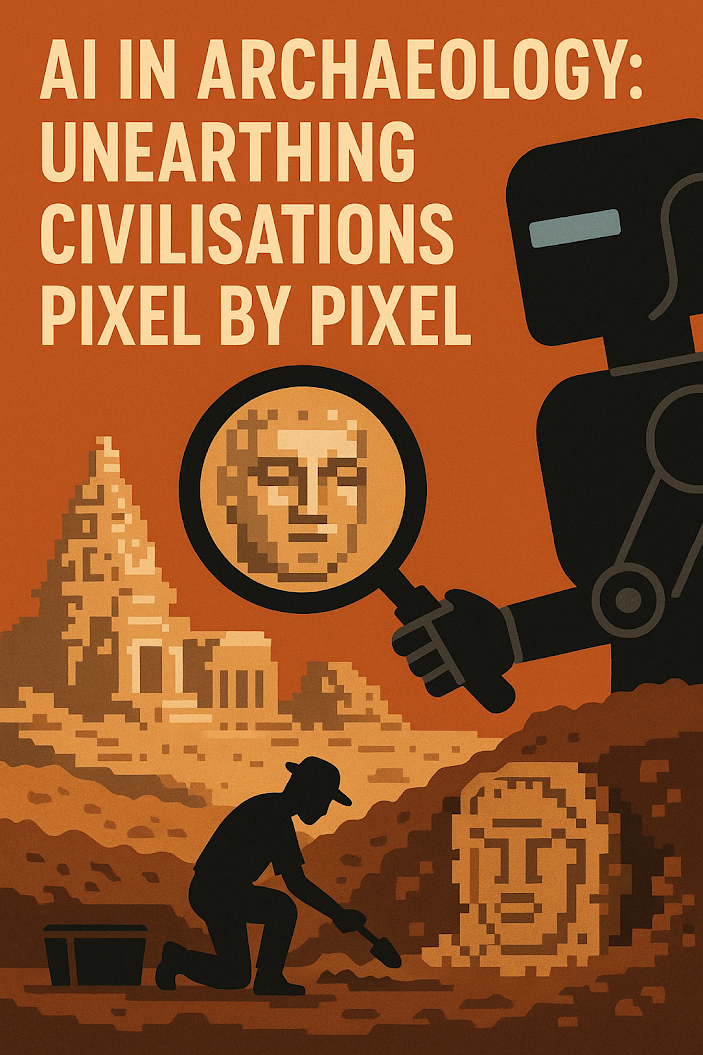
By Stuart Kerr, Technology Correspondent, LiveAIWire
AI archaeology just found 120 ancient sites that trained human experts had completely missed, including one they had literally stood on top of during a field visit. That result came from a tool built by Dr Iris Kramer, an archaeology student at the University of Southampton who was told automated site detection could never be done. She built it anyway. Her company, ArchAI, now helps decide where roads get built and where ancient earthworks get protected instead.
That story captures why AI archaeology matters right now. It is not really about replacing archaeologists. It is about finding what humans, working alone, would take decades to see. And in field after field, from British hillforts to Amazon rainforests, that shift is already well underway.
Table of Contents
Why AI Archaeology Started With a Rejection
Kramer’s first attempt used software borrowed from geographers who study landslides. Applied to laser-scanned terrain data, it caught just 20 percent of known burial mounds. That was not good enough. So she taught herself machine learning from scratch, funded by a three-month coding course, and returned to Southampton to build something better.
Her tool was tested against a landscape in Scotland where experts had already mapped known sites. It found those sites. However, it also flagged 200 locations nobody had recorded. Most turned out to be genuine, previously unknown archaeological features. AI archaeology, in this case, did not just speed up a slow process. It corrected it.
What This Means for You
If you work in construction, land planning, or heritage management, AI archaeology changes the economics of your project timeline. One UK housing development discovered an ancient burial site only after construction had already begun. Archaeological costs jumped from £20,000 to nearly £400,000, and work stalled for over a year. Tools like ArchAI are built specifically to catch that risk before a single shovel breaks ground, cutting assessment timelines that traditionally run six to twenty-four months down to days.
From Scotland to the Amazon: The Same Technology, a Bigger Story
AI archaeology has produced its most dramatic results in places too vast or too dangerous for traditional excavation. In Bolivia, airborne laser scans revealed two enormous ancient cities buried under Amazon rainforest canopy, complete with pyramids, moats, and a seven-kilometre canal. Researchers call this pattern low-density urbanism: sprawling, engineered settlements that traditional ground surveys would never have found.
In Ecuador’s Upano Valley, a similar survey uncovered more than 6,000 earthen platforms and fifteen separate town clusters. Roads stretching up to 25 kilometres connected them. Radiocarbon dating places these settlements as far back as 500 BCE. None of this was visible from the ground. All of it came from combining laser data with machine learning trained to spot patterns human eyes simply cannot process at scale.
The Contest That Turbocharged the Field
A recent global competition called the OpenAI-to-Z Challenge pushed AI archaeology even further, fast. Teams trained models on satellite elevation data, laser scans, and large language models simultaneously. The winning team, Black Bean, flagged 67 square miles of high-priority targets for future excavation in a matter of weeks, work that would traditionally take field teams years to survey on foot.
That speed is genuinely useful. It is also, researchers are careful to note, only a starting point. AI archaeology can flag where to look. It cannot confirm what something actually is, or what it meant to the people who built it. That distinction turns out to matter more than the headlines usually suggest.
Why Speed Alone Is Not the Whole Story
Every serious AI archaeology project now builds in a deliberate pause between detection and conclusion. A pattern that looks like a wall from orbit might be a natural rock formation. A shape that resembles a settlement might simply be erosion. Researchers working across Europe’s MAIA project, which uses AI to spot archaeological features invisible to the naked eye, have been explicit that human interpretation still decides what a detected pattern actually means.</p
This caution exists for good reason. Speed without verification risks two very different failures. It can create false excitement over natural formations mistaken for ruins. Or, just as damaging, it can miss the cultural and political context that turns a shape in the ground into an actual piece of human history. AI archaeology finds candidates. People still have to do the finding out.
Where the Real Risk Sits
There is a further risk that gets less attention than the discoveries themselves: speed can outpace protection. Faster detection means faster publicity, and faster publicity can attract looters to sites before archaeologists ever reach them. Researchers working on Amazon earthworks have flagged exactly this concern, alongside the related risk of biased sampling, since AI models can only detect patterns similar to sites they were already trained on.
That is why the strongest AI archaeology projects now pair detection tools with local partnership from the start, rather than treating community involvement as an afterthought once a discovery becomes public. Responsible AI archaeology, done well, protects a site as carefully as it finds one.
What Comes Next for AI Archaeology
None of this makes archaeologists less necessary. If anything, AI archaeology has made their judgment more valuable, not less, because someone still has to decide which of thousands of flagged patterns deserves a real excavation. The technology has simply changed where that judgment gets applied, earlier, faster, and across landscapes no field team could survey alone.
The forest, the desert, and the ocean floor are still hiding evidence of human lives nobody has read yet. AI archaeology is not writing that story for us. It is handing archaeologists a faster way to start listening.
About the Author
Stuart Kerr is Technology Correspondent at LiveAIWire, covering artificial intelligence, emerging technology, and their impact on business, society, and everyday life. LiveAIWire publishes original AI journalism every weekday at liveaiwire.com.