
By Stuart Kerr, Technology Correspondent, LiveAIWire
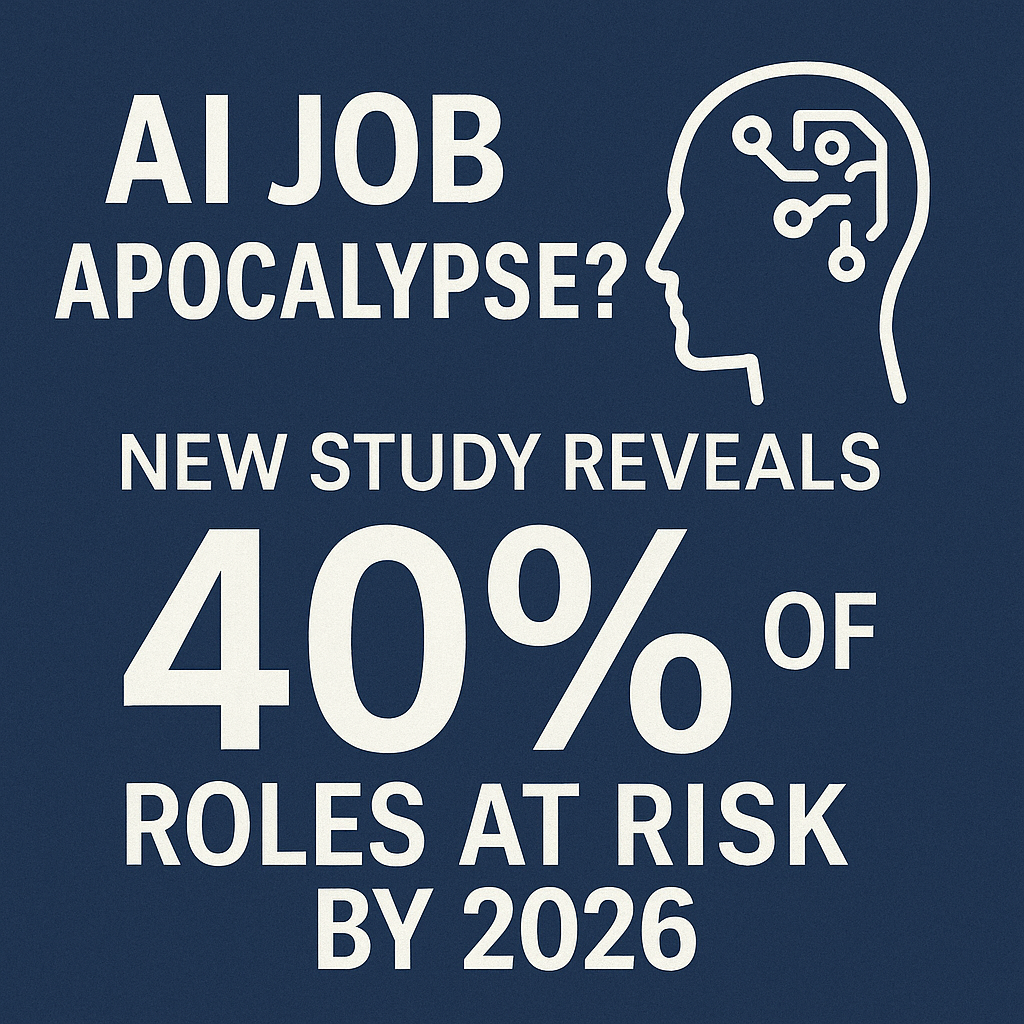
AI job exposure became a defining statistic in 2024 when the IMF published analysis estimating that approximately 40 percent of jobs globally are exposed to AI automation, a figure that has been cited in thousands of articles, political speeches, and business strategy documents in the months since its publication. The figure is real, carefully derived, and significantly misrepresented in most of the coverage it has generated. Understanding what the 40 percent figure actually measures, what it does not measure, and what the evidence suggests about the pace and character of AI-driven employment change is essential context for workers, employers, and policymakers who are making consequential decisions based on how they interpret it.
The IMF’s methodology defines job exposure to AI automation based on the extent to which the tasks comprising a job involve the kinds of cognitive, language, and pattern recognition activities that AI systems currently perform well. This is importantly different from saying that 40 percent of jobs will be eliminated by AI, which is a claim the IMF did not make. Jobs that are highly exposed to AI automation may be transformed by it, with some tasks automated and others changed in character, rather than eliminated wholesale. The distinction matters enormously for how individuals and institutions should respond to the evidence.
What AI Job Exposure Actually Predicts
The empirical research on what happens to jobs when AI tools are adopted in the relevant sector provides more nuanced guidance than the theoretical exposure framework alone. Tasks that are highly routine and well-defined are automated; tasks that require contextual judgement, client relationship management, exception handling, and creative problem-solving are not. Most roles consist of a mixture, and the outcome depends on how the task composition of the role shifts as AI handles more of the routine elements.
The labour market data available in 2025 documents clear effects in specific sectors and job categories that are consistent with the exposure framework. Research from the University of Chicago and Stanford has documented wage effects showing that workers whose jobs are highly exposed to AI tools are experiencing slower wage growth than those in less exposed roles. The National Bureau of Economic Research has published multiple working papers examining these dynamics with methodological rigour that the headline-generating research often lacks.
Which Workers Are Most Affected by AI Job Exposure
The distribution of AI job exposure across the workforce defies the simple narrative that AI primarily threatens low-skill, low-wage workers. The current wave of AI automation is affecting knowledge work and cognitive tasks in ways that previous automation waves, which concentrated on manufacturing and physical labour, did not. This means that the workers most exposed to AI-driven task automation include significant numbers in professional, technical, and managerial occupations who have historically been protected from automation by the cognitive complexity of their work.
This uneven distribution is documented in sharper detail in LiveAIWire’s coverage of the 32 percent decline in UK entry-level roles since ChatGPT’s launch, which traces exactly the sectoral concentration, financial services, legal, marketing, and technology, that the global exposure figure predicts.
The Policy Response Question
The 40 percent exposure figure has generated policy responses ranging from calls for universal basic income to proposals for robot taxes, with most falling somewhere in between these positions without clearly addressing the specific mechanisms through which AI is affecting the labour market. The most evidence-based policy responses focus on three areas: education and skills infrastructure that prepares workers for AI-augmented roles rather than AI-substituted ones; social insurance frameworks that provide adequate support for workers in transition between roles; and active labour market policies that help match displaced workers with the growing demand for AI-adjacent skills.
The UK government’s AI Opportunities Action Plan published in 2025 acknowledges the workforce transition challenge while emphasising the productivity and growth opportunities of AI adoption. The plan’s workforce provisions have been criticised by trade unions and some economists as insufficient relative to the scale of disruption that the government’s own AI optimism implies, a gap LiveAIWire has also traced more broadly in our coverage of the AI automation divide.
What This Means for You
If you are in a role that involves significant proportions of structured cognitive work, document processing, data analysis, or routine professional judgement, the 40 percent AI job exposure figure is personally relevant, but it does not predict your specific outcome. The most important individual response is honest assessment of which components of your current role are most and least exposed to AI substitution, combined with deliberate investment in the skills that complement rather than compete with AI.
The most honest framing of AI job exposure and its labour market impact is neither apocalyptic nor dismissive. It is that significant disruption is already underway in specific sectors and job categories, that the pace is accelerating, that the distribution of impact is unequal in ways that compound existing inequalities, and that the policy response in most countries including the UK is not yet commensurate with the scale of the challenge. The Institute for Fiscal Studies has published UK-specific analysis of AI labour market impacts that provides more granular evidence for UK policy than the global IMF estimates. This same gap between global exposure statistics and lived worker experience runs through LiveAIWire’s coverage of the AI shadow workforce, whose labour underpins the very systems now displacing other roles.
About the Author
Stuart Kerr is Technology Correspondent at LiveAIWire, covering artificial intelligence, cybersecurity, and the social impact of emerging technology. He publishes daily at LiveAIWire.com.